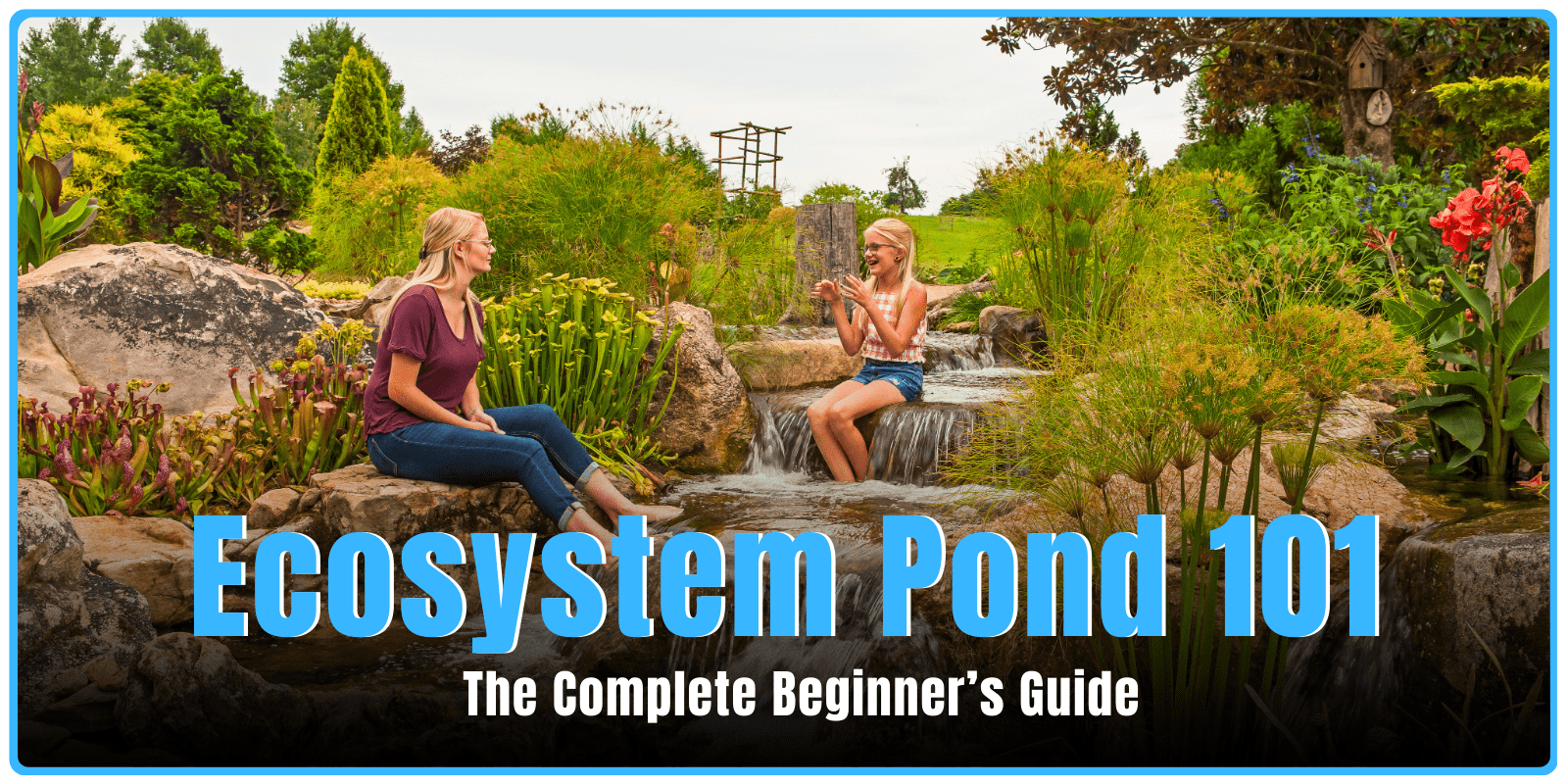
I've been building ecosystem ponds professionally for over 25 years, and this is where I think every beginner should start.
The 5 Essential Components Of An Ecosystem Pond (Quick Overview)
If you're just getting started, here's the foundation:
- Skimmer (mechanical filtration)
- Pump (circulation)
- Biological filter (beneficial bacteria)
- Liner & underlayment (structure + protection)
- Rocks, gravel, plants, and fish (the living ecosystem)
That's the system. Everything else builds on that.
Now let's break down each part and make it simple. Do you feel like you need the basics because there's just too much information out there?
Are you tired of all the conflicting info and confusing terminology people use to mystify something that's actually pretty simple?
I get it- There's a lot of noise in this space. And most of it makes ecosystem ponds feel more complicated than they need to be.
📋 Jump to a Section
What Are The Essential Components That Make Up An Ecosystem Pond?
If you want to know the full difference between a traditional koi pond and an ecosystem pond, I wrote an entire blog about that. [Insert blog link here]
But for this guide, we're going to focus on the foundation.
The true definition of an ecosystem is a biological community of interacting organisms in their environment. And that sums up an ecosystem pond. It truly does bring it all together.
So if you're asking yourself what the components are, you're looking at the following.
1 Does My Pond Need A Skimmer? (Mechanical Filter)
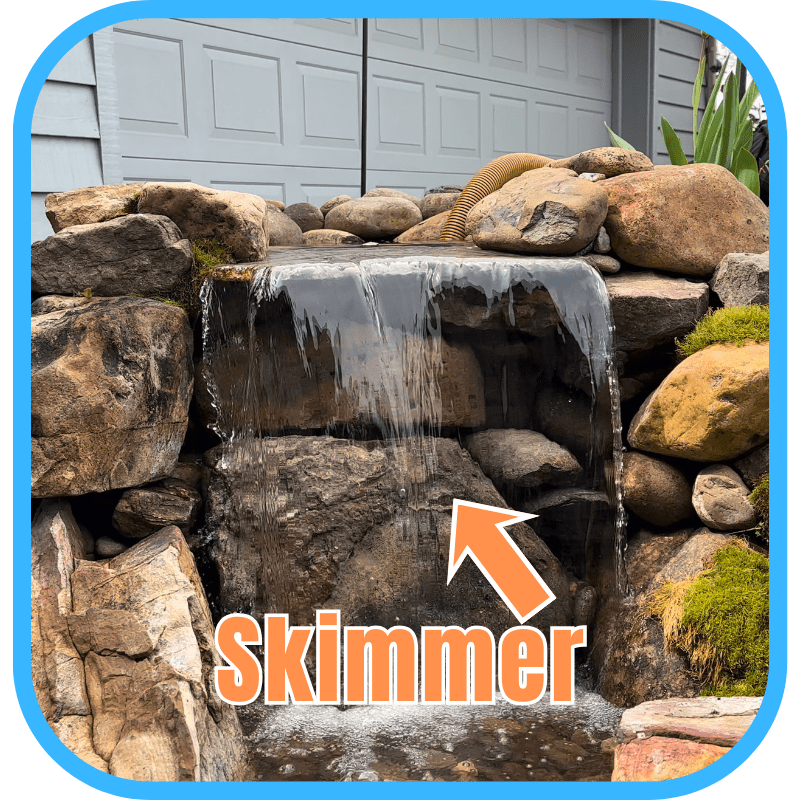
The first piece of an ecosystem pond filter is your skimmer.
If you've ever seen a pool skimmer, it's very similar. The job of your skimmer is to capture large debris. It has a high flow rate. The pump is located inside the skimmer box.
Water flows from the pond into the opening of the skimmer. It enters a basket meant to catch large debris. Then it passes through a filter pad that catches fine material like pine needles and anything that would otherwise clog up your pump & biological filter.
It's called mechanical because this is the part you physically clean. Your job as the pond's caretaker is to empty that basket and clean the filter pads. The skimmer catches the bulk solids so your water feature isn't forced to digest all of that material.
2 How Does A Pump Fit Into My Ecosystem Pond?
The pump lives inside the skimmer.
After the debris has been removed, the pump pushes the water to the top of your water feature.
That's its job.
Move water from the pond, through the skimmer, up to the biological filter.
3 What Does My Biological Filter Do For My Water? (Bio-falls or Bio-filter)
At the top of the system, you have a biological filter. It's basically a plastic tub designed to hold filter media.
Consider this part of the filter as the pond's "waste treatment plant".
Water enters through the bottom of the "tub" and moves up through layers of filter pads and biological media. That media can be ceramic, plastic, you name it- the purpose of that media is the same and it's simple: create a ton of surface area for your beneficial bacteria to grow on. Imagine tiny creatures that filter your water 😉
These microscopic organisms colonize every surface inside that filter. As water flows past them, they do their work & purify the water.
There are millions of them working inside that box.
The more surface area you have, the more bacteria you can grow.
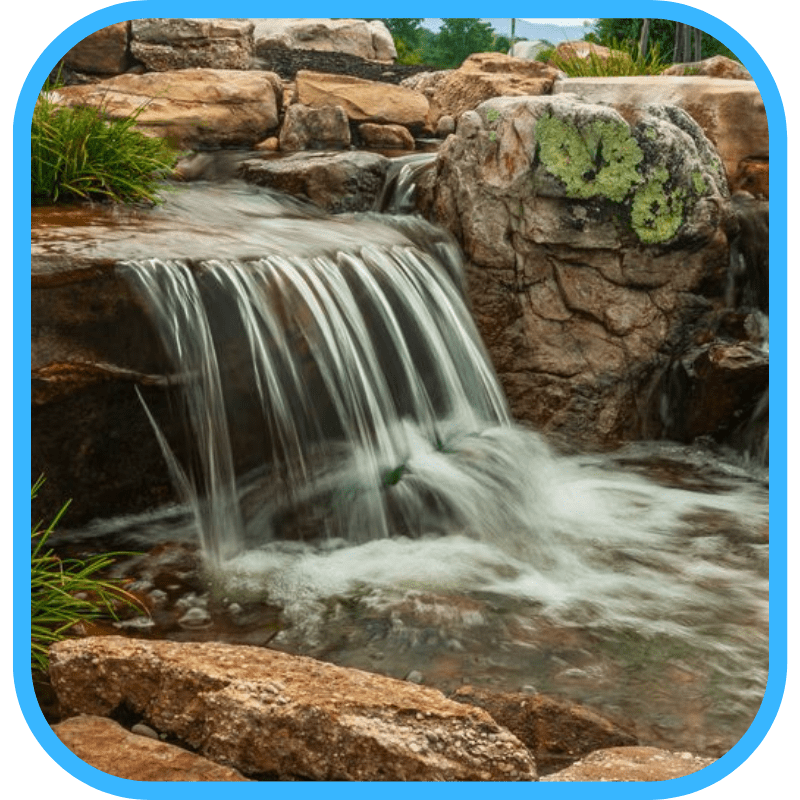
After the water moves through the biological filter, it spills out the top, usually forming a waterfall, and works its way back down into the pond.
4 Why Does My Pond Need Liner And Underlayment?
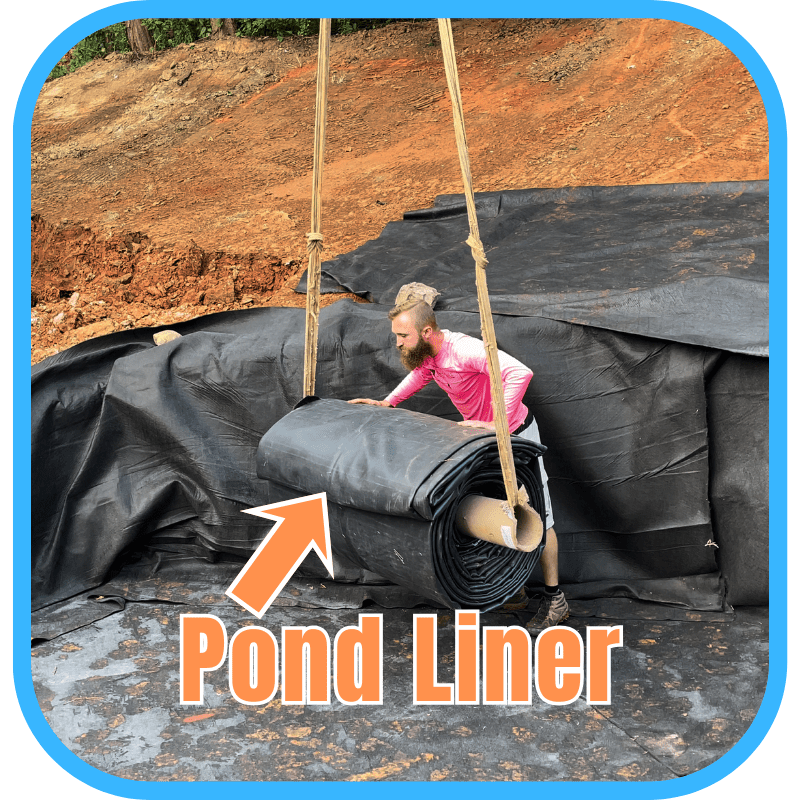
Your water is held inside your pond by a liner. The liner is protected by underlayment.
Think of an inner tube for a tire — that rubber membrane. Most ponds are made from a rubber-type material that keeps water from soaking into the ground so you're not constantly replenishing it. The underlayment helps keep rodents, insects, and sharp objects in the soil from puncturing your liner.
The underlayment protects the liner.
The liner holds the water.
The skimmer holds the pump.
The pump pushes the water.
The biological filter purifies the water.
And gravity brings it back to the pond.
That's the loop.
5 Does My Ecosystem Pond Need Rocks, Gravel, Plants, And Fish?
In a true ecosystem pond — at least the way we build them — we don't dig a smooth bowl-shaped pond. We dig a pond that has walls and flat shelves.
The walls are covered with larger rocks to retain them. The flat areas are covered with gravel.
This does several things.
First of all, rocks & gravel create a beautiful, natural-looking water feature.
They protect the liner from UV, which is one of the primary things that breaks down liner over time. When the liner is protected from sunlight, you increase its lifespan.
And they create additional surface area for beneficial bacteria to grow on. Now you're not only relying on the bacteria inside your biological filter. You also have surface area throughout the pond itself.
Aquatic plants are a major asset to an Ecosystem Pond!
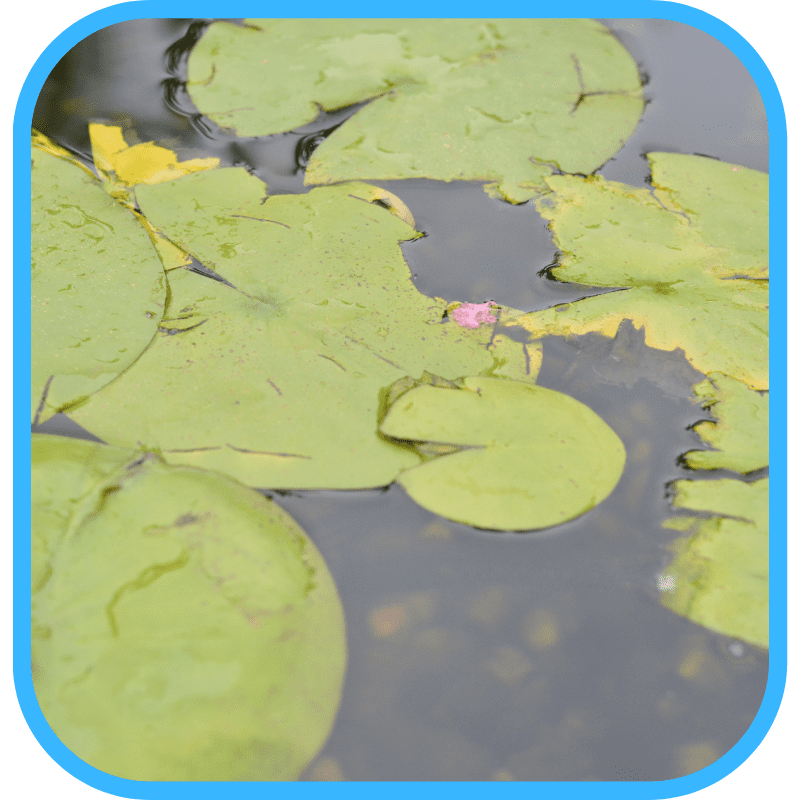
You have marginal plants that grow in shallow water along the edges. You have floating plants like water lilies and lotuses. You have submerged plants like anacharis (seaweed).
All of these plants use nitrogen and nutrients out of your pond in order to grow. They look beautiful. They give fish somewhere to hang out. And they compete with algae for those nutrients. All this means natural beauty, happy fish, and better water quality!
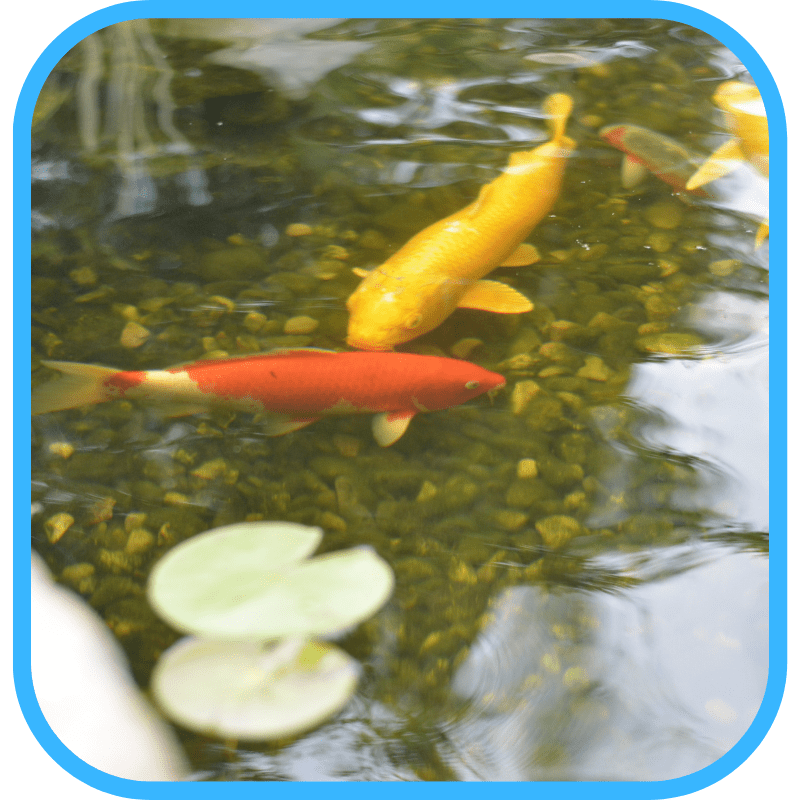
And yes — fish need to be a part of an ecosystem!
They live within the system. They produce waste that feeds the biological cycle. They're part of that biological community interacting in its environment.
When you put all of this together — circulation, filtration, rocks, gravel, plants, fish — you're not just building a water feature.
You're building an ecosystem! People have asked me so many times, can I skip the plants? Can I skip the fish? My answer is, sure, you can skip anything. It's sort of like making a cake. You can skip the sugar, you can skip the flour, you can skip the frosting. It's not a matter of can you, it's a matter of - the outcome is not the same. These are the components of an ecosystem pond. These are the things you should focus on, and as I always say, "You're attempting to recreate Mother Nature on your own terms. The closer you get, the easier it will be. The farther you stray, the more difficult your project will become!"
How Do I Determine The Right Size And Depth For A Beginner Pond?
People ask me all the time, "What's the right depth for a pond?"
And I get some wild ideas thrown at me.
"I want it four feet wide and six feet deep."
There's a practical way to understand this.
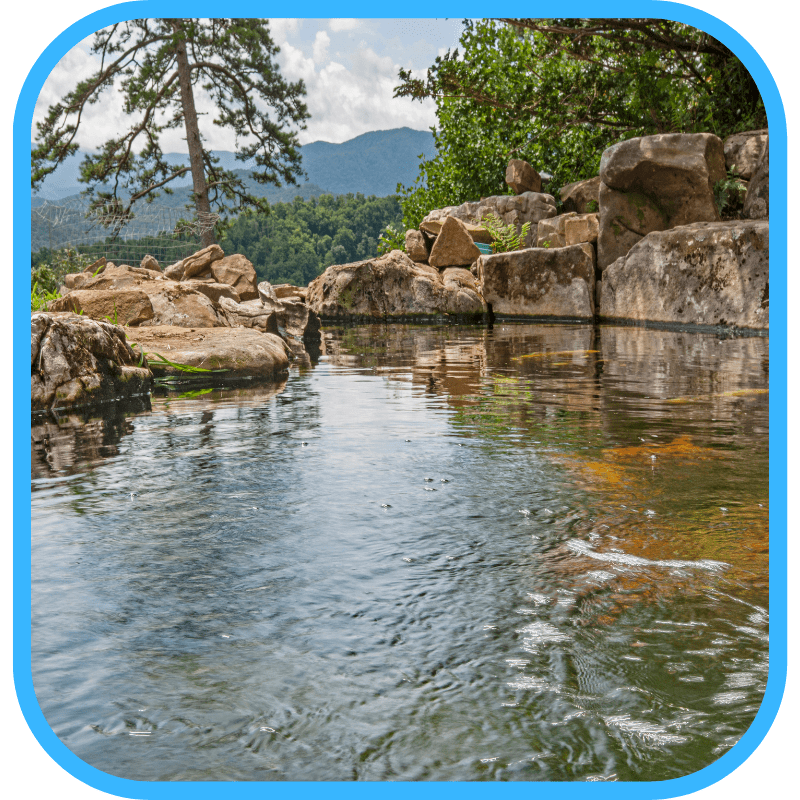
For a normal ecosystem pond, my minimum depth is two feet. And we usually don't go deeper than that until the pond footprint gets to around 12 by 16 or larger.
The reason is simple.
Depth is proportional to footprint.
When you build an ecosystem pond with rock and gravel, you're not digging a straight-down hole. You have walls and you have shelves. Every time you step down, you step inward. Think of it like walking down a set of stairs.
You go down.
You move in.
You go down again.
You move in again.
The deeper you go, the smaller your deep end becomes.
What I don't like — and what doesn't look good — is when someone tries to make a small pond really deep. You end up stacking rock after rock after rock inward until the bottom turns into this tiny little circle in the middle. It looks like a giant hole with a marble-sized deep end.
It's not natural.
And structurally, it gets sketchy fast.
The higher those shelf walls are, the more rock you have to stack to retain them. My goal is always to use rocks that are taller than the shelf height — ideally one rock per shelf wall. But that's not how most people build.
Most people use smaller rocks because they're easier to handle. They're lighter. You can move them yourself.
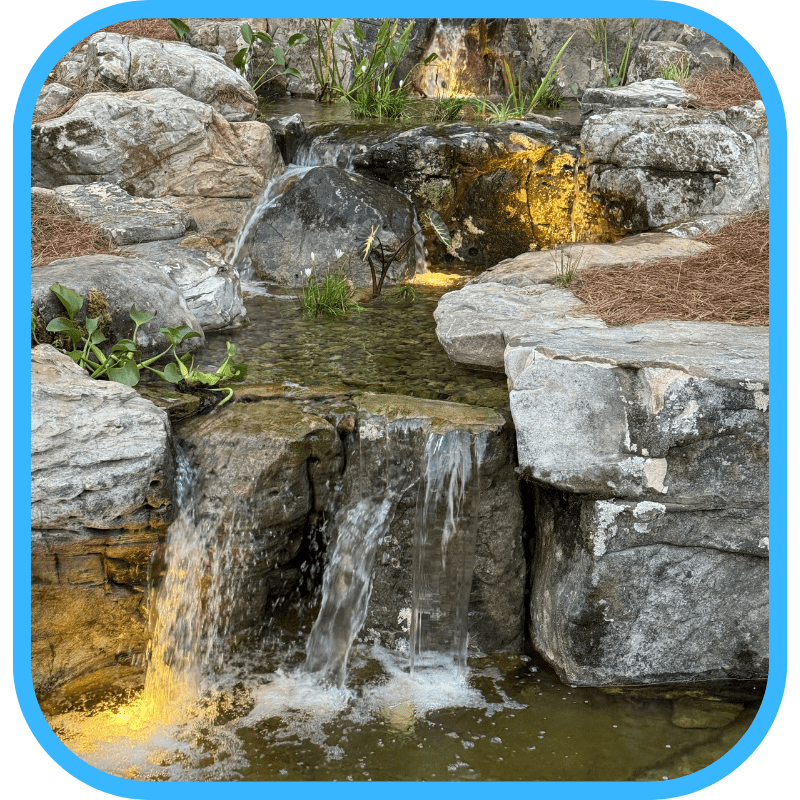
But we all know what happens when you stack a tall wall out of small rocks.
Gravity wins.
They fall down. They shift. You end up with rock piles at the bottom and exposed liner showing on the walls.
That's not just a DIY problem either. I see professionals do it because smaller stone is easier to move and cheaper to install. But it compromises stability and it compromises the look.
If your first shelf drops 18 inches, you're realistically working with rocks that are 10 to 12 inches thick if you only want to stack two of them. Those stones start getting heavy. That's the reality.
So you have to find a balance between the size rock you can physically and practically use, and how tall you make your shelves.
That's why two feet is the sweet spot for most beginner ecosystem ponds. For us, we may dig 26 inches so that after gravel is installed, you still have about two feet of water.
Two feet works in any climate in my experience. I have friends building two-foot-deep ponds all the way into Canada.
Bigger ponds are easier to manage. That's true. But making a small pond deeper doesn't automatically make it better. In fact, it usually makes it harder to build correctly and harder to make it look natural.
And that's the key.
Natural look matters just as much as function.
When's the last time you saw a small body of water in nature that was a straight-down four-foot hole? It just doesn't happen.
Why Is My Pond Water Green?
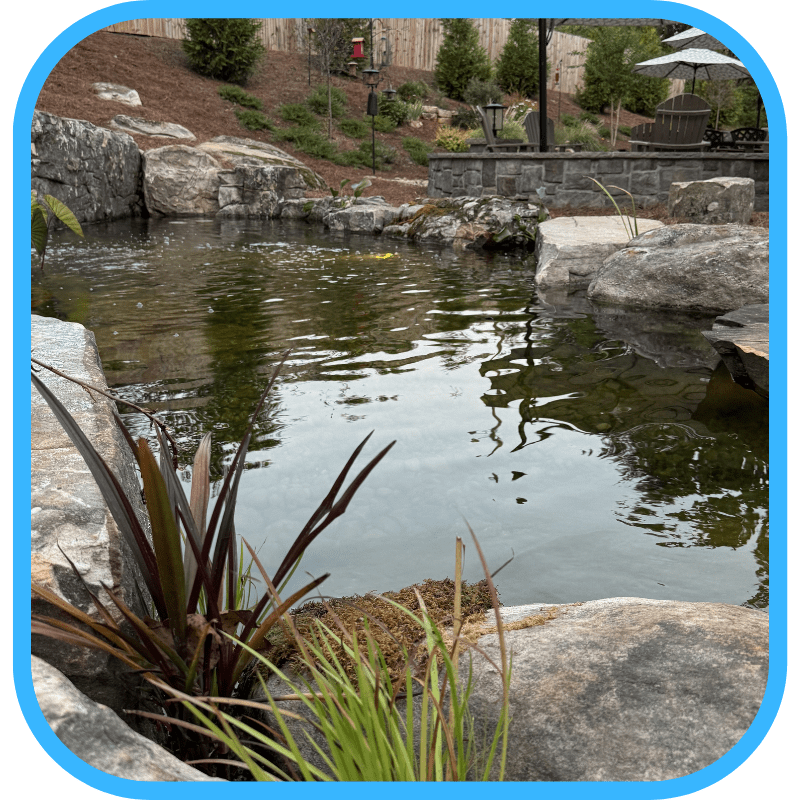
It's inevitable.
Within a week or two of building a brand new pond, we get the phone call.
"The water is green."
And you can hear the concern in their voice. They think something is wrong. They think we missed something. They think the pond is failing.
What's actually happening is cycling.
In the aquarium industry, we call this the cycling phase. When you build a new ecosystem pond, you are starting with a sterile environment. New liner. Clean rocks. Fresh water. You add some fish. You add some plants. You turn on the circulation.
But that waste treatment plant we talked about earlier? It hasn't developed yet.
Yes, we add beneficial bacteria when we build ponds. Yes, we continue adding it during maintenance. But that biological system still takes time to establish itself.
In the beginning, you've got full sunlight hitting the water. The plants are small. There's no shade from water lilies yet. There's no developed root mass pulling nitrogen and phosphorus out of the water. All the nutrients from the rocks, gravel, and soil are available as food.
And the first thing that shows up to eat that food is algae.
Sometimes it's attached algae on the rocks. Sometimes it's free-floating algae. The free-floating algae is what turns the water green. That's the "green soup" that makes everyone panic.
I have a story about that.
Early in my career, I built a pond for myself. I put the fish in. I turned the water on. It turned green. And then I went back to work. I was too busy taking care of everyone else's ponds to take care of my own.
It sat like that for a couple of months. Just green. You couldn't see into it.
Eventually I got my act together. I started adding beneficial bacteria again. I cleaned the skimmer. I paid attention to it.
Within seven days, the water turned crystal clear. The fish were healthy. The plants were growing. The ecosystem had matured.
Here's the moral of the story.
Algae bothers us.
It doesn't bother the fish.
It doesn't bother the plants.
And I haven't really experienced a situation where algae alone caused a true water quality problem, other than maybe clogging a skimmer box.
What you need to understand is this: nutrients are energy. And energy doesn't disappear. When algae blooms, it's absorbing that energy. If you dump algaecide into the pond and kill it, the water may look clear — but those nutrients just go right back into the water.
And when the chemical wears off, the algae comes back. Sometimes it comes back stronger. Sometimes it comes back resistant.
Balance doesn't happen with poison.
Balance happens with time, beneficial bacteria, enzymes, plant growth, and patience.
Don't overload the pond with fish in the beginning. Don't panic when the water turns green. Don't assume your pond builder failed you.
You're building a living system.
It takes a little time.
If the pond is designed correctly and you have a complete ecosystem, it will balance. It will arrive. The water will clear. The plants will grow. The fish will thrive.
Chill out.
Love your pond.
Enjoy the journey while it matures 😉
Frequently Asked Questions About Ecosystem Ponds
Q: Can I Skip Plants In My Ecosystem Pond?
You can. But the outcome won't be the same. Plants remove nutrients, compete with algae, and complete the system.
Q: Can I Build A Small Pond Really Deep?
You can. It won't look natural, and it becomes harder to build correctly.
Q: How Long Will My Pond Stay Green?
Usually 1-2 weeks during the cycling phase. Balance takes time.
Q: Is Algae Dangerous To Fish?
In my experience, algae alone is rarely a true water quality problem.
What Else Do I Need To Know As I Start Designing My Ecosystem Pond?
Now that we've covered the components, the depth, and what happens when your pond turns green, there are some other things you need to think about as you start designing your water feature.
Number one — when you pick a spot that you think you want to build your pond, always have your local utilities marked.
Here in Tennessee it's called "Call Before You Dig."
Always do that.
The saddest thing in the world is to get it all planned out and then find out there's fiber optics or a septic field right where you want to put your pond.
So don't start dreaming too deeply until you actually know what spaces are available for you to build in.
The next thing you've got to determine is whether you're going to build it yourself or hire a professional.
Are you fully hands-on?
Are you partially hands-on because you'd really rather be hands-off but don't have the money to pay someone to do the full job?
Or are you ready to bite the bullet and pay to have it done the way you want it done?
You've got to be honest about who you are and where you're at.
You've also got to come to terms with money.
Dreaming about a $50,000 water feature when you've got a $5,000 budget is not realistic.
You have to decide how important this is to you and what you're willing to invest in it — both financially and in sweat equity.
Another thing to think about is the true cost of owning a pond.
Not just what it costs to build it.
But electricity.
Maintenance.
Future expenses.
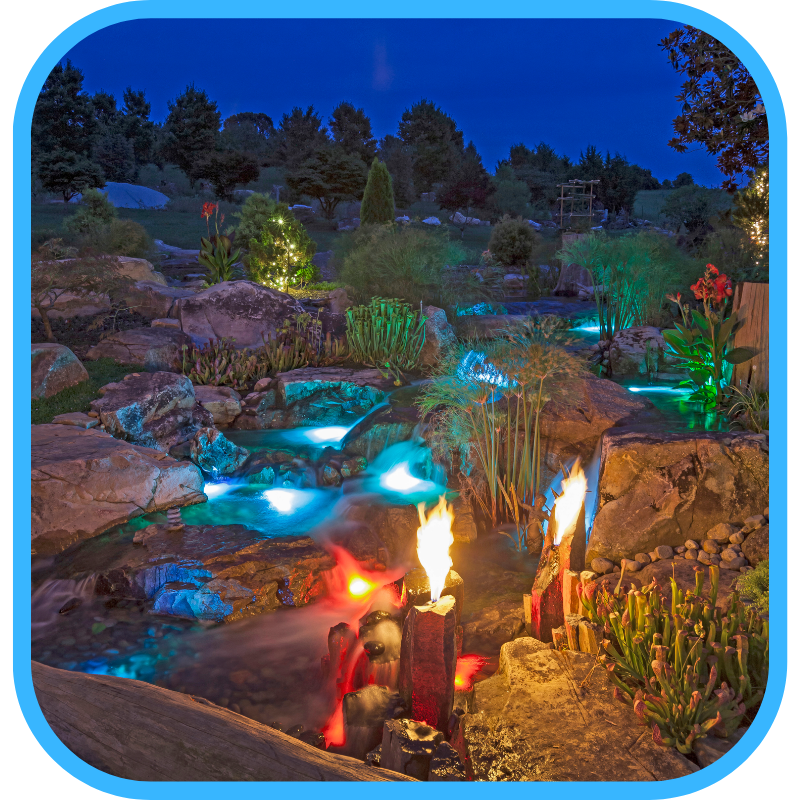
I wrote a whole blog on the true cost of owning a water feature so you can understand not only what it costs to build, but what you might incur down the road.
I don't want to scare you away from a water feature.
I simply think all surprises should be good surprises!
There are a hundred other things you can think about, and I can't fit them all into this blog…
What size filter do I need based on the size of my pond?
How many aquatic plants should I have?
What are the best kinds of aquatic plants?
Should I use a skimmer or an intake bay?
Should I use a biofalls or a wetland filter?
Everybody's got a million questions.
And the truth is — I'm here for you guys.
I'll get around to answering all of those questions in future blogs.
My goal is to educate and inspire people about ponds, fountains, and waterfalls.
I appreciate you spending a little time with me and learning a little more about water features.
Keep digging into our Learning Center, our website, and our YouTube channel.
I'll continue creating content to educate and inspire the world about water features.
John G. out.
Ready to Build Your Ecosystem Pond?
We're here. Our content is here. And it all comes from a place of love.
If there's anything at all we can do for you, don't hesitate to reach out. Fill out our contact form and let's have a no-pressure conversation. We're more than happy to help get you pointed in the right direction — whatever that looks like for you.
Contact Us