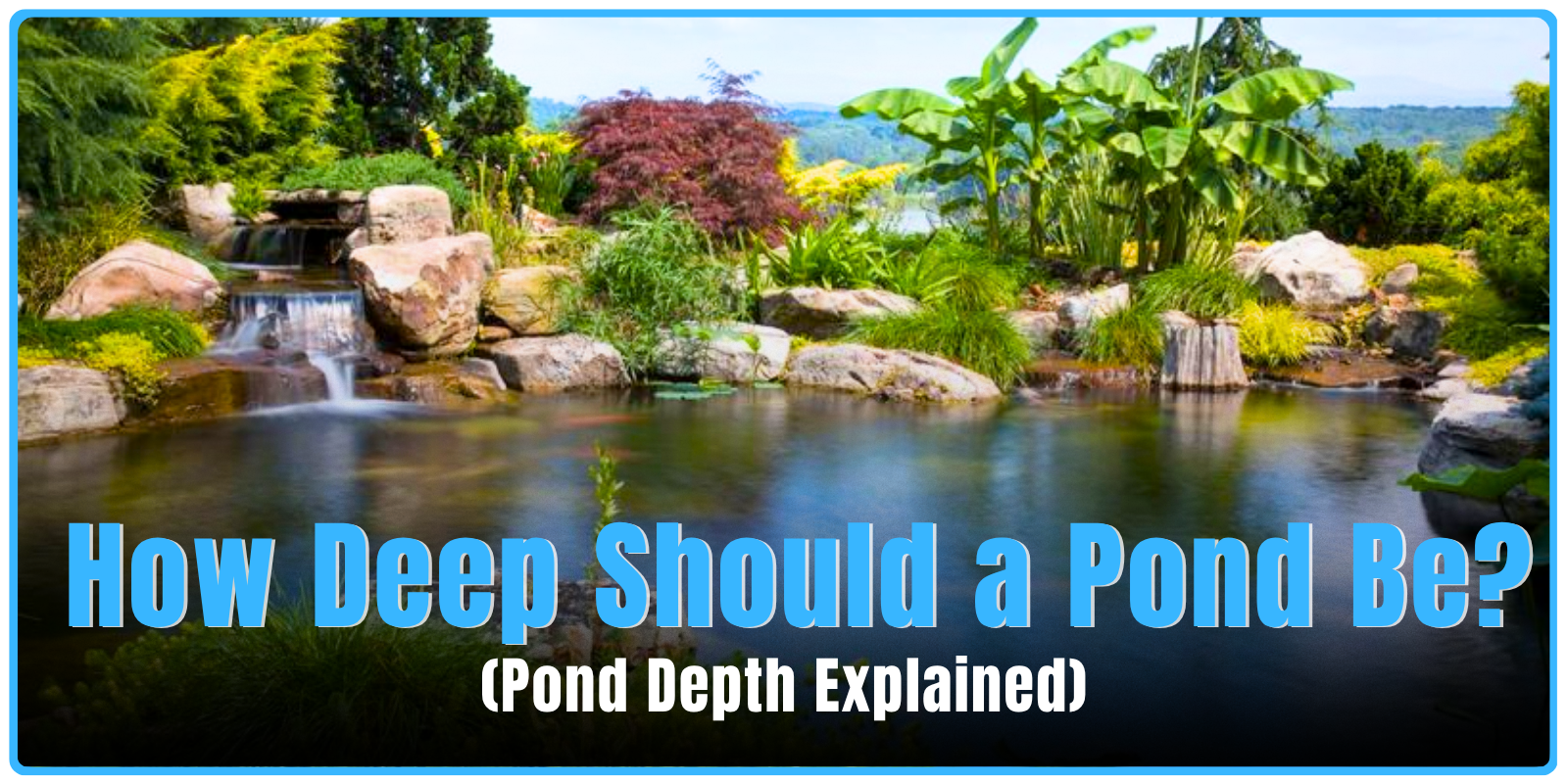
How deep does my pond need to be to function correctly?
People chase the "perfect" answer to this question all the time, but the truth is there isn't one.
As an industry standard, we like to say that an in-ground pond needs to be at least two feet deep. That's our minimum as professionals.
Is it a rule? No, it's not a rule. I've seen plenty of homeowners dig ponds shallower than that. I just don't consider that to be a professional installation.
Now, that being said, I always appreciate deeper ponds, but from a professional standpoint, twice as deep costs twice as much, and rocks get bigger. Everything when you dig a big pond gets exponentially bigger when you're building an ecosystem pond and making it look artistically appropriate.
If you're doing a gunite pond or an exposed liner pond, you're having a different conversation because I see a lot of those that go straight down deeper.
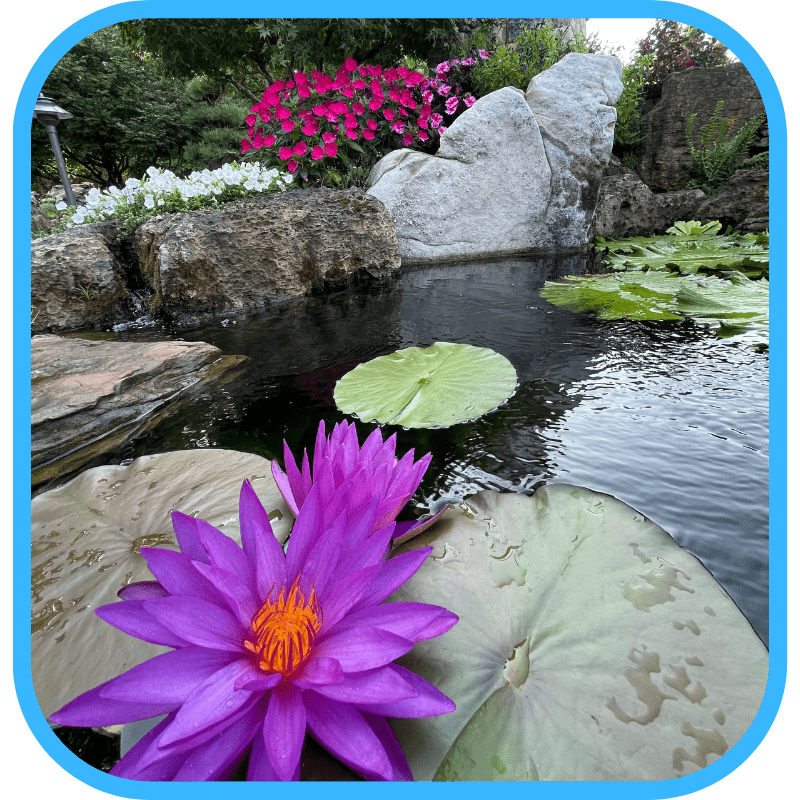
But my immediate answer is two feet deep is a minimum. You can build a beautiful pond two feet deep and have all of the components that you can have in a deeper pond.
You can have water lilies, you can have lotus, and just about any aquatic plants you want to have in a two-foot deep ecosystem pond. I have seen them built that way all over North America at that depth, and it works just fine.
Quick Overview: How Deep Should a Pond Be?
For most ecosystem ponds, depth depends on several factors:
- 2 feet deep – the minimum depth most professionals recommend
- 3–4 feet deep – provides more stable temperatures and more room for fish
- 4+ feet deep – better protection from predators and ideal for larger koi
Depth also affects:
- winter performance
- fish safety
- construction cost
- predator protection
- overall ecosystem stability
If you remember nothing else: two feet deep is the professional minimum for most ecosystem ponds, but deeper ponds create more stable water conditions and give fish more room to thrive.
Jump to a Section
The deeper the pond, the more stable the environment becomes — but deeper ponds also cost more to build.
How deep does my pond need to be to avoid freezing solid?
Okay, guys, here's the real-world story. I hear people talking about this all the time.
We're not talking about why fish die during cold weather, this does happen for sure. But it's not because the pond freezes solid!
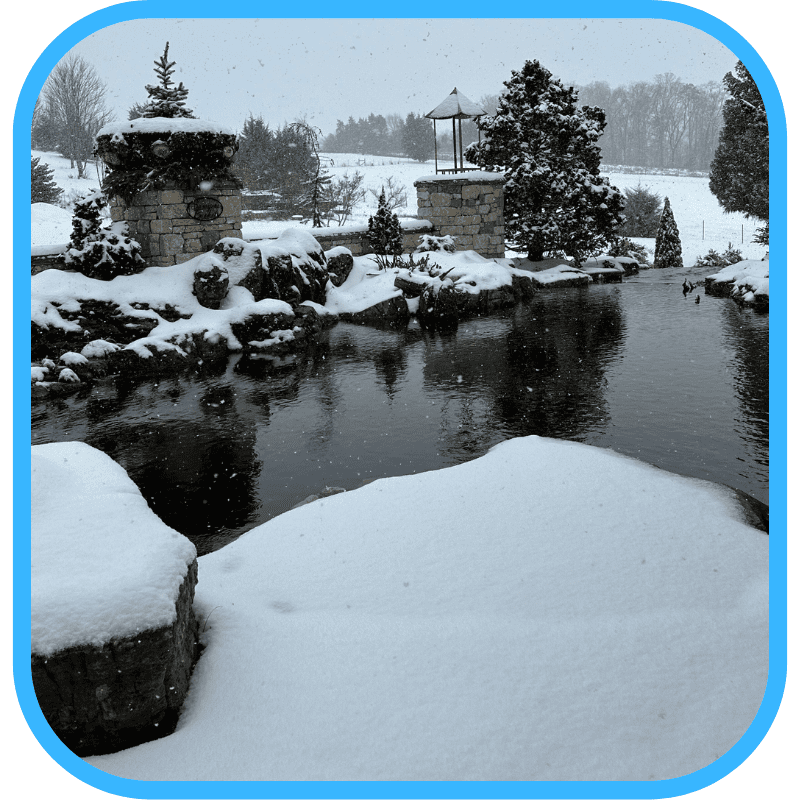
A two-foot deep pond will only freeze to a certain depth. There's this thing called geothermal heat that comes from the earth. It radiates upward into the bottom of your pond.
As the ice forms on top, it creates an insulating layer. At some point, that insulation prevents the pond from freezing any deeper. It's not going to freeze all the way to the bottom.
Now, I am talking about an in-ground pond, not an above-ground pond.
A two-foot deep pond will freeze to a certain thickness of ice, with water remaining at the bottom.
A three-foot deep pond will get thicker ice, but it will still only freeze to a certain point. The same thing happens with four feet, five feet, and so on.
I know hundreds of people who build ponds for a living around the world, and I have never heard a single one of them say they had a pond freeze solid all the way to the bottom, and that's all I've got to say about that 😉
What Kills My Fish in the Winter?
Since I touched on it in the last section, we'll go ahead and talk a little bit about it right now. Unfortunately, many people lose fish in the winter or early spring time.
It's not the ice, typically, that kills fish. The losses are typically a result of the rapid swings in temperature during the seasons when they're transitioning from warm to cold or from cold to warm.
I'm going to write a whole other article about this, but understand that the bigger the body of water, the greater the thermal mass, which is its ability to hold heat. The bigger the pond is, the slower the temperature changes occur. The smaller the pond is, the faster those temperature changes occur.
This can be compounded by features with waterfalls or aeration installed in them because the system is actually pumping the water through the outside air or vice versa, which can potentially super cool or super heat the water even faster.
Fish that are cold have a depressed immune system. They're in this state of cryostasis, if you will. What happens is the bad pathogens in the pond wake up before the immune system of the fish gets into full swing. So you have this period when the fish is vulnerable and the bad stuff is happening.
Then you also have the potential of massive ice storms or polar vortexes. Here in East Tennessee, we might have a day where it's 75 degrees, and then four days later it's 20 degrees. These fast temperature swings, especially when they happen rapidly, are very hard on fish.
Water temperatures rise rapidly and then drop rapidly. This puts the fish into a state of duress, at which point they are even more susceptible to the things we talked about earlier. This stress typically opens the door for bad pathogens to go rampant and fish end up dying, not from the cold and ice, but from the bacterial issues that result.
How deep does my pond need to be in order for my fish to be safe from predators?
Not all ponds are created equal, that's for sure. I'm still sticking to my two-foot rule, but it's very easy to design a pond that looks a lot like a buffet to a blue heron.
There's a lot of training that goes on in the water feature world where they teach you to make a shallow shelf all the way around the pond. This is all about production. If you dig a 12-inch deep shelf and then squeeze in a little bit and dig another 12-inch deep shelf, you end up with a two-foot deep pond.
This makes construction very simple. If you dig the whole pond two feet deep, you have much more excavation to do. It's also more challenging to stack the stones around the side in a structural and attractive fashion.
So the industry has taught pond builders and pond owners to dig the shelves shallower. You can use smaller stones to stack the shelves and cover the flat areas with gravel. And the reality is, they're right. It's much easier and faster to build a pond that way. It takes less work, it takes less gravel, it holds less water.
It's also much easier for predators.
That being said, there are several things we like to do, if budget allows or time allows, especially if you're digging your own pond, in order to help keep your fish safe from predators.
At the end of the day, there are raccoons, herons, bears, and so many other things that like to eat fish. The real benefit is protecting your fish from the outside and not letting predators get to the pond in the first place.
But from a construction standpoint, you can build a fish cave where your fish have somewhere to go and hide.
Here's the reality. If a heron gets to stand in your pond for an hour, he's got nothing better to do. If there's a place for him to stand, he's going to stand there and fish all day long. He's never going to leave. Sooner or later your fish are going to forget about him, come out, and his job is to eat fish. That's what he does.
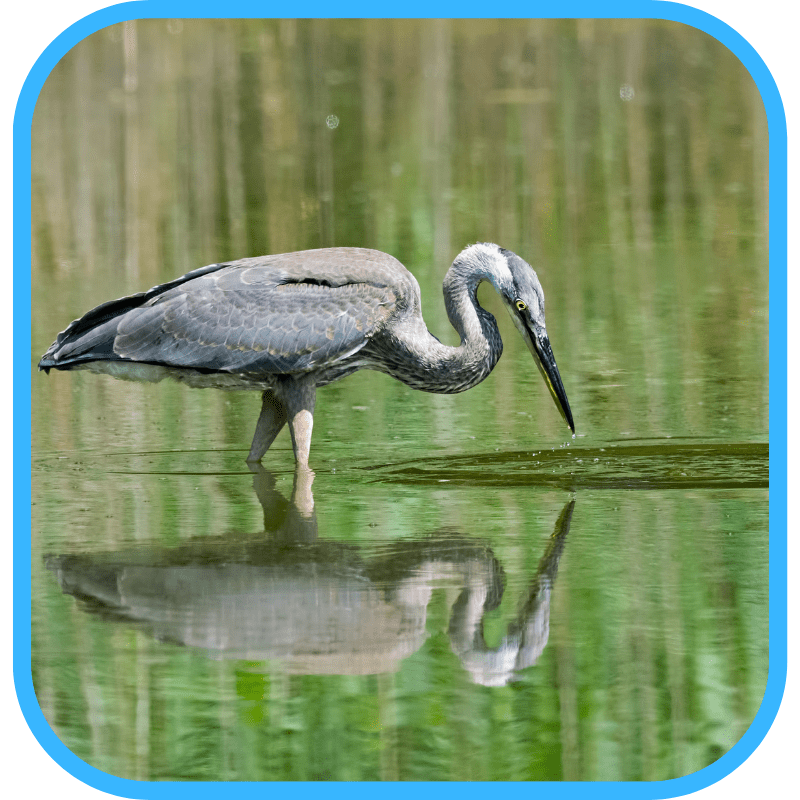
I've had plenty of herons try to eat fish that were as big as he was. At the end of the day, he spears a fish, effectively killing my koi, and still can't eat it. Their job in nature is to eat fish.
So I'll say one thing: only the smart fish survive.
As a pond owner, you have to do your due diligence to make sure predators can't easily get into your pond. And you also have to accept the fact that just about everything on the planet that eats meat likes to eat fish.
So there are a few things you can do.
Vertical edges on the pond are one. Don't create the perfect shallow shelf where herons can stand. If all your water is shallow, your fish don't stand a chance. The herons will walk right in and your fish have nowhere to go.
Create large fish caves so that in the wintertime your fish can actually go down and hibernate in the cave where they are safe and protected. There's nothing happier than a safe, protected koi.
The reality is this isn't really based on depth. Obviously if the pond is too deep for a heron to stand in, that's great. If you can afford to build your pond four feet deep, do it.
But even then, if your fish are well trained, anytime they see movement they may come swimming up looking for food. We're teaching the fish to act like dogs, and sometimes that works against them.
There are also plenty of predators where depth makes no difference at all. I've had people deal with minks. Depth doesn't matter. Otters? Depth doesn't matter. Bears? Depth definitely doesn't matter.
Raccoons can sit on the side of the pond and splash their little paws in the water. If your fish are trained to come when something hits the water and a raccoon does it, well… sorry about your fish.
So all of this really comes down to understanding that you can do all the right things, but your best animal husbandry is creating a situation where herons don't want to land in your yard and raccoons aren't hanging around your pond.
With bears, you're kind of on your own.
Make the pond big enough that the fish can swim down and hide in a fish cave. Build accordingly to the predators in your area.
And at the end of the day, you have to have space in your heart to understand that this is what happens in nature. We're trying to recreate nature on our own terms.
There are construction methods that help protect your fish, but at the end of the day it's not a perfect science.
What Construction Factors Affect Pond Depth?
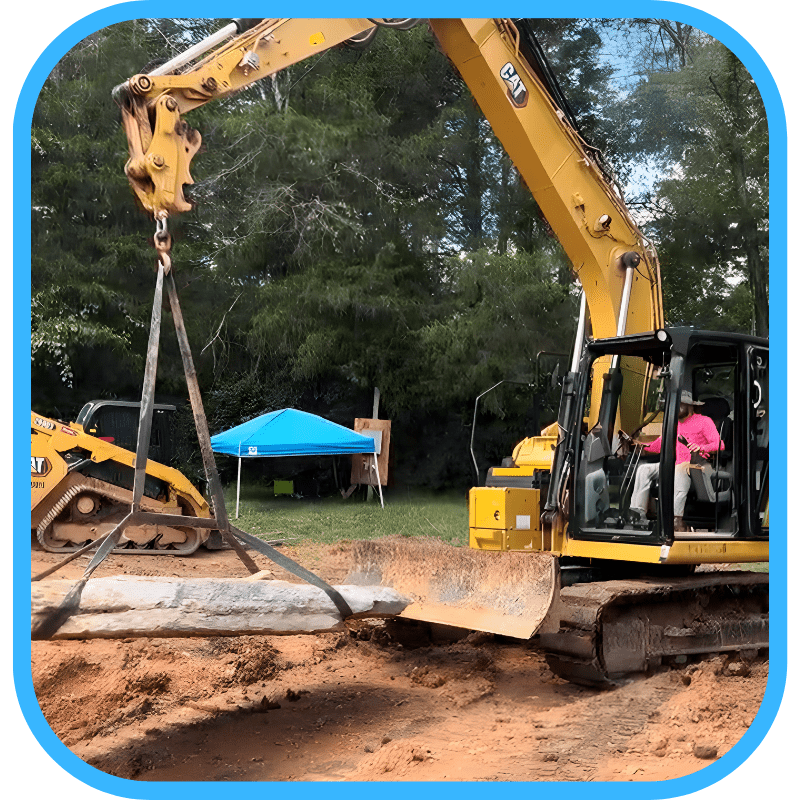
The reality here is that there's a frost line. If you live in a place that has massive frost heave, make sure you're building with a methodology that can stand up to that situation.
The other thing to consider is the type of pond you're building and how deep it needs to be in relation to the plumbing and construction methods you're using.
For example, if you have a pond that's running with bottom drains and you've got plumbing in the ground, you need to make sure you're getting below the frost line.
In an ecosystem pond in a freezing climate, you also have the capacity to drain water out of your filters and your lines. No matter what kind of pond you're building, you need to be intentional about your construction methodology and have a clear plan for what needs to be winterized during that season.
You should also have a strategy for how you're going to keep the ecosystem operating in a happy, healthy fashion throughout the winter.
That's really all I have to say about that.
Personally, I've never had frost heave push a water feature out of the ground. When you're working with a flexible liner and individual stones, if the ground moves a little bit, it's okay. It's not going to tear things apart.
It's not like putting in a concrete creation where a little bit of frost heave can cause something to crack and break.
That's one of the real beauties of a flexible liner pond.
How deep does my pond need to be for koi?
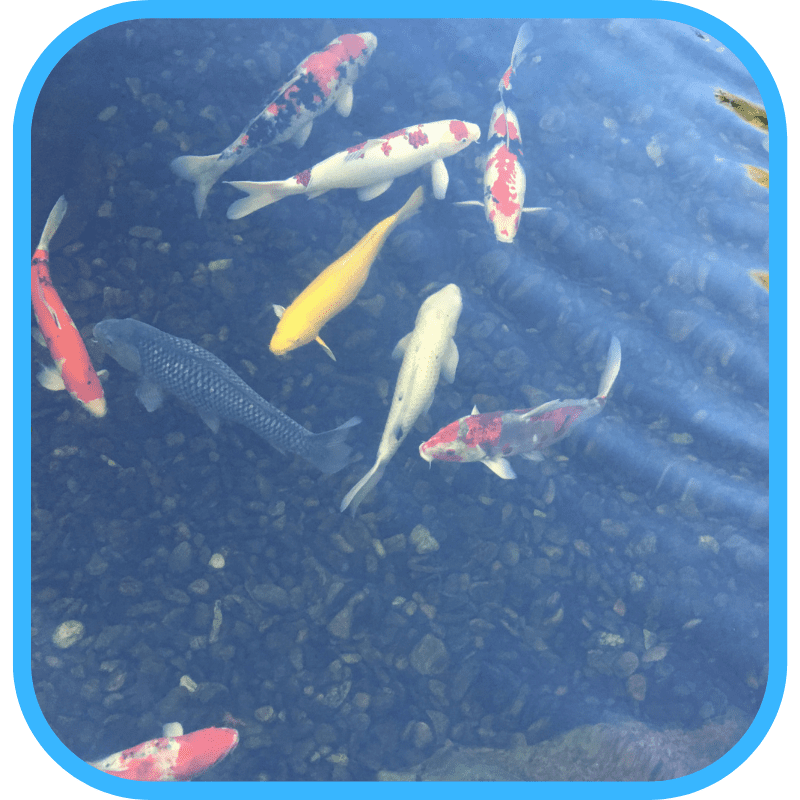
I have a two-foot rule here, but I'm going to stray from it a little bit. Two feet deep is my minimum, of course, but deeper is always better.
My pond is an ecosystem swim pond. My water is over six feet deep. One of the things I watch in my pond is that my koi love to feed vertically.
I've heard people say that koi only grow according to their environment. Everybody has an opinion about this stuff. I've seen people have a lot of koi in a small pond and they don't grow very big. I've also seen people have koi in a small pond, feed their fish a lot, and they got way too big.
I've even seen a fish with scoliosis from being in a six-foot round pond and the fish is almost three feet long. It seems cruel to me, but I also understand being in love with your pet. Sooner or later it grows bigger, and you don't have the money to build a bigger pond. Times are tough…
The reality is that it was all done from a place of love and good intentions in the beginning, and it just sort of gets out of hand.
The short version of a long story is that you can have a few koi in a two-foot deep pond, and they can grow to a pretty good size. I've heard Japanese breeders say that a thousand gallons per koi is the bare minimum.
I've also seen people with a 1,500-gallon pond and 10 koi in it, and the koi are happy. They're just smaller. That's the reality of it. I often ask people, "How many kids can you keep in a closet"? And they just give me a weird look, and I'm like, "Well, you can just pack them in there. Does that make it right"? It's a little brutal, but it gets the point across. In my opinion, they're living animals and they should be kept in a habitat that's appropriate for them to be happy in.
So what you feel comfortable with, that decision is really up to you.
There are also other varieties of fish that can be utilized in a smaller pond. You can have all types of goldfish, shubunkins, and a lot of other varieties that may be sized more appropriately for a small water feature.
Having a koi that you love, watching it grow to the point where it's too big for your pond, and then deciding whether you need to give the fish away or build a bigger pond — that's not really a position you want to be in.
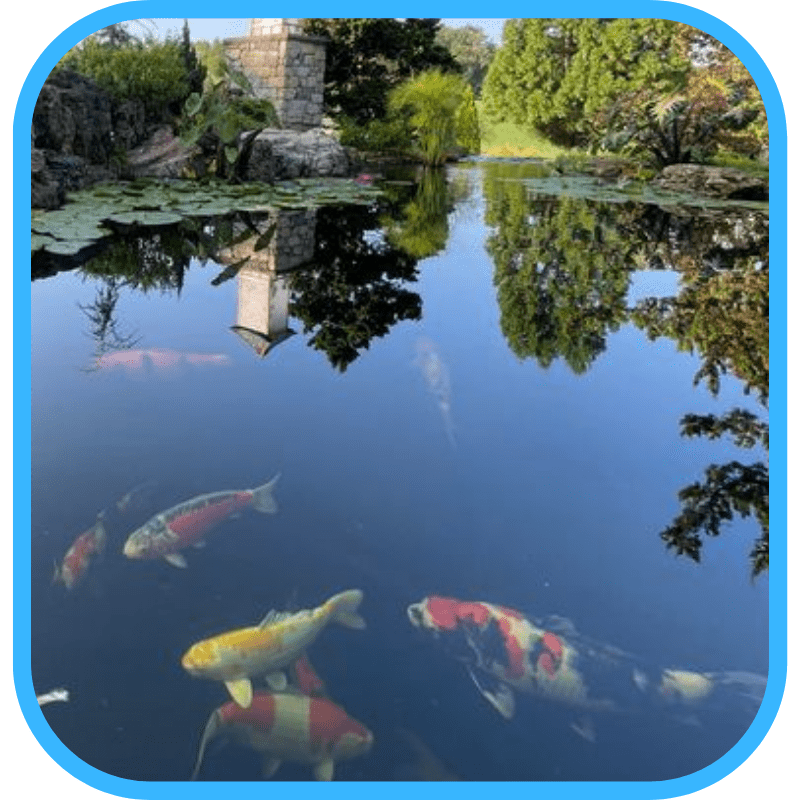
The truth is, koi like to swim. They like to feed vertically, straight up and down. It's one of the coolest things to watch. But if your pond is two feet deep, that's about as big as your fish can get. I feed my fish a lot, and I've got several fish that are more than three feet long.
So now you have all the information. What feels morally right to you, and how you decide to move forward from here, is completely on your shoulders.
So, How Deep is Deep Enough?

My recap on how deep is deep enough is pretty simple. The true answer is: as deep as you can afford to build your pond.
I would never tell someone not to build a pond, because pond ownership is one of the most amazing experiences. It truly creates a place where people connect. They connect with each other, they connect with themselves, and they connect with nature.
And the truth is, any pond is better than no pond.
So at the end of this whole article, all I can say is plan well. Make your pond as deep as you can while still creating a successful feature that works the way it's intended to work, and enjoy the experience!
Pick the appropriate fish, and if you need any help, you can always reach out to us here at Modern Design or whoever your local experts are and get the information you need in order to end up with the water feature of your dreams.
John G. out.
Frequently Asked Questions About Pond Depth
How deep should a pond be at minimum?
Will a pond freeze solid in winter?
Does a deeper pond protect fish from predators?
How deep should a pond be for koi?
Is deeper always better when building a pond?
Start a Conversation
No pressure. No used car salesman tactics. Just an honest conversation to see if we're a good fit and to help you end up with the water feature of your dreams.
Contact Us— John G. Adams