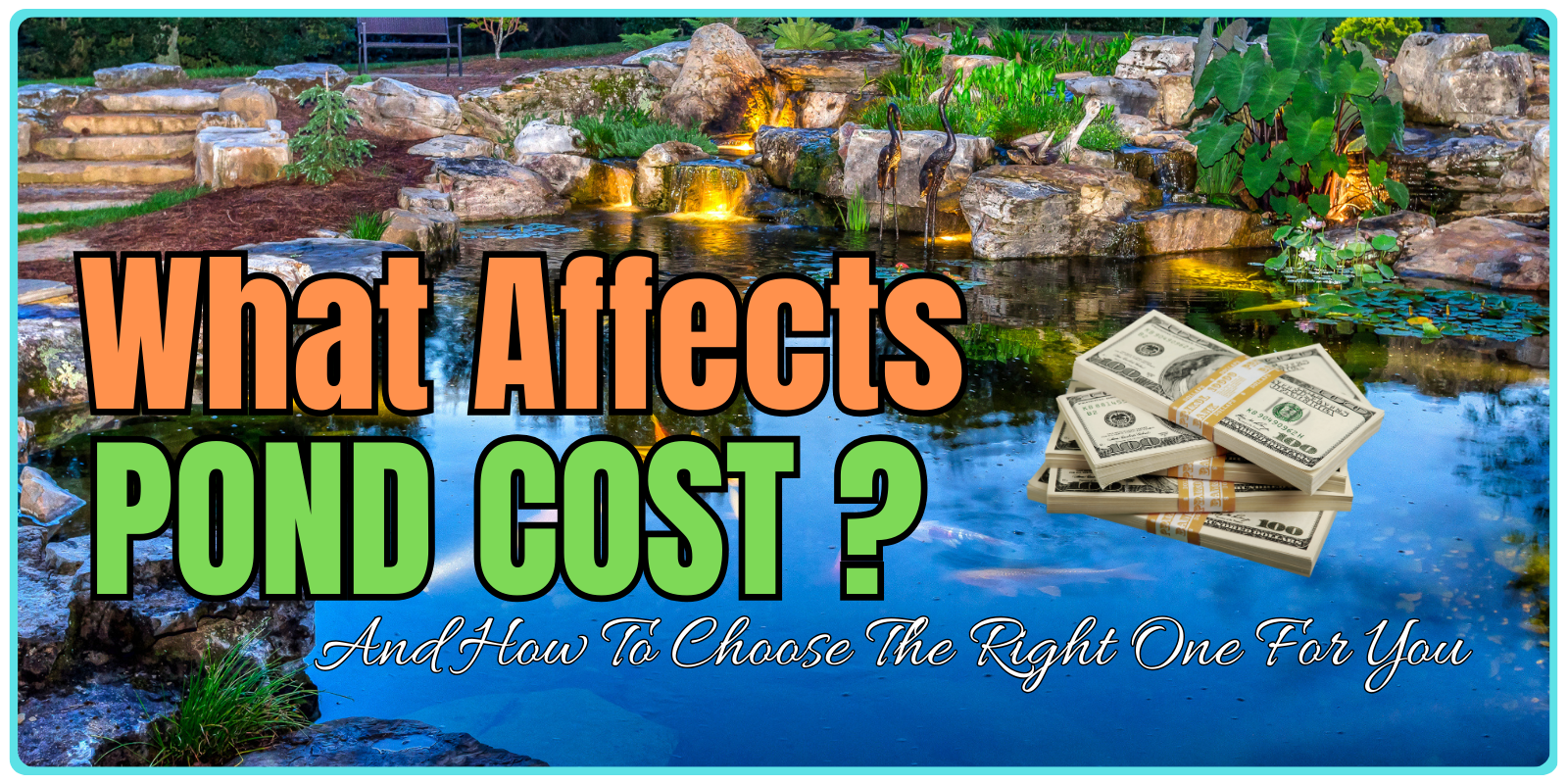
Trying to figure out what kind of pond to put in your yard and not sure how much it's gonna cost? It doesn't matter what type of pond you're thinking about, this guide lays it all out there. You'll learn what affects pond pricing, why costs vary so much, what most companies don't tell you, and how to choose the right pond for your lifestyle and budget. Real stories, real information, and transparent advice from a pond guy with 25 years of in-the-field experience!
Table of Contents
- How Much Does A Pond Cost?
- What Drives the Cost of a Pond Up?
- What Drives the Cost of a Pond Down?
- What Are the Hidden Costs Most People Don't Think About?
- Why Are Some Pond Builders So Expensive?
- Materials, Methods, and Cutting Corners
- Where Does Modern Design's Pricing Fall?
- Are There Different Pond Packages or Styles?
- Do You Offer Financing?
- Can I See Actual Projects & Current Prices?
- What Is the Lifetime Cost vs. the Initial Price?
- Common Pond Pricing Questions
- Frequently Asked Questions
- Is Building a Pond Really Worth It?
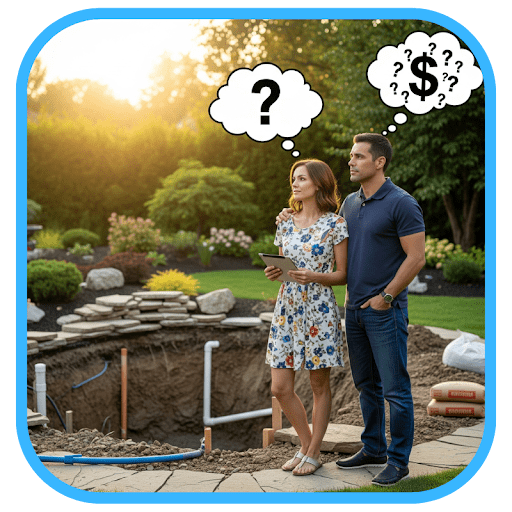
Have you ever wondered why you can get two bids for a pond project—one for $25,000 and another for $60,000?
What I've found is that most people have no idea what actually drives pond pricing. And really—it's not their fault. There's barely any transparent info online that breaks this down in plain English. You try to ask around, and all you get is: “Well… it depends.”
Yeah. Thanks for nothing.
The fact that you're even asking this question now before signing a contract you barely understand—means you're already ahead of the game. Pond pricing isn't just about money. It's about avoiding mistakes. It's about protecting your dream.
That's what this article is about.
Since around 2000, my team & I have designed, built, & renovated hundreds of ponds—from small backyard goldfish setups to massive koi ponds with full-on swimming zones and features big enough to drop a kayak in. I've seen the magic that happens when we bring a dream to life. And I've also seen the heartbreak of folks who spent their entire dream budget… and didn't get what they were dreaming of.
This article exists to help you avoid that scenario.
We're going to walk through real cost factors that impact pond pricing—like pond size and depth, boulder selection, filtration systems, equipment access, drainage issues, even HOA restrictions. I'll show you where you can trim costs without cutting corners—and where cutting too deep can cost you more in the long run.
Sometimes it's smarter to do a high level of detail in a small space than to stretch your budget across your whole backyard. That kind of strategy makes the difference between a pond that fades into the background and one that becomes the centerpiece of your home.
By the time you're done reading, you'll have a practical understanding of what affects pond cost, what drives that number up or down, and what kind of water feature fits your budget and your lifestyle.
Because building a pond should be an educated decision.
It should be comfortable. Enjoyable. Honest.
It should feel like you're building something that will bring your family together and give you a magical place to connect for years to come.
And it should never feel like a mystery.
Now, look—I'm aware that by writing this, I'm putting Modern Design Aquascaping in a position of authority. And yeah, of course I'd love for you to hire us.
But that's not what this is.
This isn't about selling you on Modern Design. The truth is, we're not the right fit for everybody. That's okay.
This is about giving you the real information. Sharing everything I've got between my ears, so you can make the best possible decision for you and your family. My goal is simple:
I want you to end up with the water feature of your dreams!
And that starts right here—with clarity, honesty, and zero pressure. So that all your surprises… are good ones.
This article is part of our full pricing series on water features, including:
If you aren't sure which water feature is right for you, it might make sense to start with this video:
How Much Does A Pond Cost?
I am adding this section in (at the end of my writing) to give you a straight answer at the beginning of the read! HOW MUCH? I have seen pond packages built out by my friends / competitors to meet price points as low as $8,500.00 installed. Companies like Easton Outdoors and Pond Country have done an amazing job building out business models that thrive on a package-style plan and we will talk about those more in a while. At Modern Design, $20,000 is more of a starting point. We have also built ponds that cost MILLIONS! There is truly not a top end for what you can spend and we are still waiting for a client that will give us the “financial freedom” to dream unlimited! Until then, we happily design one feature at a time meeting each client where they are. We are always available to have an easy-going, open & honest conversation about your needs. Now, on with the rest of the story, and please don't stop here. Even if we are not the “right fit” for your pond project, there is a pot of gold in this article that will help you land in the perfect pond for you!
AND if you aren't sure EXACTLY “What is an ecosystem Pond”? Here's a quick video 😉
What Drives the Cost of a Pond Up?
If you're serious about getting a pond, one of the smartest things you can do is understand what actually drives your number up. Because here's the truth most contractors won't tell you: it's not just about the size of the pond. The difference between a $15,000 pond and a $60,000 pond usually has way more to do with complexity, finish quality, and what kind of lifestyle you're building around it.
Let me break down the biggest factors we see that raise the price on pond builds—so you know what to expect on the front end, and it's not a surprise.
1. Pond Size and Pond Depth
This might sound like a no-brainer, but it's real. The deeper and wider your pond gets, the more everything goes up—stone, liner, plumbing, lights, filtration, labor, and equipment. And that's not even getting into all the extra layers that come with larger ecosystem builds. Bigger ponds need bigger filters on both the biological and mechanical end. They need jets. They take more lights. The boulders have to be bigger to stay in proportion. And the artistry has to scale with it. So yes—the cost goes up, and it goes up fast.
2. Rock Size, Weight, and Style
If you want those gorgeous massive boulders that look like nature sculpted them just for your backyard, it's gonna cost you. The bigger your boulders are, the more expensive everything becomes—trucking, shipping, equipment to move them, time to place them, materials to protect your liner, and the artistry to make it all look like it grew there.
Let me give you an example. I've got friends who build an 8x11 pond for $8,000–$10,000. It's fast, efficient, and budget-conscious. We've built that same 8x11 pond for over $30,000—and the difference is everything. The size of the boulders, the way they're stacked, the attention to detail, the finish work… it's immaculate. That's not a sales pitch. That's just real.
3. Filtration Systems
You can go basic. For us, basic is a biofalls and a skimmer—and even that has multiple levels. You can build an ecosystem pond with those two components, or you can take it up a notch and add a wetland filter and an intake bay.
Some filters are lower maintenance. Some are higher. Some look more natural. Some don't. But they all perform differently, and they all cost differently. The truth is: filtration is everything when it comes to your pond's performance and your long-term happiness. And no, all filters are not created equal.
4. Access and Site Conditions
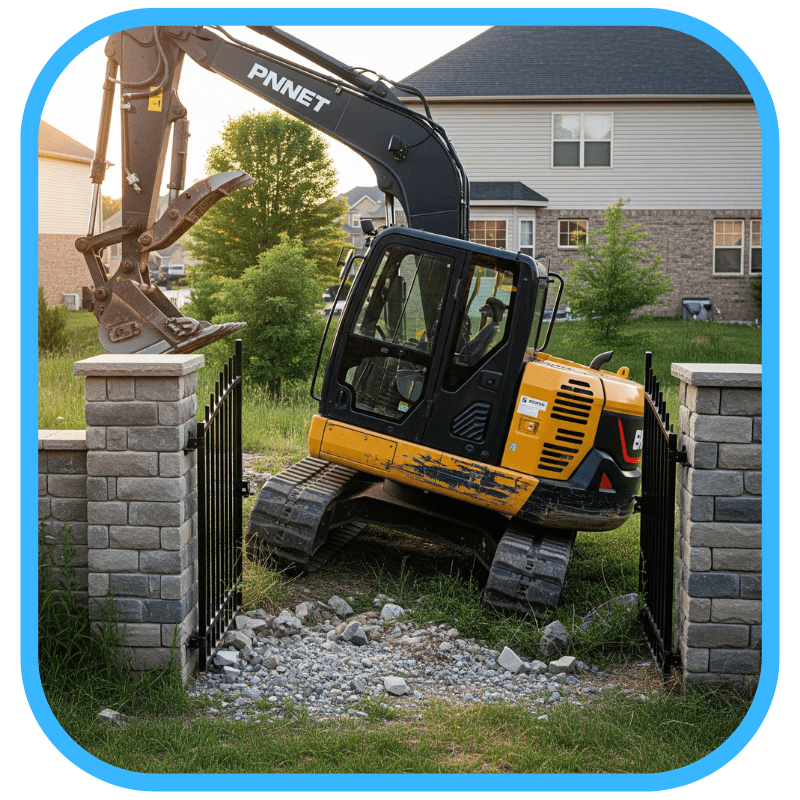
If we can't get a machine into your backyard, your pond just got more expensive. Simple as that. Hand-carrying 10,000 pounds of boulders takes a whole lot more time and labor than rolling it in with a skid steer. Slopes, tight gates, long carry distances, and tricky access can sometimes double the labor cost. You want to drive the price up? Just make sure we can't get our equipment to the build site.
5. Add-Ons, Upgrades, and All the Bells and Whistles
Think of your pond like a car. You go to the dealership and look at the base model, then look at the same car with every option on it. It's almost double the price. Ponds are the same way.
Want to add lights? Fish caves? A negative edge waterfall? Intake bays? Wetland filters? Accent boulders, rock outcroppings, aquatic plantings, carnivorous plantings, koi from Japan?
The list goes on. And then you step outside the pond itself. You start thinking of it as the hub of a wheel, and all the spokes around it—garden paths, surrounding landscaping, lighting, pergolas, sitting areas, outdoor kitchens. The outdoor living world is limitless. And it all costs money.
6. Project Location and Permitting
Some locations come with headaches. HOAs, permitting requirements, engineering approvals—you name it. In California you'll likely need to hire an engineer and a lawyer. It's not fun, but it's part of the process. Depending on where you live, you might have to jump through some expensive hoops.
7. Your Taste
Let's hope you don't have champagne taste and a beer budget.
But seriously—your preferences matter. If you want a pond that looks like it dropped out of the Smoky Mountains, with boulders that aren't all beat to hell from excavators, you're not looking for basic. You're building a legacy piece. And that kind of artistry comes with a price tag.
Not everyone can deliver that level of detail. That kind of artistry takes time, care, and experience. And it costs more. You've got to decide if you want “pretty good” or “once-in-a-lifetime.”
The key takeaway? You're not just buying a hole in the ground with water in it. One of my favorite lines is: “It sounds easy if you say it fast.” But really—this is about building a space that changes the way you spend time with the people you love. The more magical it becomes, the more expensive it gets. The better the artists are, the higher the price will be.
What Drives the Cost of a Pond Down?
You want to build a great pond without sending the price through the stratosphere? You're not alone. I talk to a lot of people who are trying to stretch their budget but still get something beautiful, peaceful, and low maintenance. The key? Trim the fat without cutting corners.
Here are the most effective ways to keep your pond cost under control without ending up with something you'll regret:
1. Don't Oversize the Pond Beyond What a BioFalls Can Handle
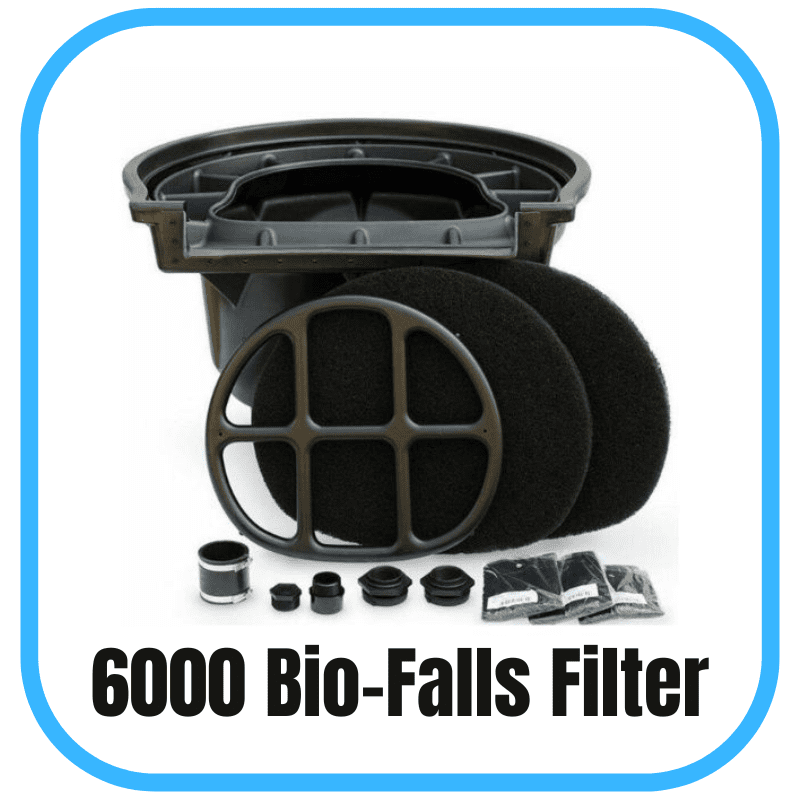
This one's simple. A large Aquascape BioFalls (biological filter) can handle around 6,000 gallons of water. So if you want to keep the filtration simple and effective without upgrading to complex systems, don't build a pond that pushes beyond that capacity. Want to know how big a 6,000-gallon pond is? Just ask Google 😉 P.S. ALL filter manufacturers have their “version” of this filter!
2. Keep It Two Feet Deep (and Avoid Overbuilt Walls)
Vertical pond walls are complicated. They take more time, more material, and more skill to make them both stable and beautiful. But if you build your pond with shelves and keep it around two feet deep, you'll save money on labor and materials—and still have a gorgeous, functional water feature.
3. Subtle Waterfalls and Short Streams
Big waterfalls and long winding streams look awesome—but they cost a lot. Taller falls mean more boulders, more liner, more pump, and more labor. If you want the sound of water without the huge price tag, go with something simple and elegant. A couple of short drops with good water flow can create just as much beauty and ambiance.
4. Skip the Advanced Filtration
You don't need an intake bay, wetland filter, or some ultra-advanced skimming setup to have a good pond. Stick with the proven combo: a skimmer and a biofalls. It works, it's time-tested, and it keeps your install simple and your maintenance manageable.
5. Stick to Basic Boulder Sizes and Minimal Curves
You don't need 3,000-pound specimen boulders to build a beautiful pond. Medium-sized boulders that are machine-placed efficiently can still give you a great natural look. Keep your shape simple and avoid a bunch of tight radius curves—those take more labor and material to make look right.
6. Build in an Easy Location
The less hassle on site, the less it costs to build. Pick a spot that's close to utilities and doesn't have access problems. When possible, choose a build site where we can get machines in and out without tearing up your whole property.
7. Place the Pond Close to Your Living Space
If you put your pond way out in the middle of your yard, you're going to have to create a whole outdoor space to make it usable—patios, walkways, pergolas, seating, lighting, gardens… it adds up quickly. Build your pond close to your home or deck, and you'll naturally use and enjoy it more without needing all the extras right away.
8. Maximize Size, Minimize Extras
If you want the biggest visual impact for the least amount of money, here's my advice: build the biggest, most basic pond you can afford, and leave all the bells and whistles off for now. You can always add the extras later. That gives you the wow-factor of water, fish, and boulders now—and time to grow the dream later.
What Are the Hidden Costs Most People Don't Think About?
Man, this really depends on the scope of your project. But let me give it to you straight—there are always a few curveballs most people don't see coming until they're in the middle of the build. These aren't “gotchas,” they're just the realities of outdoor construction.
Irrigation Disasters (And Repairs)
If you've got irrigation in your yard, odds are the first scoop from the excavator is going to rip part of it out. It's not if—it's when. And it's not just about repairs. When you add a pond, you're also going to add a garden around it to naturalize the space, and that garden often needs its own irrigation zone anyway. So either way, you're calling the irrigation guy.
Lawn Damage, Fences, and Clean-Up
You're moving literal tons of rock, gravel, and material through your yard. If you've got grass, expect damage. If you've got fences, they might need to come down temporarily—and odds are your Pond team is not going to be your irrigation team as well. You'll potentially need other pros to rebuild fences, re-sod lawns, or pressure wash a messy driveway if you want it sparkling afterward. I would expect that your Pond contractor would clean up after themselves but most of the time they won't do things like pressure wash your entire driveway as part of the cleanup process. Think of it like this: you're going to break some eggs to make this omelet. I can't speak for other companies, but here at Modern Design, we aim to help our clients get the experience that's right for them. Sometimes we contract other professionals and handle it for them and sometimes they opt to do it themselves. Communication is the key! Either way the goal here is that it's not a surprise and you have a plan!
Electrical & Power Supply
If you don't have power near your water feature location, you're going to need an electrician. That could be simple, or it could be a project depending on your site and local codes. Running gas for a fire feature? Same deal—cost varies wildly depending on your setup and fuel source.
Drainage & Runoff Surprises
A lot of people think a low spot in the yard is the perfect place for a pond. It's not. Unless you're building a retention pond (and that's a different animal), you don't want runoff dumping into your ecosystem. You might need to reroute water or add an underliner drainage system. That's not free, and most people don't think about it until it's a problem.
Concrete, Access & Heavy Equipment
Sometimes we have to cross sidewalks or driveways, and yes—those can crack or break. You might need matting for equipment or manual hauling, which increases labor time. And if we're talking hundreds of tons of material? Your lawn may need to be replaced entirely when it's done.
Regional Pricing Differences
Let's be real—everything costs more in California, and everything's bigger (and heavier) in Texas. Materials, labor, permits… they all vary by region. Some states require specific fencing, pond depth limits, or setback rules that can impact design and cost.
Underground Surprises

We've got a clause in our contracts for “unforeseen objects below ground”—and for good reason. Old stumps, massive boulders, nasty fill dirt, unmarked gas lines… these can all derail a plan fast. If you know something is buried there, say it. Otherwise, expect added time and equipment costs if we hit a surprise.
Oh—and before you design anything? Call your local “Call Before You Dig” service. Have your utilities marked. The last thing you want is to fall in love with a layout that ends up being unbuildable because of a power line or water main.
Why Are Some Pond Builders So Expensive?
Let's just say what nobody else wants to say out loud:
Some pond builders are expensive on purpose.
And there's a reason for that.
Some companies set out to build ponds that are as affordable as possible. It's part of their strategy. They pre-design water features with simplified shapes, shelf layouts, and construction details that allow them to get the job done quickly—ideally within a fixed number of days—so they can keep overhead low and hit a specific daily profit target. There's nothing inherently wrong with that approach. It's just a business model.
Here's how that looks behind the scenes:
- They might build only half the pond with shelves to save time on excavation.
- They might cut pond depth from 24” to 21”—because it shaves off just enough digging.
- They might spec out a cheaper skimmer, even if it's harder to maintain or doesn't have overflow, because they save $200.
- They might buy pumps in bulk and save $150 per unit—whether that pump is best for you or not.
That's McDonald's thinking: make it fast, make it consistent, make it affordable.
And for some people? That's exactly what they're looking for.
But that's not how every company operates.
A Different Perspective: The Price Reflects the Priorities
Some companies (like us) don't have a goal to be cheap.
They're not trying to be the fastest builders or the lowest bidder. Their mission is to build the best pond they can build—period.
They focus on custom design, aligning with the client's dream, fulfilling non-negotiables, and creating outdoor spaces that are both functional and beautiful. They're not chasing low cost, and they're not racing the clock. They're chasing artistry, longevity, and function.
That shows up in choices like:
- Stronger, thicker underlayment that protects your liner for decades
- Equipment that's easier to maintain—even if it costs more upfront
- Stonework that's balanced, scaled, and artistically placed—not rushed
- Filtration systems that are properly matched to your usage—not overdone or undersized
Yes, these decisions cost more upfront. But that's not a hidden markup. That's one company making the conscious decision to build for artistry and customization… while another company is choosing to optimize for packaged pricing and production speed.
There's No One Right Answer—But You Deserve to Know the Difference
At the end of the day, this isn't about one company being “better” than another. It's just the truth:
One company's mission is to be cost-effective. Another company's mission is to be world-class. And those two goals come with two very different price tags.
You've got to decide which approach is right for you.
But now you know the real reason those price differences exist—and how to spot them before they catch you off guard.
“I would HIGHLY recommend that you use this company. They are not just very knowledgeable but they exceeded my customer service expectations. They took their time to make sure we understood how to care for our pond, even made a video for us to refer back to. When they finished, they even pressure washed the area of my driveway that they had tracked mud on. The job was beautiful and they picked up and cleaned up everything before they left.”
Materials, Methods, and Cutting Corners: What You Can't See in the Price Tag
Here's the part that most people don't know to look for—and most contractors won't bring up.
Some of the biggest differences in pond construction come from things you'll never actually see.
Let's break that down.
Liner Types, Underlayment Weight, and Long-Term Durability
Not all liners are created equal.
There are different thicknesses, different grades, and fish-safe certification is a real thing. All of it affects cost. Some companies use thin liner with no protection, while others use a more robust build approach with thicker underlayment above and below. And at this point, we're not even talking about the process of seaming liners together. The difference between a pretty good seam and a great seam is worth 10's of thousands!
Thick underlayment is also added insurance that comes with a price. You won't know what your team is using if you don't know to ask. And we've seen plenty of ponds over the years where no underlayment was used at all—which becomes a real problem in areas like East Tennessee where termites and fire ants can chew holes through exposed rubber.
Different builders have different methods. Some use higher-end materials, others don't. It's definitely one of those invisible decisions that may never show up unless there's a failure. But if longevity matters to you, these are the kinds of corners you just don't want to cut.
Hand-Selected Boulders vs. Dropship Stone
This one's simple.
One builder might call the rock yard and order four pallets of random basketball-sized stone. Another builder might drive up into the mountains and hand-select every boulder—matching size, color, and shape to the vision for your waterfalls and interaction zones.
Same word: “stone.”
Completely different result.
The second method takes more time. More labor. More skill. But it also creates a natural, artistic, integrated pondscape you'd swear had been there forever.
Circulation Design, Plumbing Size, and Pump Efficiency
Pump selection and plumbing design affect not just the function of your pond—but the monthly operating cost.
Some builders choose pumps based on what's cheapest or what's in stock. But a smart circulation design with properly sized plumbing and a high-efficiency pump might cost more up front—but over the life of your pond, it can save you literally thousands and thousands of dollars in electrical usage and maintenance costs.
And that's not theoretical. That's math.
Structural Stability and Protecting Your Liner
How a pond is built depends heavily on how the rocks are stacked—and that affects everything from safety to longevity.
Rocks must be installed in a way that keeps them stable over time. Construction shortcuts, smaller stones, or careless stacking may not seem like a big deal today, but they can cause major issues down the road. Stability is structure.
And liner protection isn't just about what's underneath. The top six inches of your pond liner are the most vulnerable area. UV rays, fire ants, termites, and sharp edges can all cause damage. That's why quality builders use thick underlayment up the sides—not just underneath—and why they take their time on edge work.
Truth is, you probably won't be able to tell how that edge was built just by looking at the finished project. But the time that goes into the edge work is some of the most important time spent if longevity matters to you.
The Actual Cost of Doing It Twice
I'll be honest: I always hesitate with this section. I don't want to sound like I'm using fear-based marketing. That's not what this is.
But it's the damn truth, and it breaks my heart every time we're hired to tear out a water feature. A sign of someone that I DIDN'T EDUCATE IN TIME!
Fixing a poorly built pond is so much more expensive than doing it right the first time.
If you do nothing else, please—watch our video on selecting the right contractor for your water feature. Do the research. Ask the right questions. It will save you so much pain, frustration, and wasted money.
Because at the end of the day, I want you to end up with the water feature of your dreams. Not just one that looks good for a picture—but one that lasts, works, and brings you joy for years.
Where Does Modern Design's Pricing Fall (And Why?)
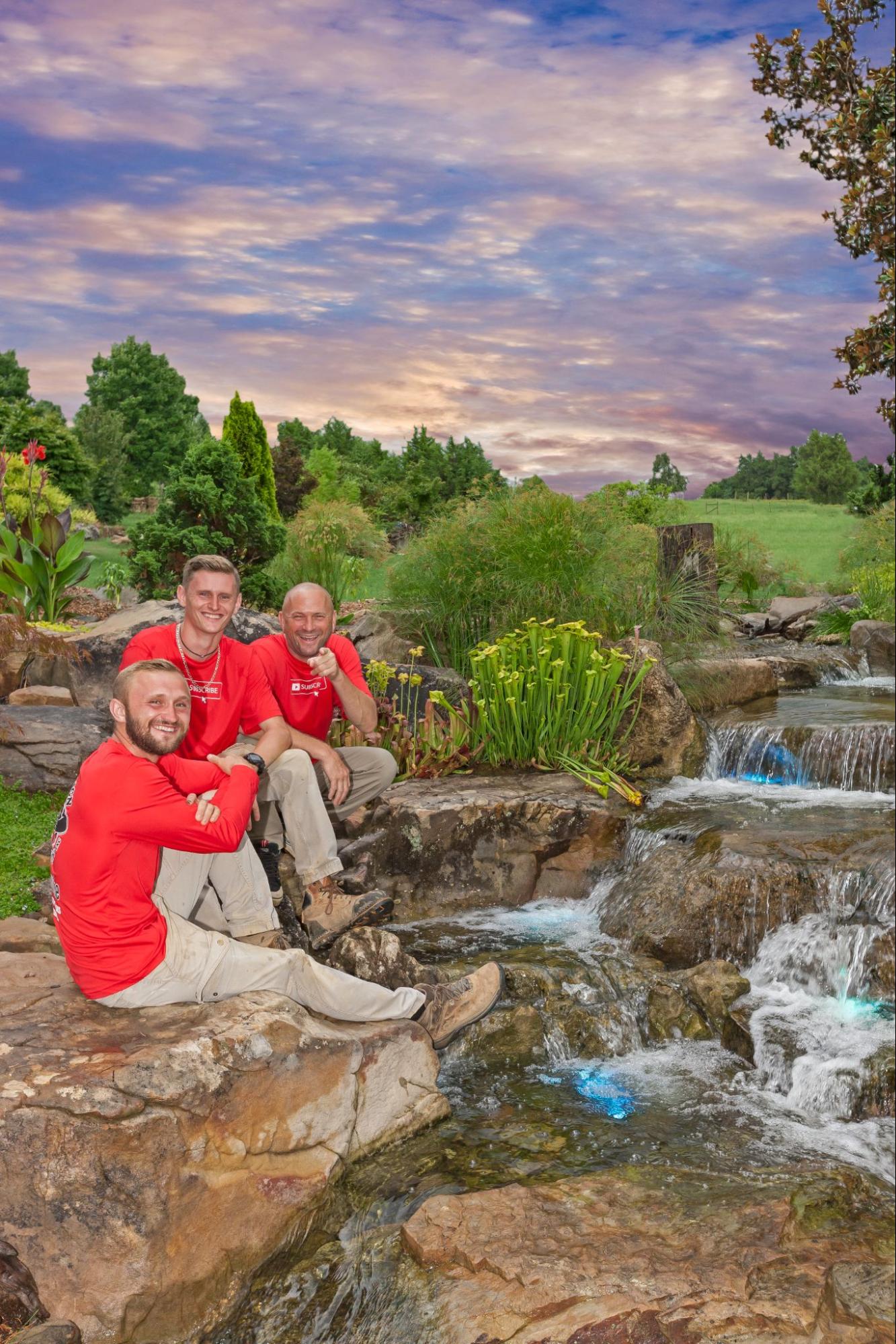
We're damn expensive.
Even our most affordable projects aren't cheap.
And there's a reason for that.
We build differently. We train differently. We think differently. The way we approach pond construction isn't geared toward the lowest bid—it's built around artistry, craftsmanship, and long-term durability. That kind of work takes time, experience, and a team that actually cares. That kind of work costs more.
Could we offer lower-cost, pre-packaged installs someday? Maybe. But if we do, it won't be this team doing the work. You can't train pond surgeons and then send them out to apply Band-Aids. That's not what we do—and the people who hire us don't want that anyway.
The truth is, we often lose jobs on price. But it's not a loss. It's clarity.
We know exactly what we need to charge to run a healthy, profitable company that treats its people well, builds features that last, and never cuts corners. We track every job—time, materials, scope, and profit. Nothing is guessed. And because of that clarity, we never drop our price to win a job. We're not trying to be the cheapest. We're trying to be the best.
If you want to see what we charge—and what those projects actually looked like—you can go straight to our Pond Project Profile Pages. Every one of them shows what it would cost us to replicate that exact project today. These are real numbers, real photos, and real stories. It's one of the most transparent pricing resources in the entire industry, and we built it to help you make a smart decision.
At the end of the day, the people who choose us aren't shopping for the cheapest pond. They're looking for an experience. They care about working with artists. They care about the how, not just the what. They want to build something beautiful, personal, and long-lasting—and they want to work with a team they trust to do it right.
That's who we're for.
We're not the right fit for everyone. And that's okay.
But when we are the right fit, it's magic.
Are There Different Pond Packages or Styles?
Yep, and style is really the right place to begin!
Pond Styles: What Kind of Pond Do You Actually Want?
When most people think about pond options, they imagine different sizes. But style is more than dimensions—it's about the purpose, look, and feel of the water feature you're building.
Here are just a few common pond styles:
- Traditional Koi Pond: These are designed around fish. Deep water, formal edges, and high-performance filtration systems like bottom drains and pressurized bead filters. Think of it as an aquarium you can walk around.
- Ecosystem Pond: Our specialty. These are integrated into the landscape, complete with plants, rockwork, fish, and biological filtration. They're designed to be naturalistic and self-sustaining, blending beauty with ease of ownership.
- Wildlife or Natural Ponds: Built with the goal of supporting birds, frogs, turtles, or even beavers and otters. They may use minimal equipment or none at all, especially in rural or conservation-focused properties.
- Formal vs. Organic: Some ponds are sleek, geometric, and architectural. Others are rugged, soft-edged, and naturalistic. Artistic style matters just as much as function—and different builders have very different artistic DNA. Some teams lean hard into symmetry and formality. Others (like us) build like nature would.
- Construction Style: Concrete or liner? Stone or faux stone? Just like koi keepers vs. ecosystem lovers, you'll find passionate opinions on both sides. Some builders swear by traditional methods; others push innovation or hybrid approaches. Neither is wrong—it just depends on your goals and what success looks like to you.
Bottom line: There's no one right way to build a pond.
There's only the right way for you.
Ask yourself:
- What's most important—fish, plants, sound, interaction?
- Do I want this to feel wild or refined?
- Am I imagining something artistic, functional, therapeutic—or all three?
Get clear on how you'll use your pond before you get caught up in how much it costs.
Pond Packages: Fixed vs. Flexible
Now, let's talk about packages.
Some companies specialize in repeatable pond packages. Think of it like a menu at McDonald's:
- “Small Backyard Koi Pond”
- “16x20 Ecosystem Build”
- “Premium Pond Package with Stream and Lighting”
These packages make things simple. They're built to hit specific price points and help clients choose faster. One great example of this model is Pond Country—they've built their brand on clearly structured packages and it works so well for them they have been copied by many companies around the world!
Other contractors (like us) tend to start with a base idea and adjust based on your wants, needs, and non-negotiables. Most of the time, even when someone thinks they're buying a package, it morphs the second we get to design:
- “Can we add a few extra lights?”
- “What if we bump this edge out and add a big sitting rock?”
- “Let's upgrade the pump and add jets.”
Now it's not a package anymore. It's yours. And that's how it should be.
Still, packages can be helpful starting points. That's why we created our Pond Project Profile Pages, to give folks a place to start. They give people something visual to react to—something that helps them understand scope, price ranges, and design possibilities.
No matter which direction you lean—style-driven or package-based—you'll make better decisions when you know what's out there. Explore your options. Look at real-life examples. And most importantly, ask yourself:
“What do I really want this pond to do for me?”
That's the question that makes all the other pieces fall into place.
Do You Offer Financing (And Should You Consider It?)
The truth is, whether or not it's smart to finance a pond project depends on your personal financial situation. I've had clients who are way more financially savvy than I am—people who finance projects not because they have to, but because they can make more money elsewhere by keeping their capital liquid. My grandfather used to finance his cars for exactly that reason. It made sense for him, so he did it.
So let's just clear the air: Yes, we do offer financing. We're set up with Synchrony Bank and can help you go that route if you choose. But we don't push it. In fact, we rarely bring it up unless someone asks.
A lot of our clients handle their own financing behind the scenes—whether that's using a HELOC (home equity line of credit), personal financing through their own bank, or even putting part of the project on a rewards credit card. And yeah, that does add 1.5%–3% in processing fees if you go the credit card route, but for some people, that's worth it.
We don't care how you pay for your water feature—cash, credit, financing, or gold bullion. What matters to us is that it makes sense to you. If financing is what gets your dream project across the finish line, just say the word. No shame, no pressure.
Can I See Actual Projects & Current Prices?
At the time of writing this article, our Pond Calculator isn't live on the website yet—but we're working on it. Once it's ready, we'll drop the link right here.
In the meantime, the best tool we have for showing current pricing is our Project Profile Pages. These pages are designed to give you a transparent look at actual ponds we've built—complete with photos, videos, and pricing breakdowns.
Now to be clear: the prices listed aren't what those projects cost back then. They represent what it would cost to build that exact same project today in current dollars, with today's labor, material, and logistics. It's the best way we could think of to be honest and transparent about real pond costs—and we're continuing to add more all the time.
If you're serious about budgeting for a pond, we highly recommend browsing the gallery.
What Is the Lifetime Cost vs. the Initial Price?
My friends, I made an entire video about the true cost of owning a water feature because one of my clients was surprised that it wasn't maintenance-free. And I thought—nothing is maintenance-free, unless you put a boulder in your front yard. But I get it… not everyone's on the same page when they start this journey.
If you want all the nitty-gritty details, watch the full video here:
But here's the honest summary:
- Seasonal Maintenance – Most of our clients have us out three times a year. Spring cleanout, mid-summer checkup, and fall plant cutback with winter prep. There's a cost to that, and we've got videos showing exactly what each process looks like—whether it's a pond, fountain, waterfall, or wetland.
- Weekly Upkeep – Plan on 15–30 minutes a week for the average 3,000–6,000 gallon koi pond. Skim debris, top off the water, rinse a filter if needed. It's basic. If you're a fanatic like me, you'll spend more time. I swim in my pond and pull dead lily pads because I love it—but that's optional.
- Maintenance Products – Bacteria, enzymes, algaecide, dechlorinator, fish food… it all adds up. How much depends on your water feature's size and how often you dose. Buy the cheap stuff or the Cadillac—either way, you'll use something.
- Electricity – Moving water costs money. Some systems only cost $25–$50/month. Others, like my Oasis (a 30,000-gallon multi-level swim pond), run $9 a day. It's all about scale. Tennessee power rates help, but energy use is something you should factor in.
- Wear-and-Tear Items – Submersible pumps usually last 3–5 years. External pumps can often be rebuilt. Check valves, light systems, and other parts will eventually need replacing. It's not a surprise—it's just pond ownership. Like oil changes on a truck.
- Optional Upgrades – Let's be real—you're not gonna stop improving your pond. I never do. Bamboo screens, new tropicals, edge planting upgrades… It becomes the heartbeat of your yard. Most people love to tinker. That's part of the magic.
Bottom line: This isn't meant to scare you. It's just the truth. If you buy a small water feature, maintenance will be small. If you buy something big and elaborate, expect more upkeep. That's how life works. Ponds come with responsibility—just like anything worth having.
Common Pond Pricing Questions (With Straight Talk Answers)
What's the real cost to build a pond (and why you shouldn't ask by square foot)?
That's like asking how much a house costs per square foot. Are we talking builder-grade or custom mansion with gold-plated toilet seats? Ponds don't price out by square foot because the complexity of the design, artistic elements, materials, and equipment all vary wildly. A koi pond with a wetland filter isn't even in the same world as a simple wildlife pond. So yeah—this is the wrong question.
Why do koi ponds cost more than other pond styles?
Technically, they're not. They just tend to require more. More filtration, more attention to detail, more protection for the fish, more rock, more labor, more planning. A koi pond costs more than a goldfish pond because there's more involved in building it right. Same goes for a swim pond being more expensive than a koi pond. It's all relative to the scope.
Can I upgrade my existing pond into a natural ecosystem pond?
In most cases, yes. We do renovations and add-ons all the time, and we've got a full video breaking that down if you want to see how it works in real life:
Whether it's a full tear-out or a retrofit, there's usually a way to turn your old pond into something that functions better and looks amazing.
Do I really need a wetland filter for my pond to stay clean?
Absolutely not. A wetland filter is just one option—a big, powerful, natural biological filter that works great in many ponds. But it's not the only way to get clear water. Your filtration needs depend on things like how many fish you have, whether you've got a lot of runoff, how you want your pond to look, and what kind of maintenance you're comfortable with. Wetlands are awesome, but they're not a magic wand.
Can I DIY part of my pond installation to lower the cost?
Yes—and no. On smaller projects, sure. In fact, I offer design consultations to help folks do part of it themselves. But I'll be honest: when someone tells me they want to do part of the work, I usually just smile and say, “I just need to know how involved you're going to be so I know how much more to charge ;)”
Involving yourself in the build almost always slows our team down, makes things harder, and adds more steps. That said, I love helping people get the water feature of their dreams—whether that's full-blown professional install or guiding you through a DIY. I just want you to win. Just know the pros and cons before you dive in.
Still have questions? Here are some of the most common things people ask us about pond pricing, planning, and what to expect. If you don't see your question here, start a conversation with our team—we're always happy to talk.
Q: How much does it cost to build a pond?
It depends on the size, style, materials, and level of artistry you're after. Pond packages from some builders start as low as $8,500 installed. At Modern Design, $20,000 is more of a starting point—and we've built ponds that cost well into the millions. There is truly no ceiling if the dream is big enough.
Q: Why is there such a huge price range between pond builders?
Because not all pond builders are building the same thing. Some companies are optimized for speed and affordability—pre-designed shapes, smaller boulders, and efficient processes. Others (like us) focus on artistry, custom design, and premium materials. Both models serve a purpose, but the outcomes—and the price tags—are very different.
Q: What's the single biggest factor that drives pond cost up?
Boulder size and the level of artistry. Large, hand-selected boulders require specialized equipment to move and skilled artists to place them naturally. The difference between a $10,000 pond and a $30,000 pond with the same footprint often comes down to the rock and the finish work.
Q: Can I keep costs down without ending up with a cheap-looking pond?
Absolutely. Stick with a simple shape, keep the depth around two feet, use standard-sized boulders, and skip the advanced filtration upgrades for now. Build the biggest, most basic pond you can afford—then add bells and whistles later. You'll get the wow factor of water, fish, and boulders on day one.
Q: Do I need a wetland filter for my pond to stay clean?
No. A wetland filter is a powerful biological filtration option, but it's not the only path to clear water. A proven skimmer-and-biofalls combo works great for most ecosystem ponds. Your filtration needs depend on fish load, pond size, runoff conditions, and the level of maintenance you're comfortable with.
Q: What are the hidden costs people don't see coming?
The most common surprises include irrigation repairs, lawn or fence damage from heavy equipment, electrical work for power supply, and drainage issues if your site collects runoff. None of these are “gotchas”—they're just realities of outdoor construction. A good contractor will walk you through them before the build starts.
Q: What does ongoing pond maintenance actually cost?
Most pond owners budget for three professional visits per year (spring cleanout, mid-summer checkup, and fall prep), plus 15–30 minutes of weekly upkeep like skimming debris and topping off water. Add in maintenance products, electricity, and occasional equipment replacement—and you've got a clear picture. We break it all down in our maintenance cost guide.
Q: Can I DIY part of my pond to save money?
On smaller projects, yes—and we even offer design consultations for DIY builds. But on larger professional installs, doing part of the work yourself almost always slows the crew down and can actually increase costs. Know the trade-offs before you dive in.
Q: Can I see real pond projects with actual prices?
Yes. Our Pond Project Profile Pages show real ponds we've built with photos, videos, and what it would cost to replicate each project in today's dollars. It's one of the most transparent pricing resources in the industry.
Q: How do I know if Modern Design is the right fit for my project?
We're not the cheapest option out there—and we're upfront about that. If you're looking for artistry, custom design, premium materials, and a team that builds for longevity, we might be exactly what you need. If you're shopping for the lowest bid, we're probably not the right match—and that's okay. The easiest way to find out is to start a conversation.
Is Building a Pond Really Worth It?
To me? Absolutely. See if any of this resonates with you?
I grew up at the lake. On the river. Out in nature. This isn't just a hobby—it's a cellular connection to water. Nature is where I meditate, it's how I recharge.
When the sun goes down, I go outside and sit by the waterfall to watch the sunset. I drink my coffee by the waterfall in the morning. I go out and feed my fish. I swim with them when it's hot. That's what this is for me—personally. It's changed how (and where) I live my life.
But you know what matters most?
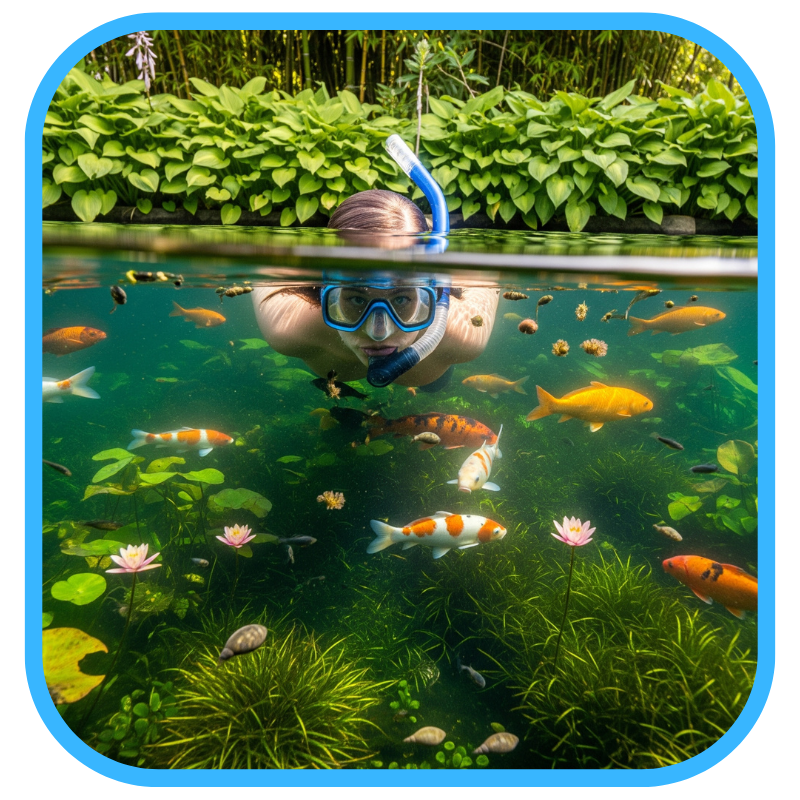
It's my kids. It's my grandkids. It's watching my boys come back holding salamanders and crayfish and frogs. It's watching all seven of my grandkids out in the pond, exploring and learning. Being in nature. No iPads. No phones. No watching some stranger live their life on YouTube while they sit on the sidelines. They're in the world. Engaged. Learning what life actually is.
And those memories—they'll stick. My grandkids will always remember “The Oasis”, they will always remember Grandpa's pond, burned into their minds forever. The time we spent out there. The cookouts. The get-togethers. That's real life. That's the good stuff.
So if you're carrying too much stress, unplugging from all the noise and plugging into nature might just change your soul. It will definitely help you connect. Connect with nature, with each other, and with yourself!
God bless & Happy Pondering 😉
John G