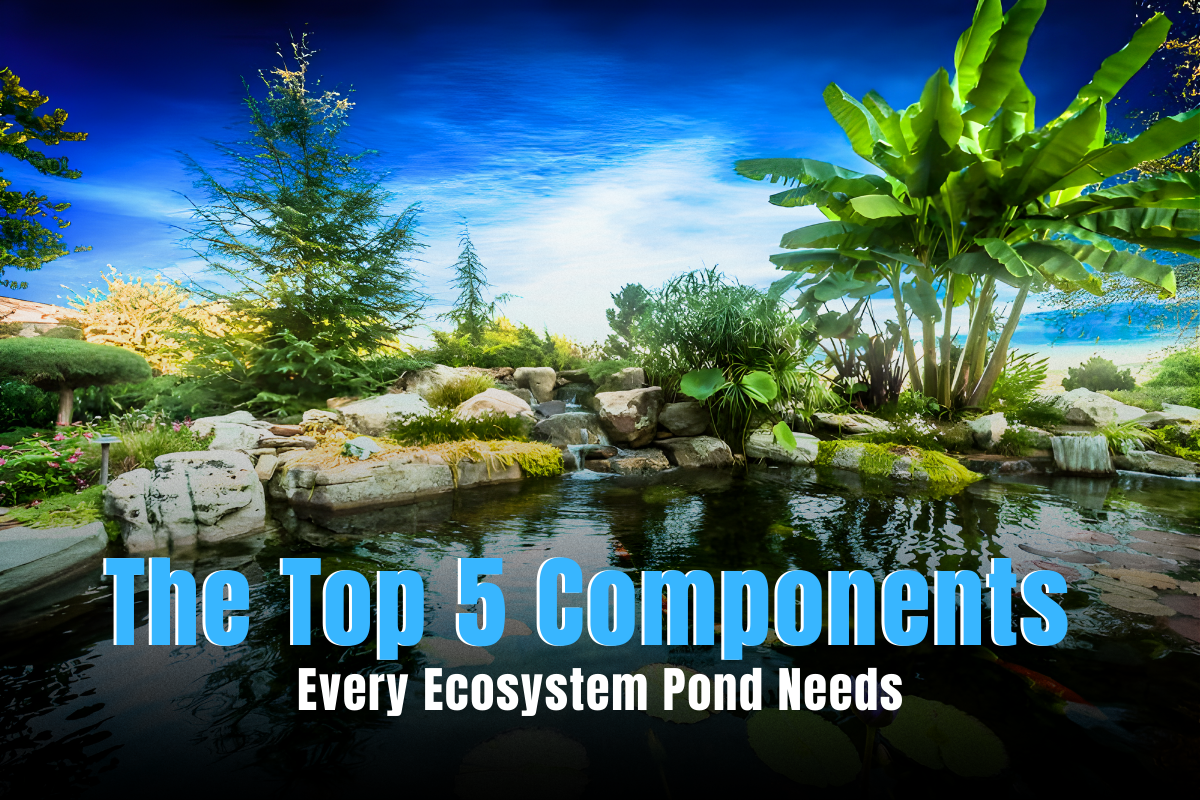
The 5 Core Components of a Healthy Ecosystem Pond
If you remember nothing else, a healthy ecosystem pond depends on five core components working together: liner and underlayment, rocks and gravel, pumps and plumbing, filtration, and living biology (plants and fish).
📋 Jump to a Section
- Section 1: What Is The Basic Idea of an Ecosystem Pond?
- Section 2: What Are the Five Components That Make an Ecosystem Pond Work?
- Section 3: What Part Do Liner and Underlayment Play?
- Section 4: Why Is It Important to Have Rocks and Gravel?
- Section 5: What Do I Need to Know About Pumps and Plumbing?
- Section 6: What Do I Need to Know About Filtration?
- Section 7: Do I Have to Have Plants and Fish?
- Frequently Asked Questions
- Section 8: Conclusion
Section 1: What Is The Basic Idea of an Ecosystem Pond?
People often tell me that they want to have an ecosystem pond, and then they'll say something like, "But I want to skip the fish," or "I want to skip the plants."
That's sort of like saying, "I want to have a digestive tract, but I want to leave out the stomach or the intestines." LOL
An ecosystem pond is very simple. The reality is, I have a statement that sums it all up in a nutshell: You're trying to recreate Mother Nature with an ecosystem pond.
The closer you get to nature, the easier the pond will be to maintain. The farther away you stray from natural balance, the more difficult it becomes.
It's truly that simple.
Let's talk about the components that make up a functioning ecosystem pond.
Section 2: What Are the Five Components That Make an Ecosystem Pond Work?
When I think about an ecosystem pond, it's pretty simple for me to organize the components into five groups. Once you understand those five groups, let's dig a little deeper into each one.
Liner and Underlayment
The first group is the liner and underlayment. This is the foundation that holds the water in.
Rocks and Gravel
Then you have rocks and gravel, which are the decorative and functional portions that conceal the liner and make things look natural.
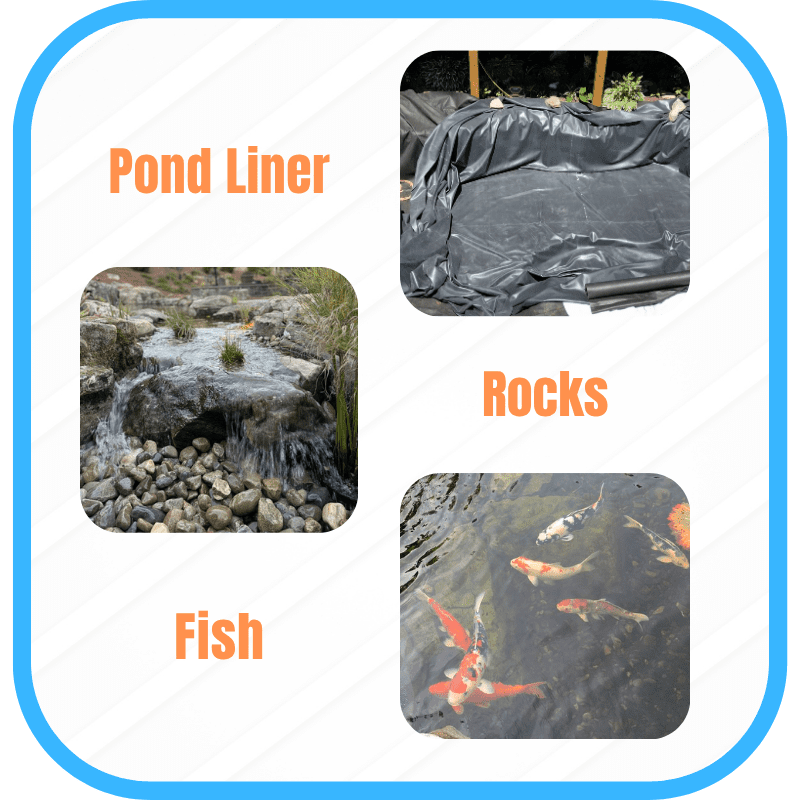
Pumps and Plumbing
Next you have pumps and plumbing, which is the system that moves water in the feature and feeds it through the filtration.
Filtration
The fourth component is filtration. That is a combination of a mechanical and a biological filter.
Plants and Fish
Finally, you have plants and fish. These are quite obviously exactly what they sound like. They're the life inside your pond that brings it beauty and gives you all the joy you're looking for.
So let's dig a little deeper into each section now and talk about what they are, what they do, and how things happen.
Section 3: What Part Do Liner and Underlayment Play in an Ecosystem Pond?
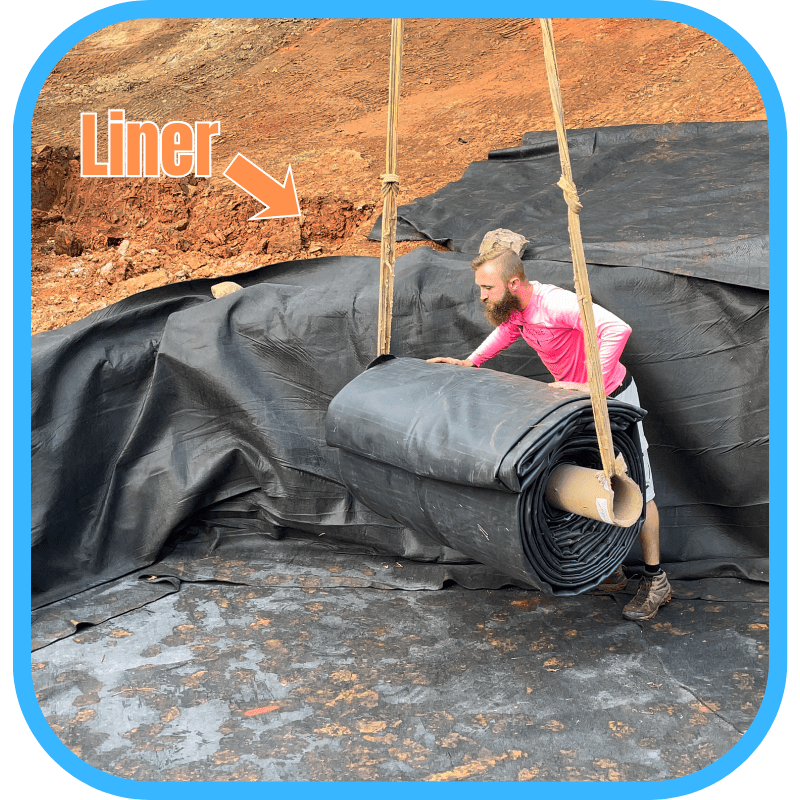
This part is very simple for me.
There are different types of liner, and we're not going to get into all of that here. I typically work with an EPDM liner, which is a nice flexible liner that feels like rubber. It's fish-safe, and its sole purpose is to keep your water from soaking into the earth. It is an impermeable membrane that basically acts as your bowl to hold your water.
Geotextile underlayment, on the other hand, is a nonwoven geotextile material that we use in two capacities.
The first is between the earth and the liner. When we dig a pond, we put the underlayment on the soil, after we remove all the sharp objects, of course, and then the liner goes on top of the underlayment. The underlayment is the protective barrier that helps keep sharp objects and insects from puncturing holes in your impermeable membrane.
We also use underlayment on the inside of the liner. Whenever we're setting large stones, we use underlayment as an additional layer of protection to help keep those stones from poking a hole in the liner from the top side.
Make sure the underlayment is covering 100% of the soil surface and fully separating your liner from the earth.
While it can't stop all chewing and burrowing creatures like chipmunks or rats from chewing in from the outside of your liner, what it will do is deter termites, carpenter ants, and other small insects from chewing holes in from the soil side of your liner.
In my experience, I have never had termites or carpenter ants chew through underlayment to get to the liner. But I have had them chew through a liner that was placed directly against the soil.
Over time, we come back to water features where there is water loss, and when we expose the liner, it looks like somebody shot it with a shotgun. There are all these tiny holes, and that is typically termite damage.
It's a simple preventative measure to make sure the underlayment is there to help deter burrowing insects, as well as tree roots, from getting up against your rubber and making a hole.
Section 4: Why Is It Important to Have Rocks and Gravel Inside an Ecosystem Pond?
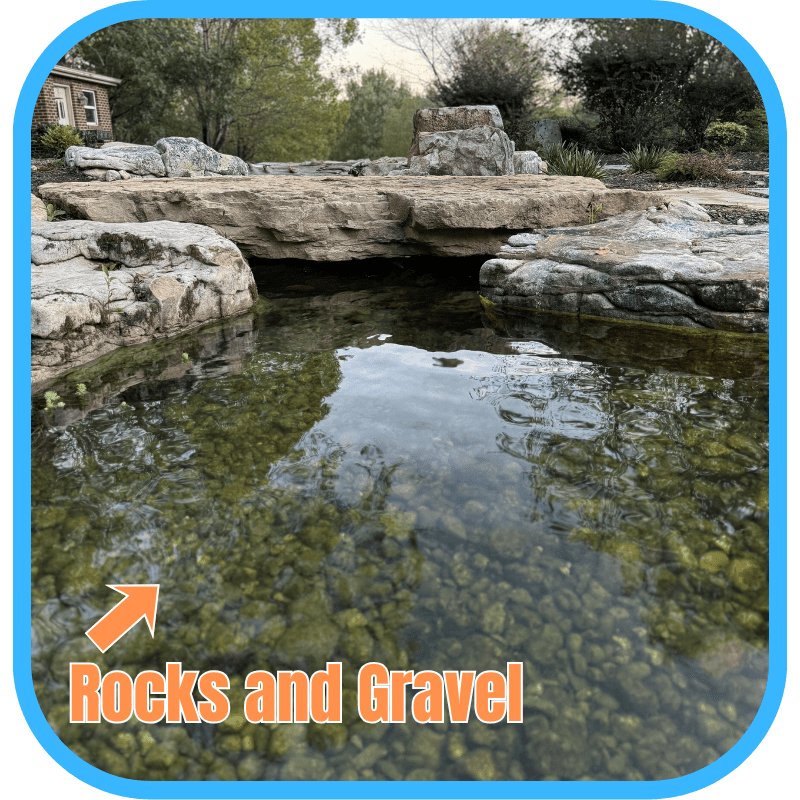
Rocks and gravel serve multiple purposes inside an ecosystem pond.
Obviously, the first thing they do is make the water feature look natural. The better you get at utilizing rocks and gravel, the more organic and beautiful your pond will become.
From a construction standpoint, the way we typically build ponds is by digging nearly vertical cuts into the earth and then creating flat shelves. Then we dig another vertical cut down to a flat bottom. That's the basic structure we're working with.
We use the rocks to stack up those vertical cuts. The ideal design is that the rocks are actually taller than the vertical cuts, so when you place them, they create a sort of dam for the next flat area. Then we cover those flat areas with aggregate.
What this ends up creating is a series of walls and floors inside the pond. The walls are made of stones or boulders, and the floors are made of gravel.
This does a multitude of things.
First, you're creating a natural habitat for the fish. Koi are aquatic cows, for lack of a better description. They're foragers. In the wild, they dig through the mud and gravel looking for small organisms to eat. That's how they spend their time.
So when you give them a pond with rocks and gravel, you're giving them a habitat where they can swim around, pick through the gravel, and look for things to nibble on. That's a natural and joyful life for koi.
Rocks and gravel also create a massive amount of surface area. We're not getting into the full filtration system yet, but the beneficial bacteria that help filter your water live on surfaces. The more surface area you have, the more beneficial bacteria you can support.
Just think of it as your pond's waste treatment system.
Gravel, in particular, creates an enormous amount of surface area. As long as the gravel layer isn't too thick and remains aerobic, you end up with a tremendous amount of biodiversity that supports healthy fish and increases the pond's natural filtration capacity.
The final benefit of rocks and gravel is protection.
Rocks and gravel protect your liner from the inside. When they're stacked well, they can prevent animals like muskrats, otters, or other burrowing creatures from digging into the sides of the pond. I've seen what happens when a muskrat decides to dig a burrow through the wall of a pond, and it's not pretty. It's not easy to fix either. What you end up with is a giant leak.
Well-placed stone helps prevent that.
Rocks and gravel also protect your liner from one of the biggest things that can shorten its lifespan: ultraviolet light from the sun.
Sunlight is incredibly destructive. When a liner is left exposed, ultraviolet rays slowly break it down over time. That's one reason liner manufacturers often give warranties around 25 years when liner is exposed to sunlight.
When you cover the liner with rocks and gravel, you block those UV rays from reaching it.
I have personally pulled EPDM liner out of ponds that had been in the ground for more than two decades, completely protected by rocks and gravel. When we exposed it and cleaned it, it was still soft and flexible, almost like the day it was installed.
Because of that, I feel very confident that when you build a pond with an EPDM liner that's protected from sunlight and protected from digging animals, you have created something that will last more than a lifetime!
Section 5: What Do I Need to Know About Pumps and Plumbing in an Ecosystem Pond?
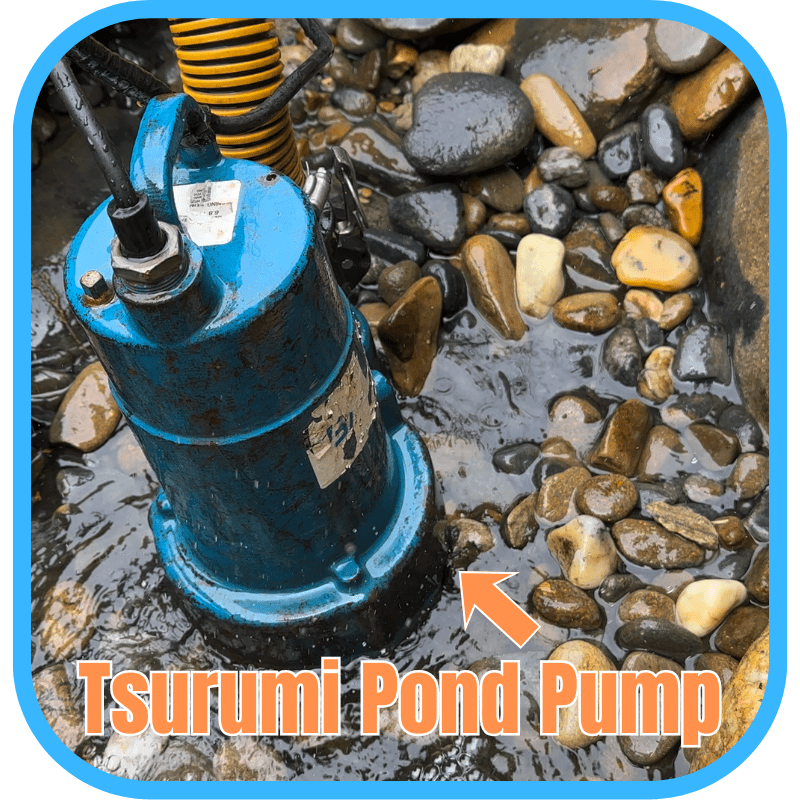
Again, I could teach a master's class on understanding pumps and plumbing, but this is the Cliff Notes version.
The sole purpose of pumps and plumbing is to move water.
You want to create as much circulation as possible, which is why it's important to situate your filters on opposite ends of the feature. The best situation you can create is one where water is pulled from one end of the water feature and returned to the other end. That is ideal.
Dead spaces are a no-no. That's typically where debris and algae will accumulate.
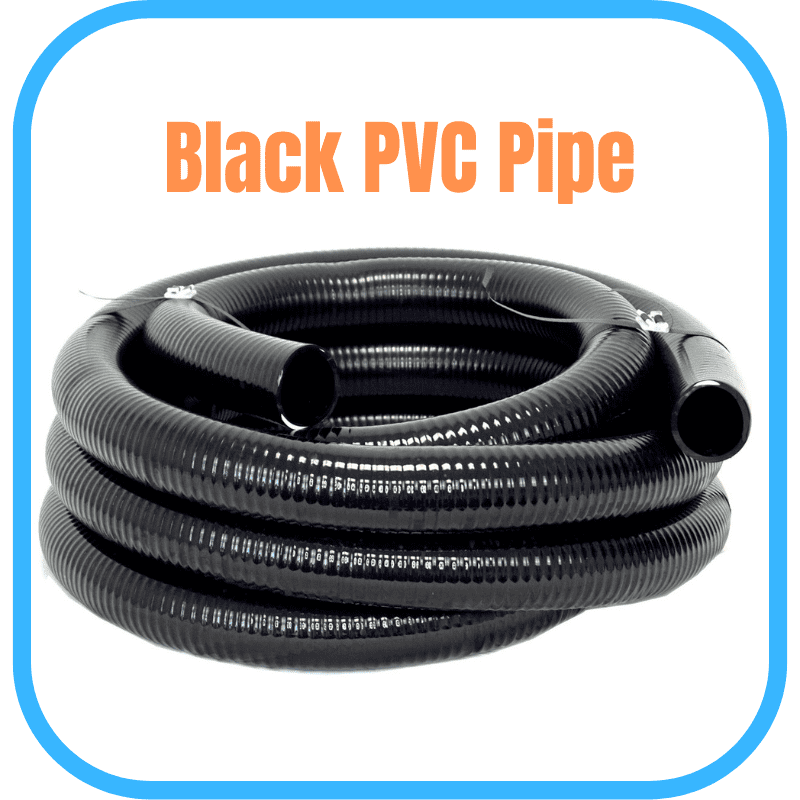
Good water flow is extremely important. I personally feel that circulation is almost as important as filtration to the overall experience.
A water feature will still stay healthy without perfect circulation. If your filters are working properly, you'll still have quality water. But when you combine great circulation with great filtration, you end up with a much lower-maintenance experience.
Now understand this: pumps and plumbing sound simple, but there is a lot more to it than it seems when you say it quickly.
You need to make sure your pumps and plumbing are properly designed for your water feature. There are calculations involved—how big the water feature is, how much water needs to move through it, the distance the water has to travel, and the lift of the water.
All of those factors determine how you size your pumps, your plumbing, and your filtration.
There's a lot that goes into this, and it really is a whole other animal.
I'm only teasing you with this information so you understand that if you're designing this part of your water feature—and it's more than just a very simple waterfall—you'll want to dig a little deeper into the research and make sure the pumps and plumbing are properly sized for your pond.
Pro Tip #1
You can often increase water flow without increasing electricity usage simply by selecting a larger diameter of plumbing. Larger pipe reduces friction loss and allows the pump to move more water more efficiently. An educated designer will typically calculate expected water flow using a pump curve to properly match the pump, plumbing, and flow requirements of the feature.
Pro Tip #2
If electrical efficiency is important to you, magnetic drive pumps can move a surprising amount of water using relatively little electricity. There are several different styles of pumps available. For example, solids-handling pumps tend to require less maintenance because they can pass debris, but they typically consume more electricity. If energy consumption matters to you, spending a little time researching pump types can help you find the best balance between water flow and electrical efficiency.
Section 6: What Do I Need to Know About Filtration in My Ecosystem Pond?
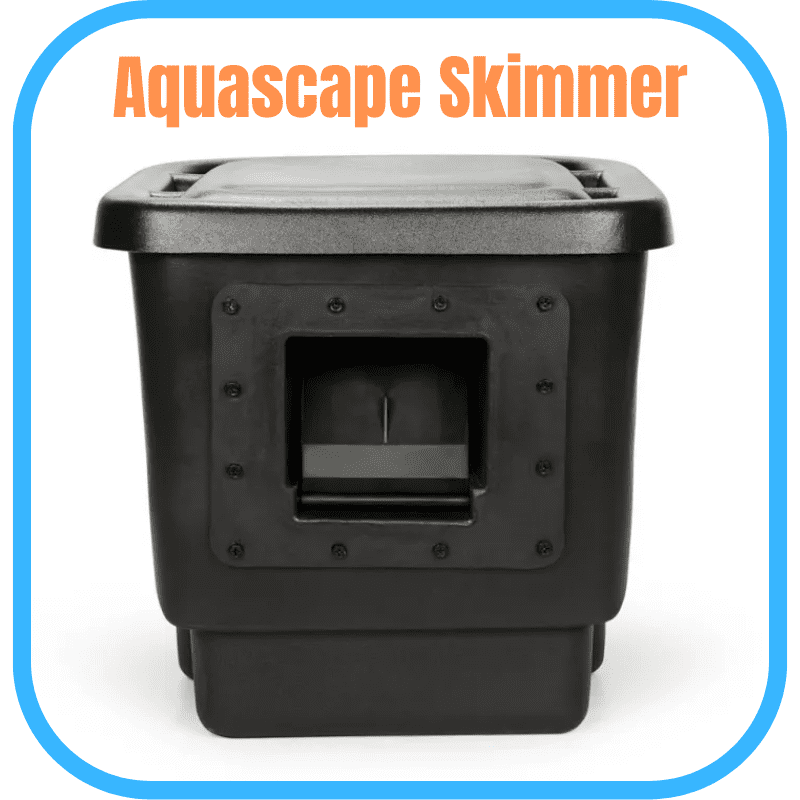
There are two types of filters in an ecosystem pond.
We'll start with the mechanical filter, also known as a skimmer. There are more complicated versions of mechanical filtration, but for all practical purposes, we're going to stick with the skimmer as the primary mechanical filter.
The job of the mechanical filter is to pre-filter the water. In other words, it catches the large debris before the water reaches your pump.
A quality skimmer box typically has a basket that catches large debris. Water flows in through the front of the skimmer, passes through the basket where leaves and larger debris are caught, and then flows through filter pads that catch smaller debris.
Below or behind those pads lives your pump.
So by the time water reaches the pump, most of the physical debris has already been removed. What's left is debris-free but nutrient-rich water.
That water then enters the pump, travels through the plumbing, and is sent to your biological filter.
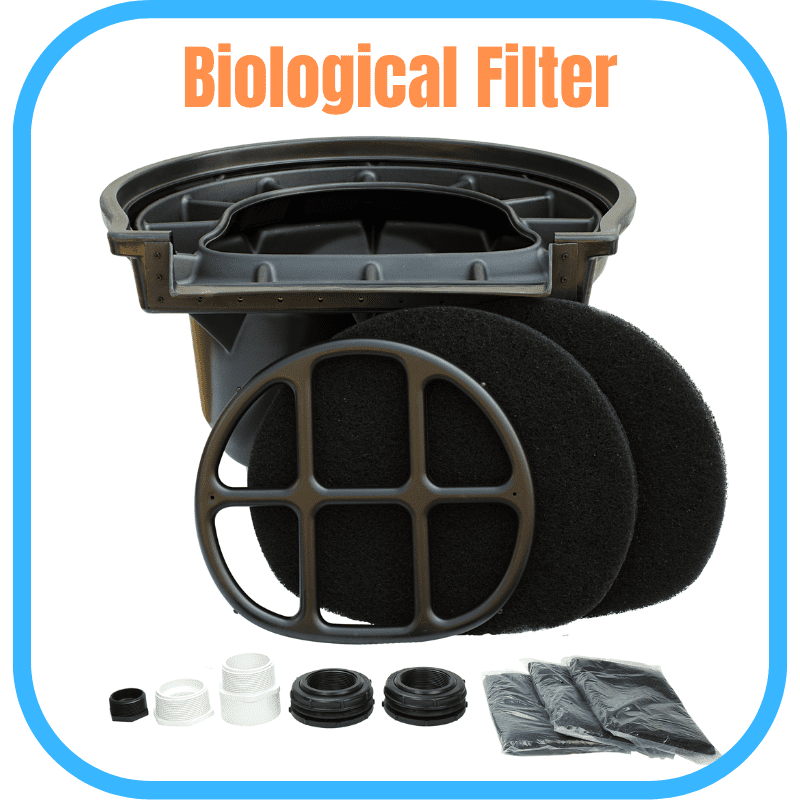
Biological filters come in many shapes and sizes. They can be canisters. They can be waterfall-style filters like a biofalls unit. Some designs are buried in the ground. Every manufacturer has their own version of a biological filter.
But regardless of the design, the purpose is always the same.
The biological filter is designed to house beneficial bacteria.
At this point, you have nutrient-rich water entering the filter. Inside the biological filter is what we call filter media. Some media looks like beads. Some of it looks like a bundle of shoelaces. There are many different types of biological media, but they all serve the same purpose.
Their job is to create a tremendous amount of surface area in a small space.
Water flows into the filter and moves through, over, and around that media. Beneficial bacteria colonize the surfaces of the media and begin doing their job, which is breaking down the nutrients in the water.
I'm not even going to get into the chemistry of it here. That's their job.
So in simple terms:
- The mechanical filter removes the chunks.
- The biological filter breaks down the nutrients.
After that process, the cleaned water exits the filter and returns to the pond—typically through a waterfall or return plumbing—and that completes the filtration cycle.
Be sure to situate the mechanical filter and the biological filter on opposite ends of the pond. By doing this, you naturally improve your circulation.
When water returns from the biological filter, it creates a current across the surface of the pond. That flow helps push floating debris toward the skimmer on the opposite end of the pond.
This allows the skimmer to do its job more effectively by capturing more of the surface debris before it has a chance to sink to the bottom.
Section 7: Do I Have to Have Plants and Fish in My Ecosystem Pond?
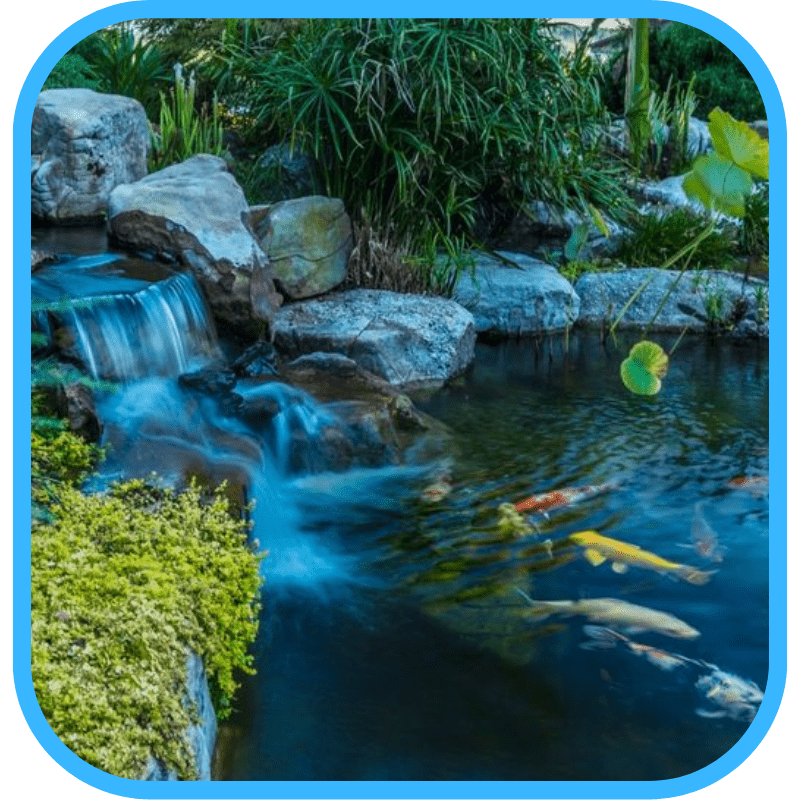
The short answer is no, you don't have to have plants and fish in your ecosystem pond.
But the real question is: why wouldn't you?
Let's start with the plants.
Aquatic plants grow in different levels of the water column. You have marginal plants, which grow around the edges of the pond. Some of these plants sit right on the edge with what we call "wet feet," where the roots are in the water but the crown of the plant sits just above the surface.
You also have floating plants—what they call rafting plants over in the UK, which I love because it just sounds cool.
Then you have water lilies and lotuses, along with submersible plants like anacharis and other aquatic vegetation.
There are so many beautiful flowering plants that you can include in a pond. They introduce colors and textures that you simply don't get from traditional landscape plants. They also soften the edges of the water feature, which makes the entire pond feel more natural and visually beautiful.
But beyond aesthetics, plants play an important role in the ecosystem itself.
Plants absorb nutrients from the water in order to grow. In doing so, they remove things like nitrogen and phosphorus from the pond. Those are the same nutrients that algae feed on.
So when you add plants to your pond, you are effectively creating competition for algae. The plants are using the nutrients before algae can, which helps support better water quality.
For me, plants are such an important part of the system that it's hard to imagine building an ecosystem pond and not including them.
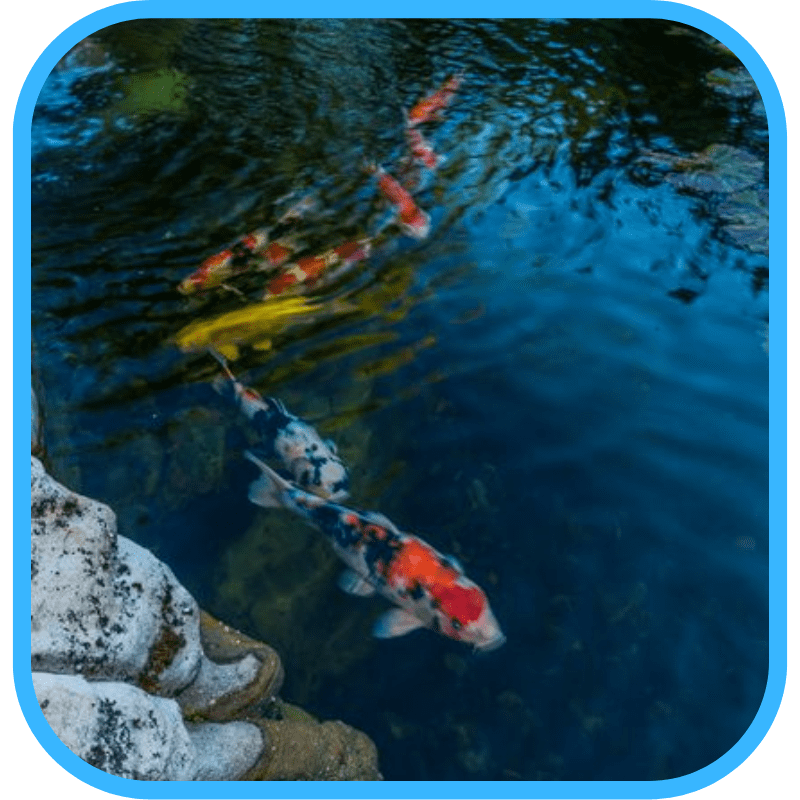
Now let's talk about fish.
Again, the question comes up: Do I have to have fish?
I personally think you should.
Fish bring life into the pond. They move through the water column, stir the bottom, and keep things moving so that debris can eventually make its way into the filtration system.
Some people feed their fish. Some people don't. You can keep goldfish, koi, or even native fish, depending on where you live and what your interests are.
The important thing to understand is that fish are part of the ecology of the pond. They contribute nutrients and energy to the system.
And that brings us back to the core idea we talked about earlier: the closer you get to natural balance, the easier the pond becomes to maintain.
Too many fish and too much feeding can create water quality issues.
No plants means too much sunlight entering the pond, less shade, less habitat for fish, and more opportunity for algae to grow.
Every component in the system works together.
Pro Tip #1 — Plant Coverage
Try to plant enough water lilies or floating aquatics so that by midsummer they cover roughly half of the pond's surface. This creates shade, helps protect fish from predators, and keeps the water temperature cooler.
Pro Tip #2 — Avoid Overstocking Fish
One of the biggest mistakes I see is people overstocking their pond with fish. If you know you're the type of person who will keep buying more fish over time, make sure your filtration system is sized large enough to handle that heavier fish load. Being honest about that up front will save you headaches later.
Frequently Asked Questions About Ecosystem Ponds
Q:What are the basic components of an ecosystem pond?
An ecosystem pond works because several components work together: liner and underlayment, rocks and gravel, pumps and plumbing, filtration, and living biology like plants and fish. When those pieces work together properly, the pond becomes much easier to maintain.
Q:Do ecosystem ponds really need plants?
If you want the pond to function the way nature intended, plants are extremely important. Plants absorb nutrients, provide shade, and compete with algae. Without plants, maintaining water quality becomes much harder.
Q:Do ecosystem ponds have to have fish?
No — but fish bring life to the system and contribute to the natural balance of the pond. Many people find that once fish are added, the pond feels much more alive and enjoyable.
Q:What is the most important part of an ecosystem pond?
There isn't just one. The system works because all the components work together. Circulation, filtration, structure, and living biology all play a role in creating balance.
Section 8: Conclusion
When you step back and look at the whole system, an ecosystem pond really isn't that complicated.
You have liner and underlayment to hold and protect the water.
You have rocks and gravel to create structure, habitat, and surface area.
You have pumps and plumbing to move the water.
You have filtration to remove debris and break down nutrients.
And you have plants and fish to bring the ecosystem to life.
Each piece works together with the others.
Your pumps and plumbing need to be properly sized for the pond and the filtration system. Your filters need to be sized appropriately for the amount of water moving through them. If water moves through the filters too quickly, they won't work properly.
Your liner and underlayment protect your investment by making sure the pond actually holds water and stays protected from the soil on the outside and sharp objects on the inside.
For a basic ecosystem pond in the range of a few thousand gallons, it really can be this simple. These components working together create the balance that makes an ecosystem pond function.
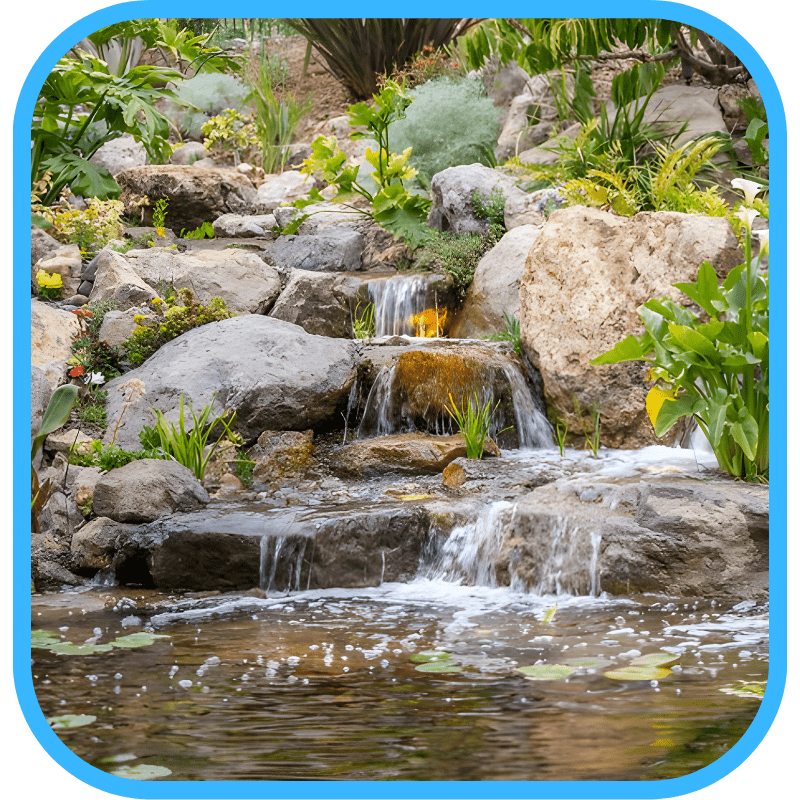
One last recommendation: when water returns from your biological filter, take advantage of that opportunity to create a waterfall.
The splash from a waterfall not only looks beautiful and sounds amazing, it also oxygenates the water, which benefits the entire system. Even a small waterfall can make a big difference.
If for some reason you're not creating a waterfall on the return line, then you should consider adding some other form of aeration.
But honestly, if you're already building a pond, I can't imagine not creating some kind of waterfall. The sound of moving water is one of the most relaxing and enjoyable parts of the whole experience.
That's the ecosystem pond in a nutshell.
I hope this gave you a clearer understanding of how the system works and maybe even a different perspective on how all the pieces fit together.
If you have questions or want help planning your own pond, feel free to reach out. Just fill out the contact form and start a conversation with us.
We'd love to help you end up with the water feature of your dreams.
Start a Conversation
No pressure. No used car salesman tactics. Just an honest conversation to see if we're a good fit and to help you end up with the water feature of your dreams.
Contact Us— John G. Adams