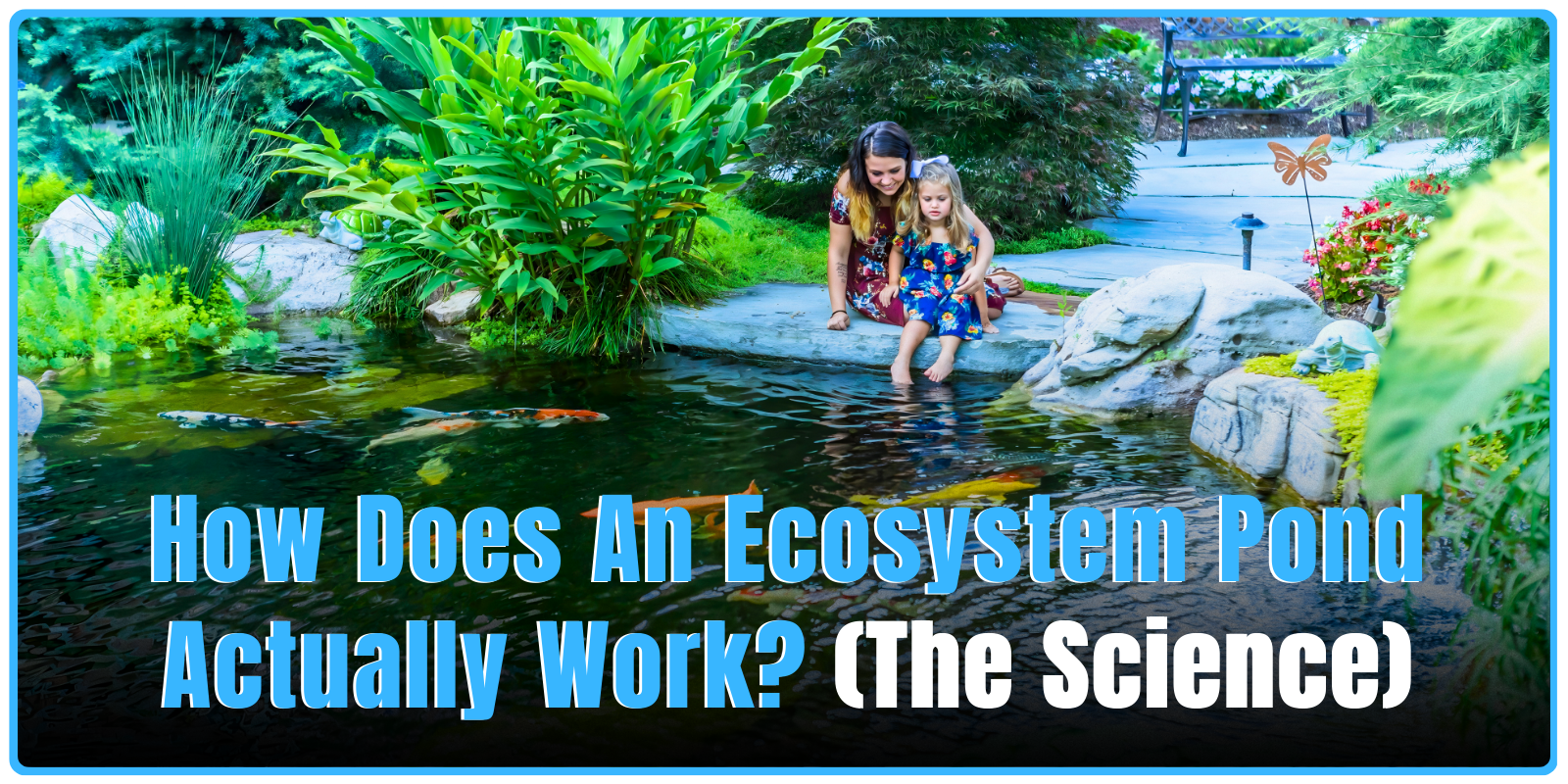
Quick Overview: How an Ecosystem Pond Works
At the most basic level, an ecosystem pond works by moving waste through a natural cycle.
- Fish waste, leaves, and debris break down into ammonia
- Beneficial bacteria convert ammonia into nitrite and then nitrate
- Plants and algae use those nutrients as food
- Filtration, circulation, and clean-outs help keep the system in balance
If you remember nothing else: an ecosystem pond works by cycling waste through bacteria, plants, filtration, and circulation until the system finds balance.
Jump to a Section
- Quick Overview: How an Ecosystem Pond Works
- How Does the Nitrogen Cycle Work?
- Does Nitrate Build Up In My Pond?
- Do Rocks and Gravel Create Sludge or Help Filter the Water?
- Why Is There Foam or an Oily Film on My Pond Water?
- Which Aquatic Plants Are Best for Absorbing Excess Nutrients?
- Will an Ecosystem Pond Attract Mosquitoes?
- How Do Bottom-Feeding Fish Help Clean a Pond?
- Frequently Asked Questions
- Closing Thoughts
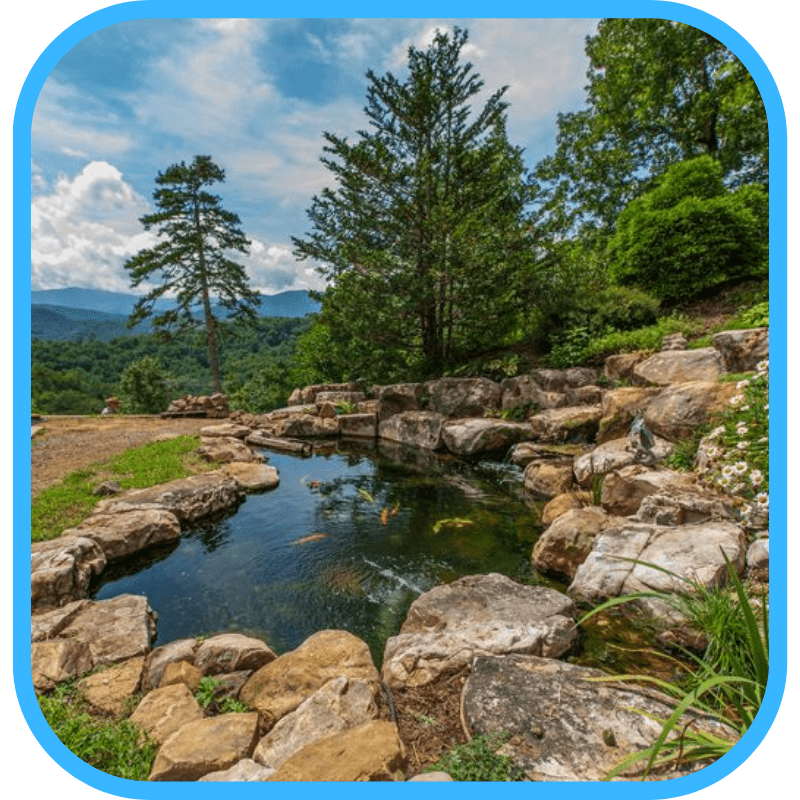
After having water features in my life for decades, I'm pretty confident that the idea of a completely maintenance-free, hands-off ecosystem pond is mostly a myth.
Could it happen? Maybe. But it's highly unlikely.
In order for a pond to truly maintain itself with zero intervention, you would have to recreate nature so perfectly—so precisely—that the entire system balances itself without any help. That level of biomimicry takes an incredible amount of effort, and most people simply aren't trying to replicate nature that exactly.
If you look at natural lakes and streams across the United States, you'll see the same reality play out. Bodies of water go through cycles. At certain times of the year, nutrient levels rise, and when that happens, you can get algae blooms. It's a natural process.
The same thing happens in aquariums. When you start a new fish tank, they call it cycling. You get a spike of ammonia, and then the system begins moving through the nitrogen cycle—where ammonia is converted into nitrite and then nitrate. Plants eventually use those nutrients, and the system begins to stabilize.
When we build an ecosystem pond, we're essentially trying to recreate nature—but on our own terms.
In this article, I want to walk you through what's actually happening behind the scenes. We're going to talk about the science of how an ecosystem pond works, what processes are taking place in the water, and what realistic expectations you should have.
My goal is simple: I want to put you in a position where all of your surprises are good surprises.
When you build a new pond and the water suddenly turns green, instead of panicking, you'll understand what's happening. You'll be able to say, "Ah, my pond is cycling. It's going to clear up soon," and you'll know what to do next.
So today we're going to get a little geeky.
Not in a complicated, textbook kind of way—I'm not a college junkie, and I don't like throwing around big words just to sound smart. What I want to do is help you understand what's really going on and why things happen the way they do.
Once you understand that, everything about owning and enjoying an ecosystem pond starts to make a lot more sense.
Section 2: How Does the Nitrogen Cycle Work in an Ecosystem Pond to Keep the Water Clear?
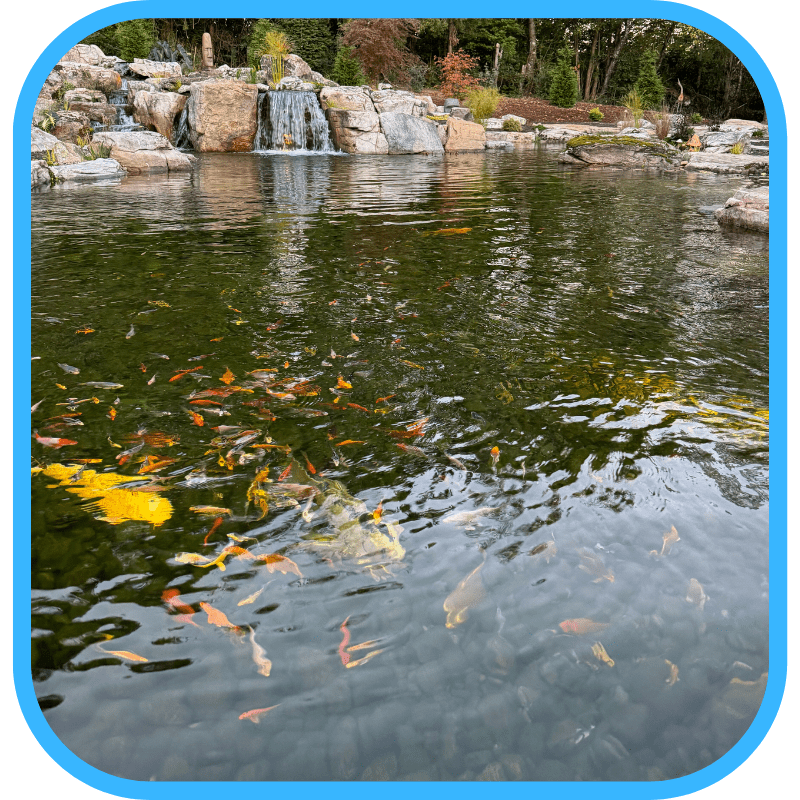
Let's keep this simple.
Waste in a pond usually starts out as fish waste, leaf matter, or other organic debris that ends up in the water. Any kind of fertilizer or energy entering your pond will eventually begin the nitrogen cycle.
At the beginning of that process, the waste breaks down into ammonia.
Ammonia is very toxic to fish.
This is where beneficial bacteria come into play. There are many different types of these bacteria living in your pond, and their job is to break down waste and turn it into something less harmful.
I like to think of them as tiny dogs that eat the debris in your pond.
One type of beneficial bacteria consumes ammonia. When they process it, they convert it into nitrite.
Nitrite is much less dangerous than ammonia, although it can still be harmful if the levels get very high.
Then another type of beneficial bacteria shows up and consumes the nitrite. When they process nitrite, they convert it into nitrate.
This process—from ammonia to nitrite to nitrate—is what we call the nitrogen cycle.
Nitrate is the final stage of that process.
In perfectly purified water, there would be no nitrate left. But in a pond, nitrate becomes available food for plants and algae.
At this point, that energy has to go somewhere.
Plants will consume nitrate as they grow. They also use other nutrients like phosphorus from the water. When you have a good amount of plants in your pond, they are constantly pulling those nutrients out of the water as part of their growth.
But if you don't have enough plants, that same energy will be used by algae.
Algae is basically nature's way of consuming excess nutrients when there aren't enough plants to do the job.
As nitrate levels continue to rise, they can eventually become stressful for fish. That's why it's important for that energy to be used up or removed from the system.
There are two main ways that this happens.
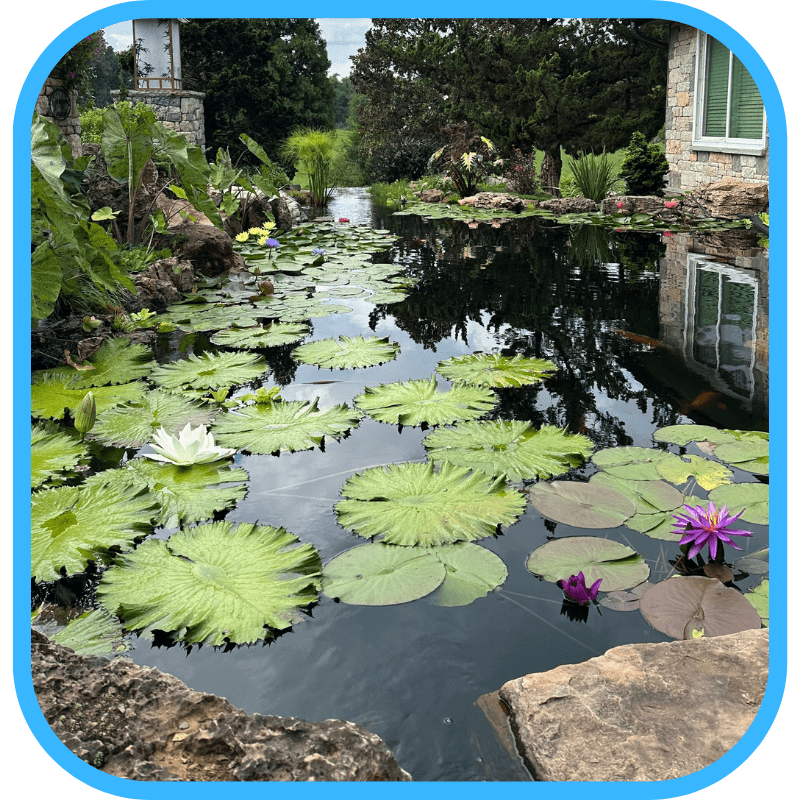
The first is through plant growth, where plants consume the nutrients as food.
The second is through water changes, where you physically remove water that contains high levels of nitrate and replace it with fresh water that has lower levels.
That's the basic idea behind what's happening inside your pond during the nitrogen cycle.
If you'd like to see a deeper explanation, I also made a video about the nitrogen cycle that walks through the process visually.
But the key thing to understand is this: waste doesn't just disappear in a pond. It moves through a natural cycle, changing forms until plants, algae, or water changes remove it from the system.
Section 2B: Does Nitrate Build Up In My Pond? (And What Can I Do About It)
There is another piece of the puzzle that's important to understand.
The bacteria that remove nitrate from water are called denitrifying bacteria, and they live in anaerobic environments, which means environments with little or no oxygen.
In a well-built ecosystem pond, there actually shouldn't be much of that happening. Most of the pond environment is oxygen-rich because of water circulation, waterfalls, and filtration. Because of that, nitrate tends to slowly build up over time.
That's one of the reasons traditional koi ponds often require regular water changes. In many of those systems there are no aquatic plants, no rocks and gravel covering the surfaces, and a lot of exposed liner. Without plants in the system to consume nutrients, nitrate levels can rise more quickly.
The same principle still applies in an ecosystem pond. Over time, nitrates will build up, and that's one of the reasons occasional water changes are still part of responsible pond care.
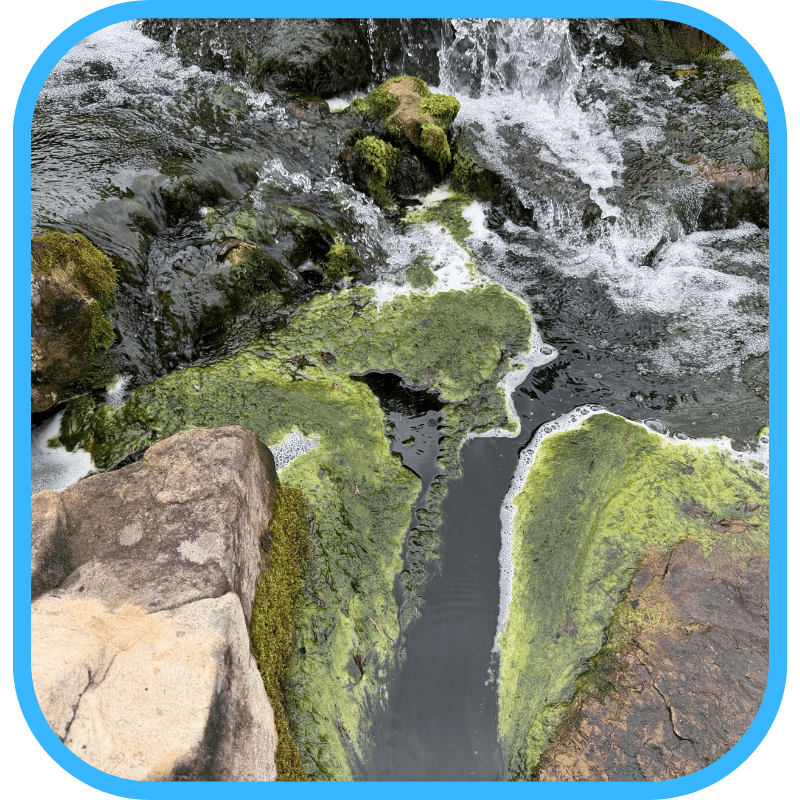
In my opinion, this is where aquatic plants really help balance the system. Plants actively consume nitrates and other nutrients as they grow. When you have a healthy amount of plant life in the pond, they help offset some of that nutrient buildup and reduce the need for frequent water changes or chemical treatments.
A common mistake people make is trying to solve algae problems with algaecides.
Algaecides may remove the visible algae, but they don't actually remove the nutrients that caused the algae to grow in the first place.
Energy doesn't disappear—it only changes form.
When algae is killed by an algaecide, it simply dies and decomposes in the pond. As it breaks down, those nutrients return to the water and reenter the nitrogen cycle. Eventually, as the algaecide wears off or becomes diluted, that energy often shows up again as another algae bloom.
Sometimes it even comes back as a different type of algae that is more resistant to the treatment.
Nature has a way of finding balance.
That's why understanding the nutrient cycle—and managing it with plants, filtration, and proper pond design—is usually a much more sustainable approach than trying to fight algae with chemicals alone.
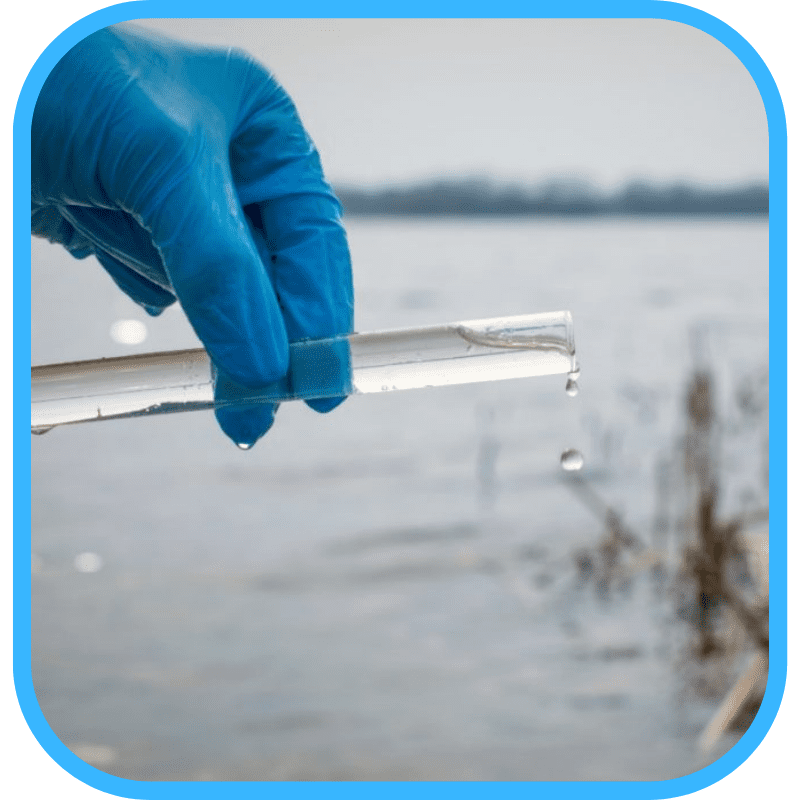
When doing water changes, make sure the water you're adding back into the pond is clean and free of its own problems. Replacing nitrogen-rich pond water with water that contains other contaminants doesn't really solve the issue—it just changes the type of problem you're dealing with.
I've seen situations where people drilled wells for their ponds only to discover the water was extremely high in iron or phosphates. City water can also contain chlorine or other additives that can create issues for fish and water quality. Before using a new water source to refill your pond, it's a good idea to test it. Making sure your replacement water is clean and balanced will help your water changes actually improve the health of your pond instead of introducing a different problem.
Section 3: Do Rocks and Gravel in a Pond Create Sludge or Help Filter the Water?
This is a question that comes up a lot.
In my experience, rocks and gravel do a tremendous amount to help filter an ecosystem pond.
Now, I've talked about some of the other benefits before. Rocks and gravel make the pond look natural instead of looking like a fish tank. They create habitat for all kinds of creatures that belong in a natural environment. They also help protect your liner from digging animals and from ultraviolet rays.
So there are already plenty of reasons to use them.
The only situation where I can understand someone not wanting rocks and gravel in a pond is if they are trying to raise championship koi. In that case, they often want a more traditional koi pond, which is basically an outdoor fish tank with smooth surfaces.
But real carp in nature don't live in padded rooms.
They rub against rocks. They spawn in gravel. They scratch themselves when they itch. That's what fish naturally do. So unless your goal is to create a sterile environment for show fish, the argument against rocks and gravel doesn't hold much weight for me.
And I'll add something else to that.
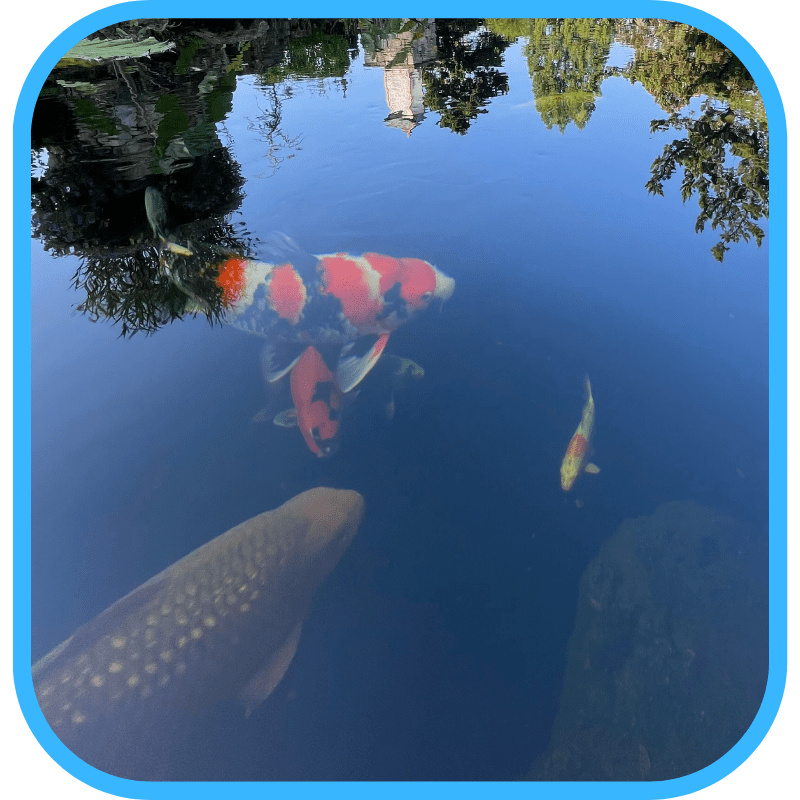
A few years ago I had the privilege of traveling to Japan, where I spent time visiting families that have been raising koi for hundreds of years—generation after generation. While I was there, I actually got to help net fish out of their mud ponds. These weren't just any fish either. These were some of the finest koi in the world, being harvested from the mud ponds and brought into indoor greenhouses where they spend the winter.
While I was standing there looking around at the environment where the Japanese raise some of the highest quality koi on the planet, I noticed something interesting.
Those ponds were mud-bottom ponds.
And in that mud… there were rocks and there was gravel.
So I'll just leave that little secret right there.
Now let's talk about filtration.
In a healthy ecosystem pond, the surfaces of the rocks and gravel become covered in biofilm. This is that soft green coating you often see on stones in natural water. Fish graze on it, baby fish nibble on it, snails feed on it, and it becomes part of a living ecosystem.
More importantly, that surface area becomes home to beneficial bacteria.
Those bacteria colonize the rocks and gravel and begin digesting organic matter in the pond. Using oxygen, they help break down debris and move it through the nitrogen cycle before it turns into the thick anaerobic muck people are worried about.
The massive surface area created by rocks and gravel is one of the reasons ecosystem ponds can support such strong biological filtration.
But there's an important point that people sometimes miss.
This is also a maintenance question.
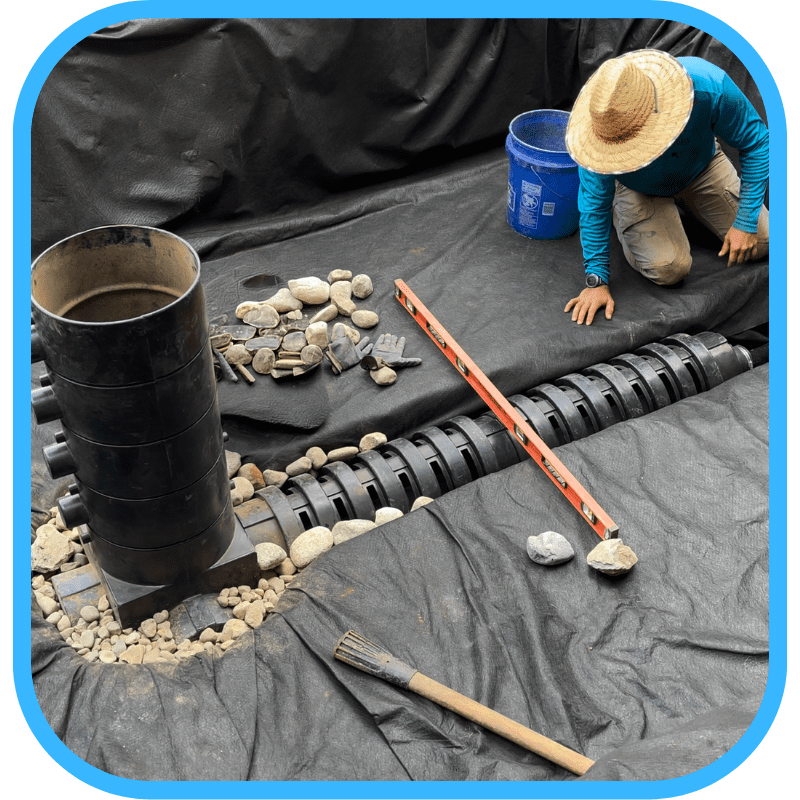
In a traditional koi pond, debris is pulled into bottom drains. That debris is captured in a basket, the basket gets cleaned, and the filtration system does the rest.
In an ecosystem pond, the rocks and gravel themselves become part of the filtration system. That means they also need to be cleaned periodically.
You can't install rocks and gravel and then just let debris and organic matter build up year after year without doing anything about it.
That's not what I'm suggesting.
Rocks and gravel work extremely well when the pond is maintained properly. For most ecosystem ponds, that simply means doing a seasonal clean-out, usually in the spring, where the accumulated debris is removed and the system is reset for the year.
If you'd like to see exactly how we do that, here's a video that walks through our pond clean-out process step by step.
When maintained properly, rocks and gravel don't create sludge.
They help create a living biological filter that supports the entire ecosystem of the pond.
Section 4: Why Is There Foam or an Oily Film on My Pond Water — and How Do I Fix It?
The reality is pretty simple.
Foam or oily film on the surface of your pond is usually the result of decomposing organic matter.
As things break down in the pond—fish waste, leaves, plant debris, and other organic material—they release compounds into the water. These dissolved organic compounds have an interesting property: one side of the molecule is attracted to water, and the other side repels it.
Because of that, these particles tend to collect at the surface of the water.
When enough of them accumulate, they clump together and alter the surface tension of the water. That's what creates the foam you see around waterfalls or the oily-looking film that sometimes spreads across the pond surface.
You'll often notice foam gathering near waterfalls or building up in the opening of the skimmer until it eventually backs up into the pond.
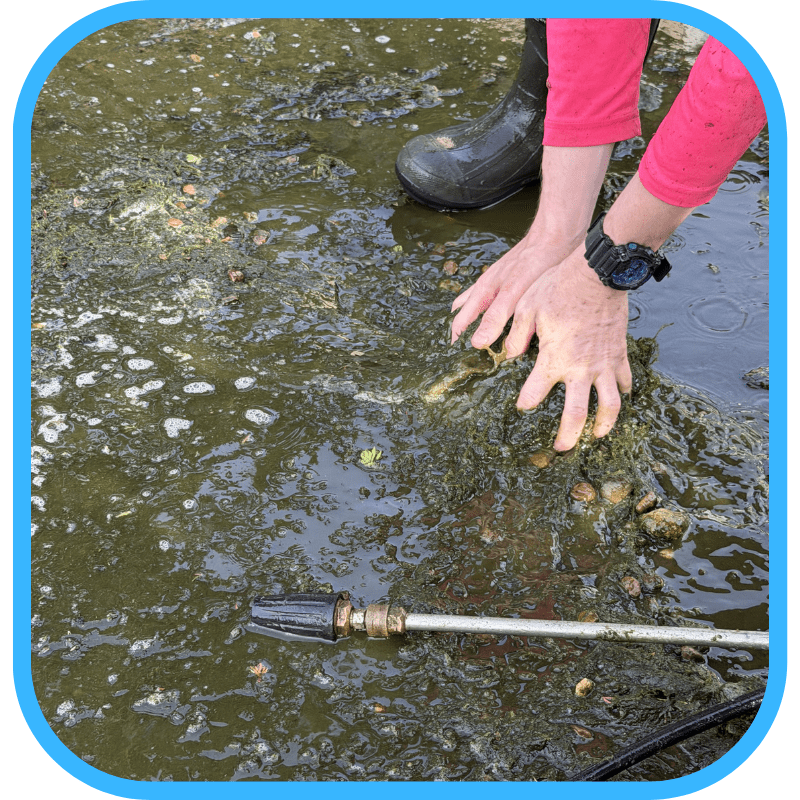
All of this is basically a sign that organic debris is accumulating and beginning to break down into muck.
Sometimes the fix is simple. If your skimmer has an overflow, you can take a hose and spray water into the front of the skimmer to push the foam out so it flows over the overflow and out of the system.
But most of the time, foam or oily film is really a signal that something else is going on.
It could mean the pond hasn't been cleaned properly and it's time for a full drain and clean-out.
Other times it's caused by something like a large storm event. Heavy rain can wash organic material—mulch, topsoil, leaves, and other debris—into the pond. In a natural body of water, a lot of that material would soak into the surrounding soil. But in a lined pond, that debris gets trapped inside the system.
So if you're seeing foam or oily film on the surface of your pond, it's usually just a sign that organic material has built up and needs to be removed or managed.
Once the excess debris is removed and the pond is back in balance, that foam usually disappears on its own.
If you don't have the time or resources to do a full clean-out, many pond product manufacturers offer maintenance products designed specifically to break down accumulated organic matter. You'll often see them called things like "Sludge Buster" or "Muck Buster." These products typically contain blends of beneficial bacteria that are formulated to digest the organic material that settles on the bottom of your pond. Some come in granular form, while others come as pellets that sink to the bottom where the sludge accumulates. Either way, they can be a helpful tool for gradually breaking down that buildup when a full clean-out isn't practical.
Section 5: Which Aquatic Plants Are Best for Absorbing Excess Nutrients and Stopping Algae?
There's a concept we should talk about here called phytoremediation.
That's the fancy term for when plants remove contaminants from water.
In a pond, the main contaminants we're concerned with are nitrogen (in the form of nitrate) and phosphates. These are the nutrients that drive algae growth and eventually begin to degrade your water quality if they build up too much.
Aquatic plants are incredibly effective at absorbing these nutrients.
Some plants act like nutrient sponges, pulling excess nutrients directly out of the water as they grow.
A good example of this is the water lily, and there are actually two different ways you can plant one depending on your goal.
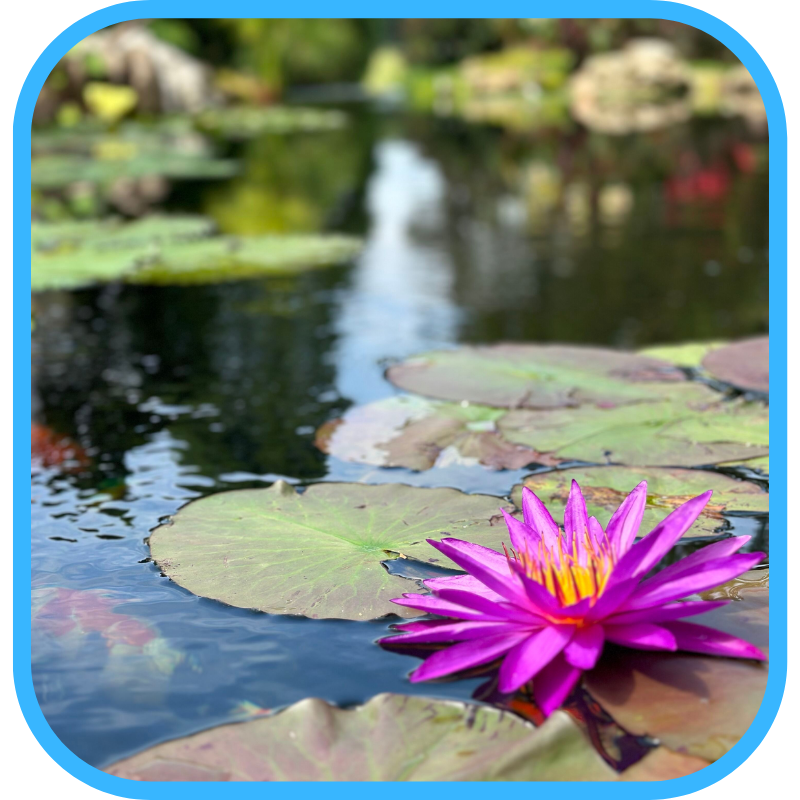
If you want a water lily to function as a nutrient sponge, helping purify the water, you plant it directly into the rocks and gravel at the bottom of the pond. The roots will spread out through the gravel and begin pulling nutrients out of both the water and the pond bottom.
But if your goal is to grow the biggest, most impressive flowers possible, you plant the lily in a pot.
When a water lily is planted in a pot, you can fertilize the plant inside that container. The fertilizer stays mostly contained in the pot and feeds the plant directly, producing lots of leaf growth and beautiful blooms.
If that fertilizer were released directly into the pond water, it would do the opposite of what you want. Instead of feeding the plant alone, it would add nutrients to the entire pond and encourage algae growth.
So depending on your goal, water lilies can either be nutrient removers or ornamental showpieces.
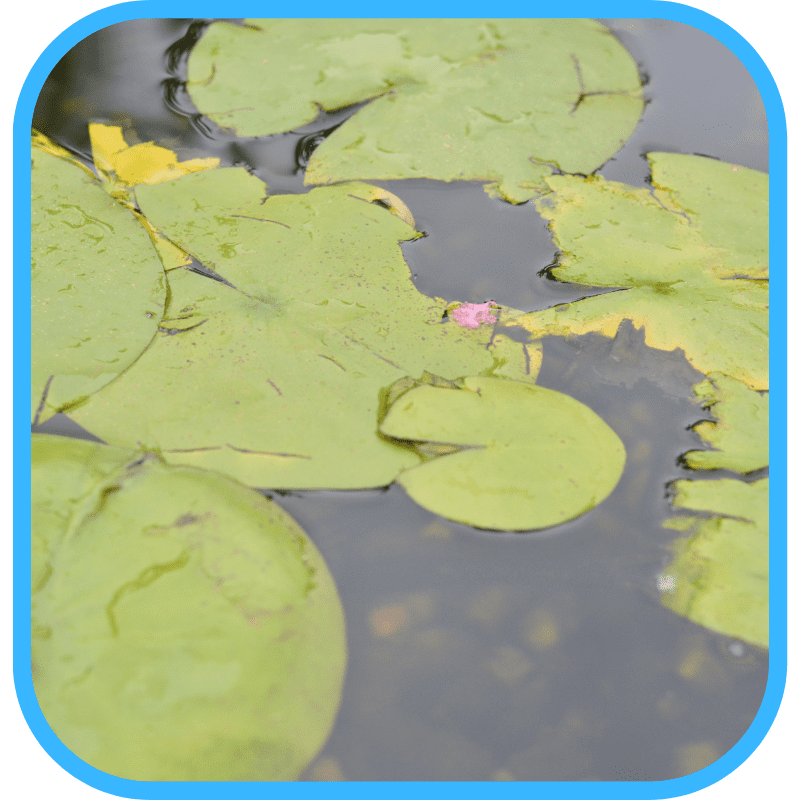
Beyond lilies, many floating plants and marginal plants are also excellent nutrient consumers.
And here's one of the most powerful parts of the process: plant harvesting.
When you remove excess aquatic plants from your pond—whether that's floating plants, marginal plants, or overgrown vegetation—you are physically removing nutrients from the system.
It's actually a lot easier than cleaning a pond.
You can literally walk out with a wheelbarrow, pull out a bunch of plant growth, and throw it in your compost pile. Those nutrients that were in your pond are now feeding your garden instead.
That's a huge win for your pond and your landscape.
Because remember what we talked about earlier: that energy has to go somewhere.
If it's not being used by aquatic plants, then one of three things will happen:
- It will feed algae growth
- It will be suppressed with chemical treatments like algaecides
- Or it will continue building up in the water
Algae is simply another organism using sunlight and nutrients to grow.
So in a pond, you're usually making a choice between growing aquatic plants or growing algae.
The more plants you have doing the work, the less opportunity algae has to take over.
Aquatic plants don't just remove nitrogen and phosphates. Many species can also absorb small amounts of heavy metals and other contaminants from the water. Things like trace metals, runoff pollutants, or even residues from certain pond treatments can sometimes be taken up by plant tissue. When you harvest and remove those plants from the pond, you're also removing those contaminants from the system. It's another reason why a healthy population of aquatic plants is one of the most powerful tools you have for maintaining good water quality in an ecosystem pond.
Some aquatic plants are extremely aggressive. Certain varieties can spread through a rock-and-gravel pond so aggressively that once they're established, they're nearly impossible to remove without using chemicals to kill them. That's why it's important to ask your local aquatic plant experts which varieties work best in your region. Look for plants that are easy to harvest, divide, or pull out when they spread too much. For example, plants like taro & zephyr lilies (rain lilies) tend to grow in manageable clumps and are relatively easy to remove if they start getting out of hand. Choosing plants that are easy to control will save you a lot of frustration down the road.
Section 6: Will an Ecosystem Pond Attract and Breed Mosquitoes in My Backyard?
This is a question I hear all the time.
People say, "I don't want a pond because I don't want mosquitoes."
Here's the truth: mosquitoes need stagnant water to reproduce.
An ecosystem pond is anything but stagnant.
When you have water circulation, waterfalls, or aeration running, mosquitoes struggle to lay viable eggs in the first place. The moving water disrupts the process they rely on for breeding.

But even if a mosquito managed to lay eggs in your pond, those larvae wouldn't last long.
A healthy ecosystem pond is full of predators.
As you move up the food chain from microscopic life, you'll find dragonfly nymphs, small fish, and countless tiny aquatic creatures that will absolutely devastate mosquito larvae. They become food almost immediately.
In other words, mosquito larvae don't stand much of a chance in a balanced ecosystem pond.
In my experience, the places where mosquitoes actually breed are completely different.
You're much more likely to get mosquitoes from a forgotten plastic tub behind the garage with two inches of stagnant water in it than you are from a functioning pond.
For example, around my own pond I have dense ground covers and shady areas. During the summer, if I overwater those areas with my sprinklers, the moisture gets trapped under the plants and in the shaded soil. That's where I've actually seen mosquito issues develop.
It's not the pond—it's the stagnant moisture trapped in those areas.
So if you keep your waterfalls running and your water moving, an ecosystem pond is one of the least likely places in your yard for mosquitoes to breed.
Section 7: How Do Bottom-Feeding Fish Actually Help Clean an Ecosystem Pond?
Fish are absolutely more than just something to look at.
If you spend any time watching koi in a pond, you'll notice they are constantly grazing and constantly working. They move through the gravel, sweep through the sediment, and search for food all day long.
This ties into something we talk about a lot when building ecosystem ponds, which is biomimicry. That simply means we try to recreate what happens in nature.
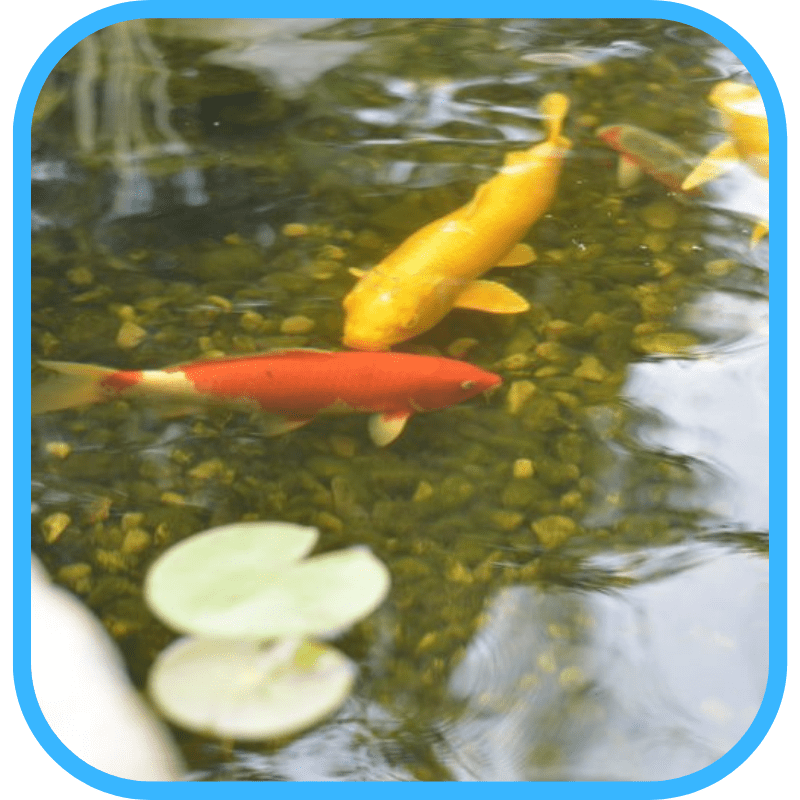
In natural environments, the bottom of a lake or pond contains a mixture of materials—rocks, gravel, sand, and sediment. Scientists sometimes refer to this as benthic diversity, which basically means the variety of materials and particles that make up the pond bottom.
That diversity creates habitat for all kinds of small organisms.
Over time, nature finds its way into your pond just like it does in any natural body of water. You begin to see small worms and other tiny creatures living in the gravel and sediments.
Koi love that.
They search for those organisms as food. They dig through sandy areas. They turn over gravel. They play in the bottom while they forage.
While they're doing that, something important is happening.
As koi stir the gravel and sediments, they release debris and organic matter into the water column. That material can then move into areas where there is more oxygen, allowing beneficial bacteria to begin breaking it down.
Some of that debris also gets pulled into your skimming and filtration system, where it can be captured and removed from the pond.
In other words, the fish are actually doing part of the work.
Their natural behavior helps keep material from settling and compacting into stagnant muck on the bottom of the pond.
Now, how much they contribute depends partly on how you stock and feed your fish.
If you overpopulate your pond, you'll have to supplement their diet more heavily because there won't be enough natural food in the pond to sustain that many fish.
If you think about a natural lake, there isn't a fish every two feet. There are relatively few fish spread across a huge volume of water, and they're all different sizes.
A moderately stocked pond allows fish to spend more time doing what they naturally do—grazing, foraging, and interacting with the ecosystem.
For example, during the winter when I don't feed my fish at all, they spend their time nibbling on biofilm, eating algae, turning gravel, and searching through the rocks.
It keeps them active, it keeps them happy, and honestly, it's pretty beautiful to watch.
Frequently Asked Questions About How an Ecosystem Pond Works
Why does my new pond turn green?
Do ecosystem ponds still need maintenance?
Do rocks and gravel help filter pond water?
Will a pond attract mosquitoes?
Section 8: Closing Thoughts — The Science Behind an Ecosystem Pond
The reality is, there is an incredible amount of technical and scientific activity happening inside of a pond.
There's so much going on at the microscopic level, within the biology of the ecosystem, that most people never even see. All of these interactions between bacteria, plants, fish, and microorganisms are constantly working together.
In many ways, an ecosystem pond truly is a recreation of nature.
And when you stop and think about it, that's actually a pretty remarkable thing.
We live in a world where natural habitats are constantly being destroyed. We clear land, we cover it with blacktop, and we create impermeable surfaces everywhere we go. A lot of the natural systems that once existed in those places are simply gone.
But inside a pond, all of this science and biology is still happening.
It's beautiful. It's magical. And it draws nature back into the space.
Birds show up. Dragonflies arrive. Frogs move in. Fish settle into the water. Life finds its way into the ecosystem.
And for me, that's the real reason I do what I do.
I love helping people create spaces where they can connect.
Connect with themselves.
Connect with each other.
And connect with nature.
John G Out 😉
Ready to Build Your Ecosystem Pond?
We're here. Our content is here. And it all comes from a place of love. If there's anything at all we can do for you, don't hesitate to reach out. Fill out our contact form and let's have a no-pressure conversation. We're more than happy to help get you pointed in the right direction — whatever that looks like for you.
Contact Us— John G. Adams