Quick Overview: What Happens After You Say Yes?
- We confirm your vision and walk the property
- We answer final questions and validate the direction
- Most clients receive pricing that day
- If it's the right fit, the next step is usually a deposit and scheduling
- Construction is messy in the middle, but we stay until the job is done
- Maintenance, warranty, and long-term expectations are part of the conversation
This process is designed to help you move forward with clarity and confidence.
Table of Contents
- Is This Article (or Video) Right for Me?
- What Is the Consultation — And What Isn't It?
- What Should I Expect on the Day of My Consultation?
- What Happens After the Consultation?
- How Are Deposits and Payments Handled?
- How Do You Handle Scheduling?
- What Will My Yard Actually Look Like During Construction?
- What Surprises Homeowners the Most?
- What Happens After We Leave? (Maintenance & Warranty)
- How Do Consultations Typically End?
- Why Don't We Rush the Design Process?
- Frequently Asked Questions
- A Final Word
Is This Article (or Video) Right for Me?
The first thing we need to cover right off the bat is who this content is for — and who it's not for.
If you're not sure what type of water feature you want GO HERE
If you're still trying to figure out whether you even want one…
If you haven't thought through budget, design, or what this is going to look like for you…
This is not the right place for you. Go HERE
You need to be in the earlier phase — going through our website, absorbing the Learning Center content, using the self-discovery tools, and figuring out what's right for you, how it works, and what it costs.
There's a ton of information there to help you get to that point.
You just need your last questions answered so you can validate the conversations you've already had and pull the trigger on your pond project.
Now, that doesn't mean you're ready to sign a contract on the spot.
But it does mean you're pretty serious.
The best way I can describe it is this:
You're at the dealership.
You've decided you're buying a car.
You're pretty sure you know which one you want.
You just haven't made the final commitment.
At this point, you still have questions that need answered.
You want to make sure everything feels just right.
You want to make a deeper connection with our team.
We're here to walk across the finish line with you.
So here's what we're going to cover in the next few minutes:
- What a consultation is — and what it isn't
- What to expect during the experience
- What happens after the consultation
- How deposits work
- What scheduling and timelines really look like
- What to expect during construction
- What surprises most homeowners
- What happens after we leave
- How consultations typically end
- And why we don't rush the design process
By the end of this, you're going to have a lot more answers than questions.
So when someone from our team shows up for your on-site consultation, you're able to focus on the design, the details, and making the final decisions with confidence.
What Is the Consultation — And What Isn't It?
This consultation is not a sales call.
It's not about starting from scratch.
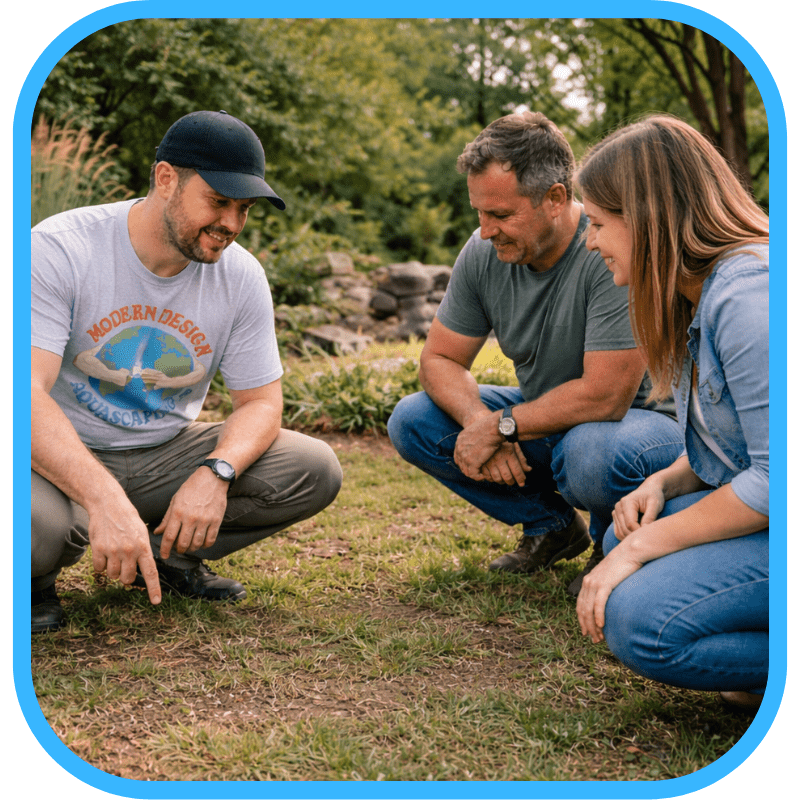
The consultation is about confirming your vision. It's about laying eyes on the land. It's about solidifying the relationship that you've made with your salesperson and making sure that you really have a great connection with whoever you're working with, because it's so important that you have a true connection with your designer and the team who's bringing your water feature dreams to life.
That's what this is about.
Meeting the person — whether it's myself, Tristan, or someone else on our team.
You've already had conversations with us. But there's something different about being there in person. Shaking hands. Spending time together.
That time together really solidifies the relationship in an important way.
The other part of this is finalizing the design.
We're looking for things that we couldn't see in the photographs you sent in or didn't uncover during our conversations. Sometimes there are things that seem completely unimportant to a homeowner that are very important to us as contractors.
So this is an opportunity to make sure we haven't missed something that could impact your project.
We're walking the property with fresh eyes.
We're revisiting the conversations we've already had — not to start over, but to validate them.
To make sure what we talked about is in fact the direction we want to go.
And to make sure we haven't missed something in the design process that could make your project come out even better than expected.
What Should I Expect on the Day of My Consultation?
How long does the consultation take?
That's a loaded question.
The truth is, a typical consultation takes anywhere from 30 minutes to five hours.
What impacts that more than anything is how much homework you've done on the front end.
If you've done a lot of homework, you're not going to have as many questions. If you haven't, it's going to take longer.
Large-scale projects also take more time. When we're traveling farther out or working on bigger projects, we dedicate more time to the consultation process so we can really dive into questions, details, and concerns.
The reality is, we don't schedule our consultations close together because we want to dedicate as much time to you as you need.
Some people don't want a lot of questions answered. They know what they want and they're ready to move on. They're not all about chit-chat.
For those people, we're not having this conversation for us. We do what we do. We set it on autopilot. We turn our passion up to 10 and we start building. That's how we operate.
We just need to make sure we're going in the right direction for you. That's what matters.
Other people want to understand everything. Detail-oriented people. You know who you are.
Either way, we're not in a hurry to leave.
We're here to answer your questions, make sure you're comfortable, and get you to a place where you feel 100% confident moving forward.
So the time is however long you need.
Who should be present?
Everybody.
All decision-makers need to be there.
Anybody who's going to have input on this project — whether it's financial, artistic, or otherwise — should be present for the consultation.
You want to hear this story from the horse's mouth.
If one person is there and their spouse or partner isn't, and they "couldn't make it," the consultation needs to be rescheduled.
This is a decision you're going to live with for a long time.
It's important that we develop that relationship together as a whole.
What do I need to have ready?
You need to be confident that you've done enough homework.
You've spent time absorbing content, understanding the type of water feature you're building, how it works, what it's going to take to maintain, and what to expect long term.
You should be educated about the water feature you're having a conversation about.
Beyond that — come with an open mind.
Be prepared for the price ranges we've already talked about.
Be ready to get on the schedule.
This isn't a guaranteed commitment, but the reality is, odds are pretty good that what you'll need is a deposit.
We'll talk about what that looks like.
And look — if you're not ready to move forward, that's okay. But truthfully, if you're not ready to take that next step, it doesn't really make sense to pay for an on-site consultation.
Will I get a price that day?
Yes.
Unless it's a very large project — something well into the six-figure range — you're going to get a price from us on the spot.
Our goal is to revisit everything we've talked about, make sure nothing's been missed, and get your project on the books.
Will I see drawings or designs that day?

Sometimes you'll see conceptual "sketches".
We're not big on elaborate blueprints or highly detailed drawings, understanding there is a place for them - but for most situations, they simply are not needed.
The best way to explain it is this:
It's like telling a painter you would like to commission them to paint you a painting… and then asking them to draw you a picture of the painting first, so you can decide if you want them to paint it.
That's not how we work. Our designs are more guidelines than rules!
Of course we show comparable projects, similar looks, and give you enough detail to understand what you're getting into. We make a list of your non-negotiables — the things that are important to you — and we incorporate those into the proposal based on our conversations. It's not a "trust me" situation, we explain it with past projects. The truth is, no matter what we do, on large projects people are always "pleasantly surprised" when we finish!
That being said, once we have agreed on the details and a "footprint" to build in, we need artistic freedom to work our magic. We build according to the rocks that show up. The materials. The environment. Projects evolve as we build. So instead of locking everything into a rigid drawing, we keep things flexible so we can create something that truly blows your mind- a unique, one-of-a-kind interpretation of aquatic art!
Do I need to make a decision that day?
No, you don't have to. But in most cases, people don't invite us out to their property until they're pretty close to making a decision. So while there's no pressure to decide that day, the visit is often about validating the direction and moving forward with confidence.
What actually happens during the consultation?
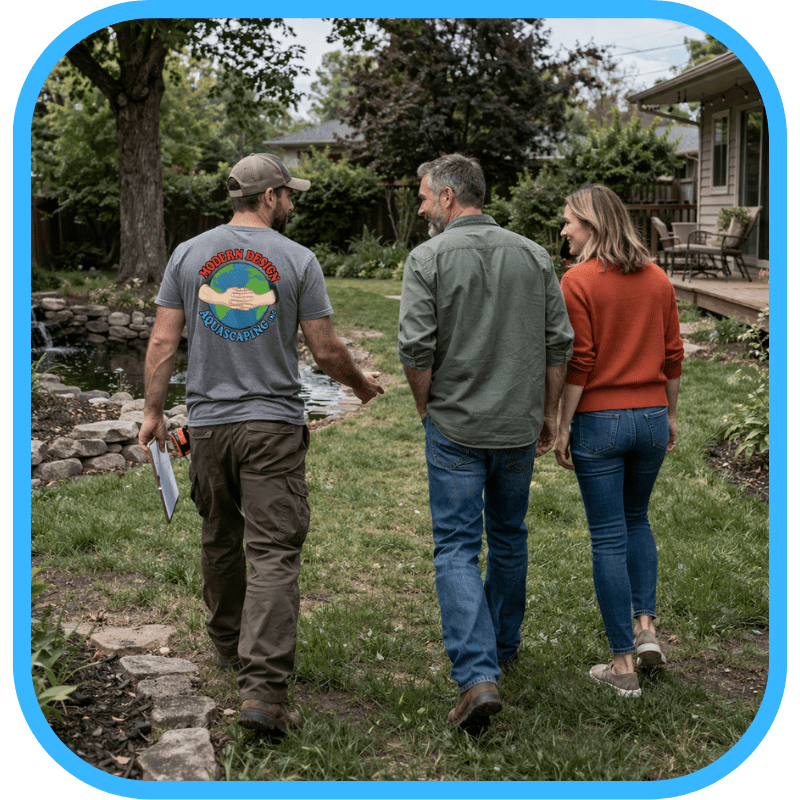
We walk the property.
We revisit the conversation.
We make sure nothing's been missed.
We confirm the direction.
What Happens After the Consultation?
How is the proposal built?

Your proposal is built directly from our conversations.
Everything we talked about up to this point — your non-negotiables, the size of the water feature, the layout, the details that matter to you — all of that gets translated into a proposal.
We build it out using our own software, selecting the proper components based on your specific asks.
Every job is unique & different.
We size the right pump.
We size the plumbing correctly.
We determine whether it's an internal or external pump based on the application — swim pond, koi pond, whatever it is.
This isn't templated.
It's built specifically for your project.
What will my quote include?
Your quote is going to include everything we talked about.
A clear description of the project.
The size of the water feature.
The length of the stream.
All of your must-haves.
It's a detailed verbal breakdown of what we're building for you.
Now, Tristan and I do this a little differently.
He tends to include more detailed breakdowns of parts and pieces because that's important to him as a consumer.
For me, that level of detail has never really mattered.
To me, it's like going to buy a Corvette and asking for a breakdown of every single part and what each one costs.
That just doesn't make sense to me.
I'm more interested in:
Here's the project.
Here's what you're getting.
Here's what it costs.
But that's a difference in personality.
And at the end of the day, we tailor the proposal to you.
If you're detail-oriented, you'll get more detail.
If you're not, we're not going to overwhelm you with things that don't matter to you.
Our goal is simple:
We want you to feel comfortable and confident in what you're getting.
How long does it take to receive my quote?
For most projects, it's finished right there — before we leave.
For larger or more complex projects, it may come shortly after.
For example, Tristan just flew out to Florida yesterday and met with a client he had a phone call with the week before. That consultation went well. He was back in the shop the next day putting together the final details for that proposal and sending it out.
Even on a multi-hundred-thousand-dollar project, it was turned around within a couple of days.
It really depends on how much more information is needed and how prepared you are going into the consultation.
How Are Deposits and Payments Handled on My Pond Project?
What is the deposit and is it refundable?
The standard is a 50% deposit to get started.
Technically, it's non-refundable.
But the reality is, in the few instances where someone has asked for their money back, we've made it happen.
If we've taken a financial loss on your project based on something you've asked for, we may have a conversation about that so we're not taking a hit.
But at the end of the day, we only want to do projects with people we're a great fit for.
We want an exceptional experience for you and for us.
We're not interested in leaving a bad taste in someone's mouth because we took their money and wouldn't give it back.
That's not who we are.
What happens once I give a deposit?
Once your project is sold, we put you on our calendar.
We tell other clients that your time slot is no longer available.
We begin planning & ordering materials for your project.
That's when things start moving.
On larger or travel-based projects, there may be certain non-refundable expenses — things like plane tickets or lodging.
There are always exceptions depending on the situation.
But in general, once you're on the schedule, we're moving forward.
What does the payment schedule look like?
For most projects under six figures, it's simple:
50% down.
50% when we're finished, before we leave.
For larger projects, we break the remaining balance into phases.
That depends on the size and scope of the project.
There are also situations where we're booked months in advance.
In those cases, we may only take a 10% deposit to hold your spot, because we don't want to sit on a large amount of your money for months before we start.
Every situation is a little different, but the goal is to keep it fair and straightforward.
Do you accept credit cards?

Yes.
But we don't absorb the 3% fee from the credit card companies.
If you want to pay with a card, you cover that percentage.
We don't build that cost into every project just to accommodate it.
If you're paying cash, you're getting the best price.
If you choose to use a card, you're choosing to pay for that convenience.
Do you offer financing?
We do have a financing option for smaller projects.
But honestly, the rates aren't great.
If you're considering financing, I would strongly recommend going to your own bank or credit union and setting up a home equity line of credit.
That's what I did on my own project.
That's where you're going to get the best rates.
If financing is part of your plan, handle that on your end and save yourself a lot of money.
What causes the final price to change?
This is one of my biggest pet peeves.
I hate when someone underbids a project, gets the job, and then starts adding costs later. The client ends up paying the same amount — or more than we would have charged— for an inferior project.
We don't operate that way.
If your project price changes at any point, we immediately call a timeout.
And understand this:
It only happens if something comes up that we could not have known ahead of time.
If it's our mistake, we take it on the chin. Period.
If it's something unforeseen — like hitting massive rock underground, buried debris, or conditions nobody knew about — then we stop.
We don't keep building and surprise you later.
We stop the project.
We sit down with you.
We explain exactly what's going on, what we found, and what the options are.
From there, we figure out the solution together.
Sometimes we pivot.
Sometimes we adjust.
Sometimes we redesign.
But we never wait until the end and say, "Oh by the way, it costs more."
That will never happen.
Acts of God require a conversation.
Everything else stays exactly the way we agreed.
That's how we operate.
And that's how we treat people.
How Do You Handle Scheduling — And How Close Do You Stick to It?
My friends, this is quite the magic trick.
We're building projects that are constantly evolving works of art — some of them very large scale.
We're working with weather, which is completely out of our control.
We're dealing with machine breakdowns, equipment failure, botched deliveries.
There are a lot of moving parts.
Honestly, it's a miracle we can ever do anything on schedule.
And then on top of that, you've got the reality that projects grow.
People add things.
"While you're here, can we do this?"
"Would it make sense to add a patio?"
"What about some trees over here?"
Before you know it, the project is 20–40% larger than what we originally planned.
That's not us pushing scope.
That's just the natural evolution of the project as people see it come to life.
So how does scheduling actually work?
We sell the job.
We put you on the calendar.
And then we do our best to stay in communication with you and keep you updated on where things stand.
The schedule is a guesstimate.
That's the honest truth.
So no — we're not going to leave you hanging or disappear on you.
You're going to hear from us.
You're going to know what's going on.
And when it's your turn, you're going to get the same level of focus and attention we gave the last client.
How far out are you scheduled?
It depends.
Time of year matters.
Project size matters.
Location matters.
Local projects, we're usually pretty close to schedule.
Out-of-town projects are a little different.
We have teams — what I call pond assassins — that we've worked with all over the world. Guys & gals we've known for decades.
When we do those projects, we collaborate.
We bring in a full team so we can move faster and still deliver the same level of quality.
When is the best time of year to build?
It depends on where you are.
I personally watched the leaves change on projects one year in North Dakota, then in New York, then in PA. and finally in Tennessee.
There's always somewhere in the country where the weather is perfect 😉
We build in the rain.
We build in the snow.
We show up and get work done.
Now, there are limits.
If you're on a steep clay slope and it's pouring rain, that's not safe. That's not happening.
But in sandy soil? We can work right through it. Sometimes we don't even stop.
So it really comes down to your property, your soil, and your location.
Just know this:
We're not fair-weather Johnsons, we work if it's possible (and safe) to work.
Can you schedule around a specific event or deadline?
We do our best.
But let's be honest — everybody has a deadline.
A wedding. A party. A personal milestone.
We're all the heroes of our own story.
We come from a place of love and we try to accommodate everyone.
But when things go sideways that are out of our control, pressure and stress don't help anything.
So I'll usually ask:
Is this deadline truly non-negotiable?
Because if it is, we need to talk about that up front and make sure it's realistic.
In some cases, we may be able to move things around.
But in general, it's not ideal to build under pressure.
We'll always try.
But there are no guarantees.
What happens when weather delays things?
Weather happens.
If we can work safely, we will.
If we can't, we won't.
It's that simple.
When weather delays a project, we shift gears. We find something else to stay productive until conditions improve.
It's just part of the process.
Circumstances beyond our control.
We deal with them and keep moving forward.
That's how we handle scheduling.
We do the best we can.
We communicate.
And when it's your turn, you get our full attention until the job is done right.
What Will My Yard Actually Look Like During Construction?
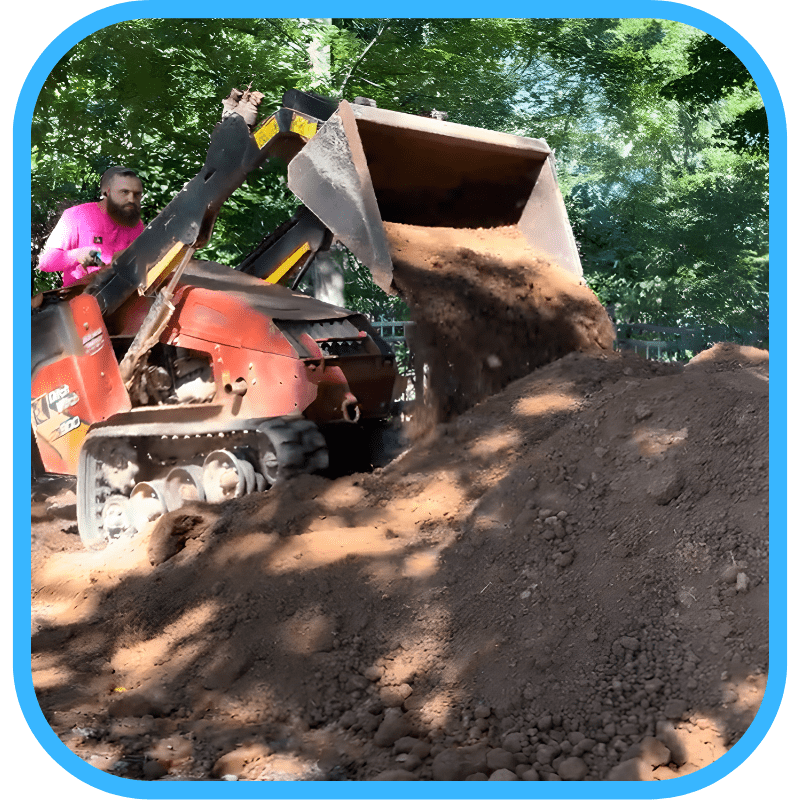
There's a point in every project — especially larger ones — where you're going to look outside and think you've lost your mind.
It's going to look like a nuclear bomb went off in your yard.
That's just the reality.
Unless your project is tiny, there is a lot that goes into building a water feature. I would strongly recommend watching some of our construction videos so you can really see what it looks like when these projects go into the ground.
Because this isn't light work.
We're moving thousands and thousands of pounds of material. Tons of dirt, gravel, stone — sometimes semi-loads — all moving back and forth across your yard.
We can't magically lift things from the front yard to the backyard.
Equipment has to come in. Materials have to travel across the lawn. Sometimes through gates. Sometimes fences need to be removed or modified.
We do whatever it takes to get the job done effectively and efficiently.
Making something take twice as long because we're trying to avoid taking apart a fence just doesn't make sense.
What kind of impact will this have on my yard?
There's going to be disruption.
There's going to be lawn damage.
There's probably going to be irrigation repairs.
No matter how hard we try to protect everything, you just can't move that much material in and out without affecting the space.
You've got to break some eggs to make an omelet.
Whoever came up with that line was definitely a pond builder.
So plan for it.
Know it's part of the process.
Are there things I need to prepare for ahead of time?
Yes.
If your subdivision has any rules — start times, stop times, no weekend work, parking restrictions — we need to know that ahead of time.
We were on a project in California where none of that was communicated.
No work before 8.
No work after 5.
No weekends.
And the project had been scheduled for long workdays, six days a week.
It caused delays, cost money, and created a lot of frustration.
So if there are covenants, restrictions, or anything like that — we need to know up front.
Same goes for anything in your landscape that's important.
If there are plants, trees, or features in the danger zone that you want to preserve, I recommend having a landscaper come out ahead of time and relocate them.
Because once we're on-site, we're on a mission.
We're not reckless, but the reality is it's very difficult to do what we do and not make a mess.
So plan accordingly.
What about noise, dust, and disruption?
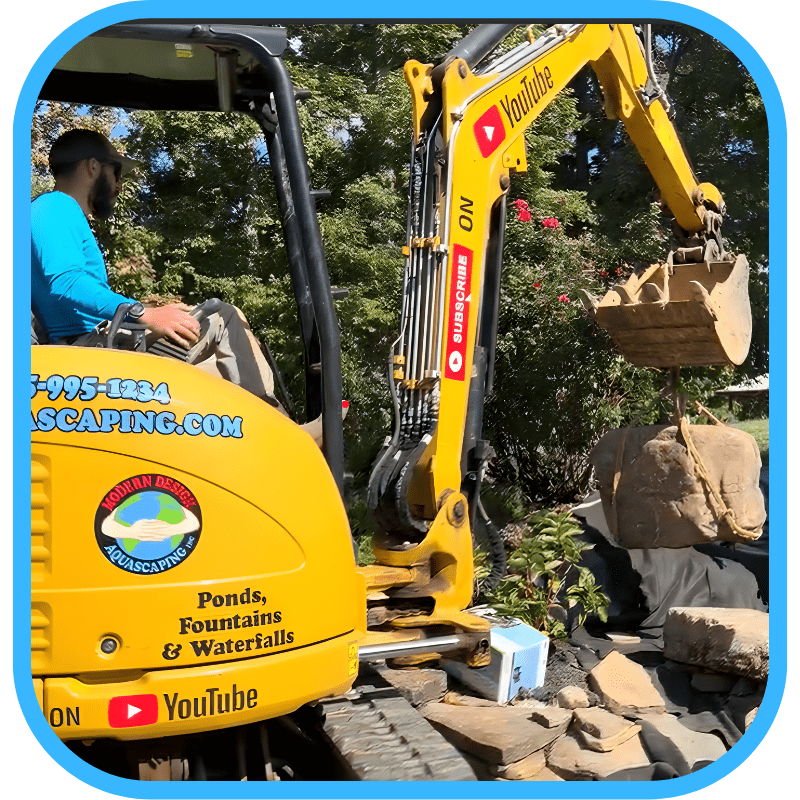
It's construction.
If it's a big job, it's big machines.
If it's a really big job, it's really big machines.
There's going to be noise.
There's going to be dust.
There's going to be disruption.
That's just part of it.
It's like going to the gym.
It doesn't look great in the middle of the process.
But at the end, you look in the mirror — and that's where the magic happens.
You're going to have that moment where you look outside and think, "What have I done?"
And then at the end — it all comes together.
Do I need to be home during construction?
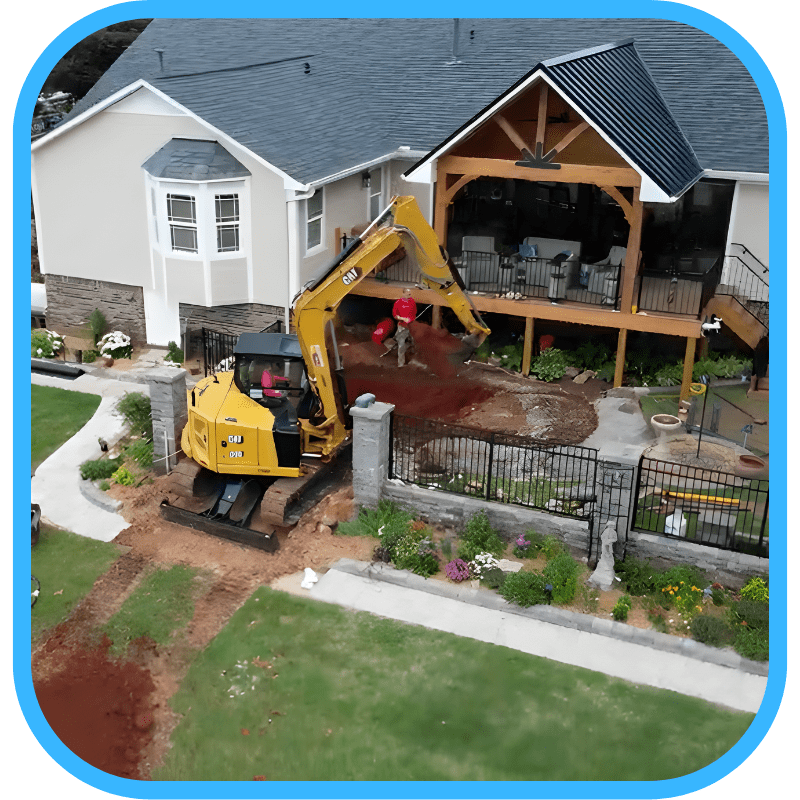
You don't have to be.
Some people choose not to be there.
But I'll tell you this — it's very different when you are.
You get to see the process.
You get to have conversations with the artists.
You get to be part of the evolution of the project.
When homeowners are present, they tend to feel more connected to the end result.
They have more ownership in it.
The only downside is the disruption to your daily routine — mud, noise, dogs running through the yard.
So you've got to decide what's right for you.
How do I communicate with the crew?
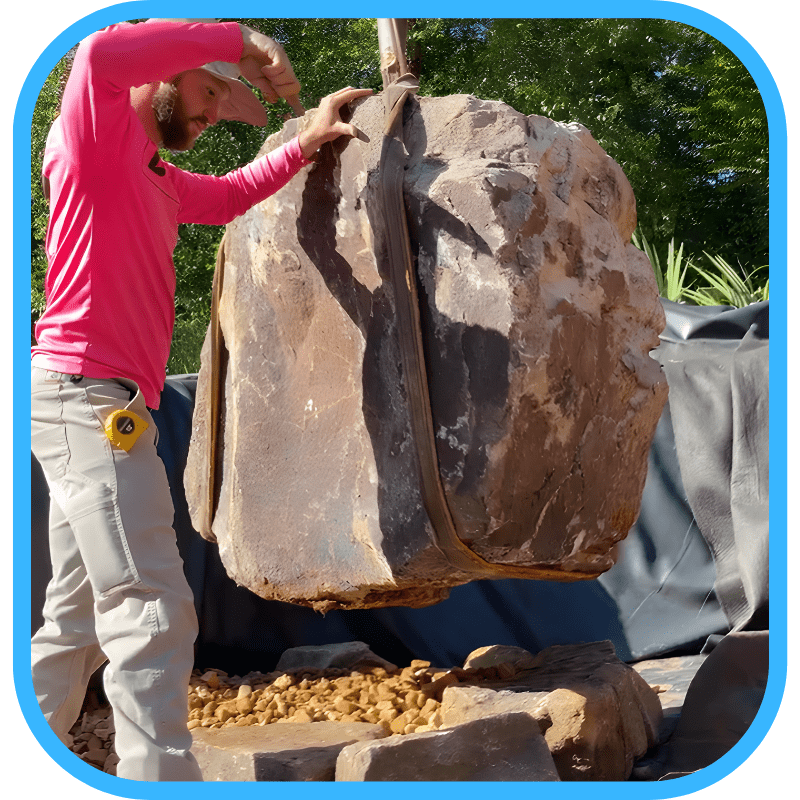
All of our people are great.
But if you have questions, concerns, or want to make changes, you need to go through the team lead.
There's always someone in charge of your project.
You're welcome to talk with everyone, but anything related to design, scope, or decisions needs to go through that person.
That's how we keep everything clean and consistent.
What about permits?
Permits are your responsibility.
If you're local and need help, we can assist.
But if you're in another town, another state, or another country, you need to do your homework and understand what's required.
I've seen jobs get shut down because permits weren't pulled.
That's not something you want to deal with.
We'll help guide you if you need it.
But ultimately, it's your responsibility to make sure everything is handled properly.
That's the reality of construction.
It's messy in the middle.
But in the end — it's worth it.
What Surprises Homeowners the Most?
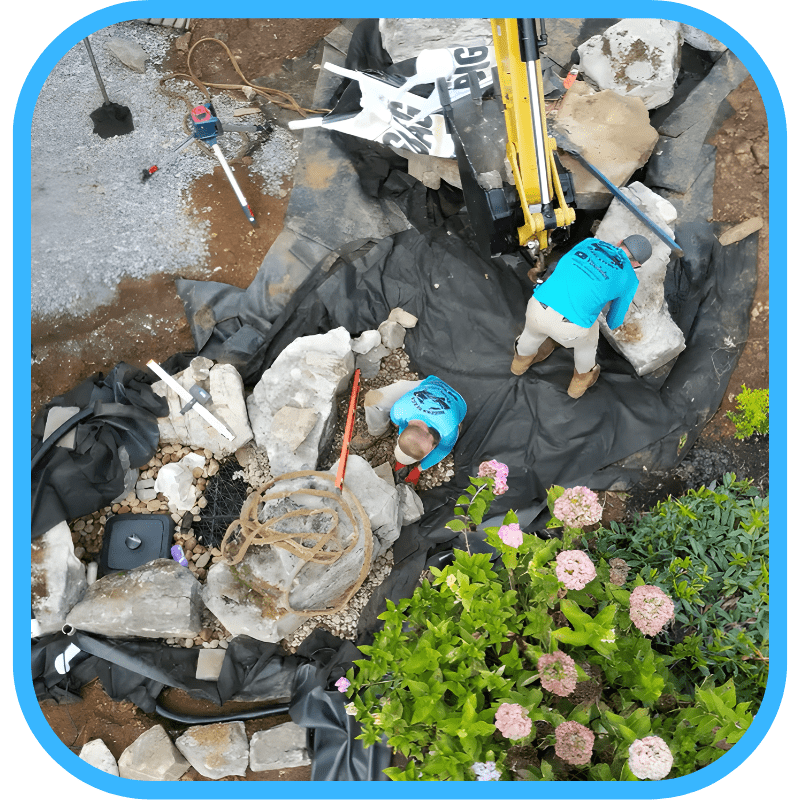
You know, for everybody, it's different.
I hear a lot of things.
"I can't believe how many materials went into this."
"I can't believe how hard you guys work."
"I can't believe how natural it looks — like it's always been there."
"I can't believe the size of those rocks."
"I can't believe there were semi-loads full of boulders."
There are so many different reactions.
And honestly, most of them are good surprises.
People are blown away by the process, by the efficiency, and by the end result.
What surprises people after the pond is done?
A big one is how quickly things start to come together.
With proper filtration, the water clears quickly.
Fish can go in pretty quickly too — once the water temperature matches the outside temperature, we can start adding fish as long as we don't overpopulate.
That part surprises people.
What does the pond look like at first?
This is an important one.
At the beginning, it doesn't look finished.
It can look a little… naked.
The edges haven't filled in yet. The plants are just getting started.
And a lot of times, the water will turn green.
That's normal.
It happens in aquariums. It happens in ponds.
You're recreating Mother Nature from scratch.
There's no balance yet.
There's no established ecosystem.
So in the first 30 to 90 days, you're going to see changes.
You might see algae.
You might see cloudy or green water.
That's all part of the process.
What's actually happening during that time?
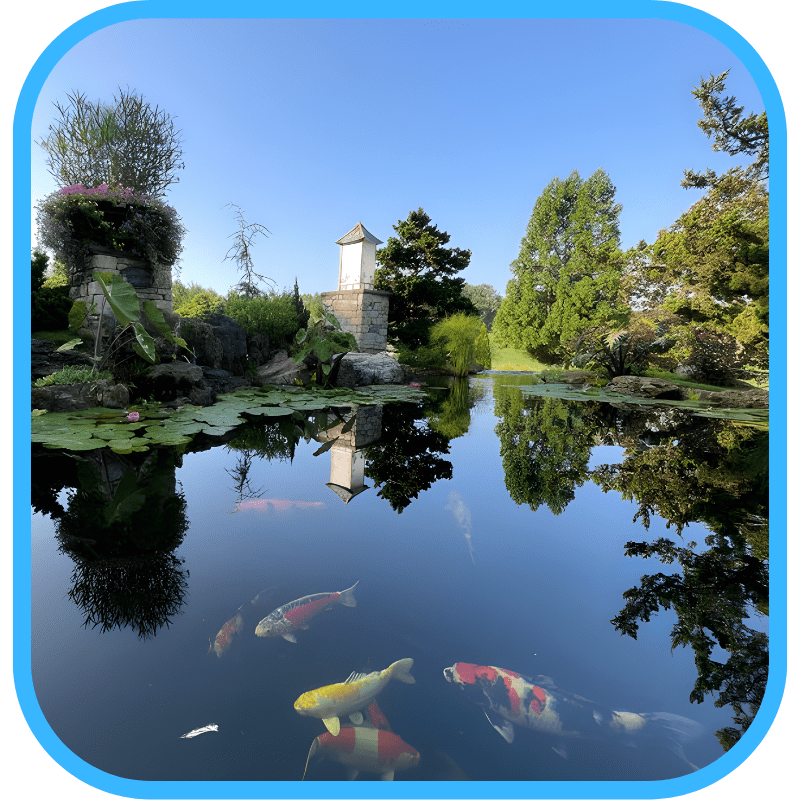
Your pond is becoming an ecosystem.
Right now, it's basically a big hot tub.
There's no shade.
There's no plant coverage.
There's no biological balance.
But as time goes on:
The beneficial bacteria builds.
The plants start to grow.
The lilies spread out and create shade.
The water cools.
The fish have more habitat.
Everything starts working together.
And that's when the magic happens.
What about maintenance and long-term expectations?
This is another big one.
I had a client one time who thought his pond was going to be zero maintenance.
And that's just not reality.
So I created a video called "The True Cost of Owning a Water Feature."
It might feel a little direct.
But it's not meant to talk you out of anything.
It's meant to set expectations.
It's like buying a car.
At some point, you're going to need brakes.
You're going to need tires.
There are wear items.
A water feature is no different.
There are things you'll maintain.
There are parts that may need to be replaced.
There are upgrades you might want over time.
That video walks through all of it so you know exactly what to expect.
Why we share that
This is coming from a place of love.
I'm not trying to talk you out of anything.
I'm trying to make sure you actually enjoy what you're getting yourself into.
Because this isn't just about building something that looks amazing for a week.
This is something you're going to live with.
And if you don't understand what that looks like on the front end, that's where people get frustrated on the back end.
That's why that video exists.
Not to scare you.
Not to be negative.
Just to be real.
Because the right person watches that and says,
"Perfect. I know exactly what I'm getting into."
And the wrong person watches it and says,
"Yeah… that's probably not for me."
And that's a win too.
Because at the end of the day, this only works if it's the right fit.
And when it is — when everything lines up — there's nothing like it.
What Happens After We Leave? (Maintenance & Warranty)
What does maintenance look like — and who handles it?
There is routine maintenance with any water feature.
How much depends on the size of your pond.
For a smaller pond — say 3,000 to 4,000 gallons — you're looking at maybe 15 to 20 minutes a week during the summer.
That's it.
If you want to go deeper into that, we've created a ton of content around maintenance that will walk you through exactly what to expect.
If you're local, we also offer maintenance services. Right now, for local jobs, we include one year of VIP service with our pond installations. That gives you a chance to experience what it looks like to have everything taken care of for you — and to understand what it takes to maintain your pond at a high level.
From there, if you want us to continue handling it, we offer maintenance programs within a couple hours of the Knoxville area.
And if you've got questions, we're always here to help.
What does your warranty cover?
We build our water features to be as close to bulletproof as possible.
Over the last 25 years, we've seen just about everything that can go wrong — and we build to prevent it.
We're careful about our underlayment.
We protect the liner inside and out.
We account for things like muskrats, fire ants, termites — all of it.
We don't cut corners.
That said, everything we build comes with a one-year warranty from the date of construction.
If something fails because of how we built it, we fix it.
Period.
If we make a mistake — a leak, a low edge, anything construction-related — we own it.
That's our name on the project.
What's not covered?
Common sense stuff.
If a tree falls and crushes your system — that's not on us.
If something happens that's completely outside of our control — acts of God — that's a different conversation.
If equipment is abused or not maintained and it fails because of that, it's not going to fall under warranty.
But in all practical situations, we're here to help.
What happens after the first year?
After that first year, manufacturer warranties take over on the equipment.
If something like a pump fails and it's still under manufacturer warranty, we can help facilitate that.
If we need to come out and replace something after that first year, there may be a service charge for labor depending on the situation.
If you're on a maintenance program with us, you're going to get a much higher level of service and support.
What if something goes wrong?
We're here.
You've got our contact information.
We respond quickly. We help troubleshoot. We do what we can to get things handled.
The last thing we want is for you to have a bad experience.
We want you to love your water feature.
We want you telling your friends how great it is.
We're going to treat you the way we would want to be treated.
And at the end of the day, we're going to do what's right.
How Do Consultations Typically End?
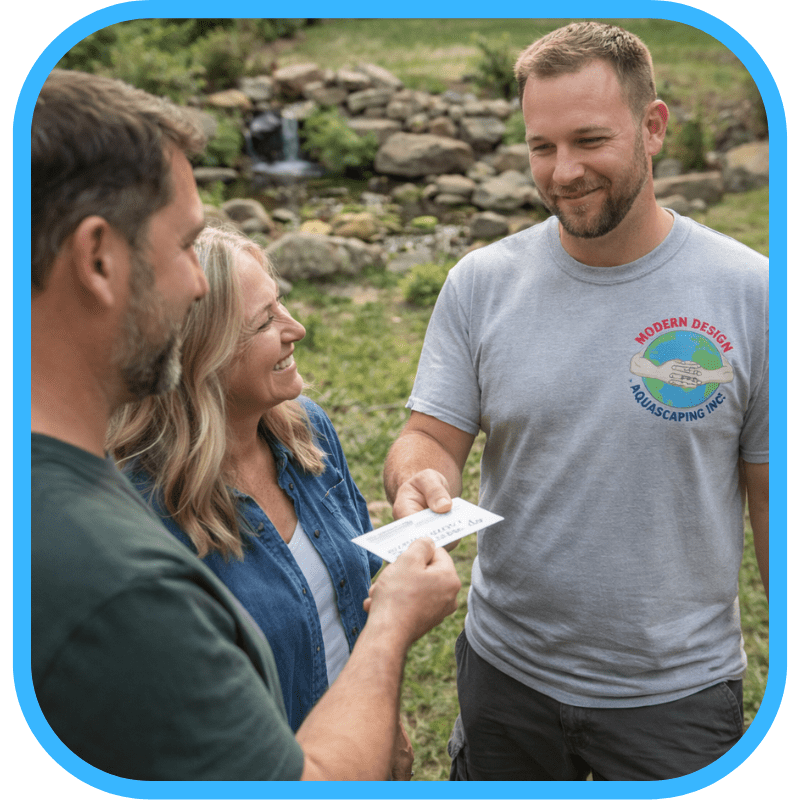
Almost 100% of the time, a consultation ends with a handshake and somebody writing us a check or doing a bank transfer.
Here's why.
The truth is, we work really hard on the front end to answer all your questions, to give you all the information and education you need so that you're fully capable of making the right decision for yourself.
We're not there to sell you.
We're there to answer questions and make sure everything lines up.
We're only looking to work with people who are a great fit for us.
We want exceptional experiences, and we want to work with exceptional people.
And by the time you've invited us out to your property, you're pretty sure you know what you want — and you're pretty sure we're the team you trust to do it.
It's that simple.
What if I'm not ready to move forward?
No pressure.
We're not going to twist your arm.
We hope we've done enough on the front end to give you what you need to make your decision, but at the end of the day, that decision is yours.
If you're not ready, we simply collect the consultation fee and we're still here for you.
We'll continue to answer your questions.
And if you decide to go another direction, we would genuinely appreciate hearing why.
Not to argue with you — but to learn and improve.
Why do some people choose not to move forward?
If I'm being honest, most of the time it comes down to cost.
We know what it takes for us to deliver the level of experience we're committed to providing and we stand behind that.
At the end of the day, we hope you choose to work with us.
But more importantly, we want you to make the decision that's right for you.
Why Don't We Rush the Design Process?
We've never done anything in business the fast way.
We've never been in a hurry.
I know a lot of guys who are faster than us at every phase of the business.
That's just not how we operate.
It's important to us to have a process.
It's important to us to understand why you're doing what you're doing — what matters to you, what your non-negotiables are, what this space actually means to you.
I've had the opportunity — if that's what you want to call it — to see a lot of people end up with the wrong water feature.
Not because they didn't care.
But because they didn't slow down enough on the front end.
They didn't ask the right questions.
They didn't get asked the right questions.
They got sent in the wrong direction.
I've seen people talked into ponds when a pond wasn't right for them.
I've seen people end up with waterfalls when what they really wanted was something simpler.
I've seen a lot of hard-earned money spent in the wrong direction.
And almost every time, it could have been avoided by taking more time in the design process.
The devil's in the details.
It's all the little things along the way that add up to something incredible.
You can't always point to one big thing and say, "That's why this feels right."
It's the accumulation.
From the first conversation…
To the content you've gone through…
To the questions you've asked…
To the on-site consultation…
All of it builds.
And at the end, you sit down in that space…
And it just feels right.
That's the goal.
Not just to build something that looks good.
But to create a space where you can sit, breathe, connect with yourself, with your people, and with nature.
And that only happens when you take the time to get it right.

Frequently Asked Questions About On-Site Consultations
Do I need to be ready to move forward before I book an on-site consultation?
Yes — at least mostly. This consultation is for people who have already done their homework, understand the general budget, and are close to making a decision.
Will I get pricing during the consultation?
In most cases, yes. Unless it's a very large or unusually complex project, we typically provide pricing on the spot.
Do both decision-makers need to be there?
Absolutely. Anybody who has financial, artistic, or practical input on the project should be present.
Is the consultation a sales call?
No. It's about confirming the vision, walking the property, validating the direction, and making sure we're a great fit for each other.
What usually happens after the consultation if I do decide to move forward?
In most cases, the next step is a deposit and scheduling. From there, we begin planning, ordering materials, and moving your project toward construction.
A Final Word
This whole process is about clarity.
And in closing, I just want to reiterate — there's nothing more important to us than delivering you the water feature of your dreams.
If there are questions you still have that we haven't answered, we're here for you for however long it takes.
If there are things you need to help you build confidence, we're here for that too.
We will always give you 100% of what we have to offer.
Because we do what we do from a place of love.
It's our passion.
There's nothing we'd rather be doing.
Our commitment is to be the best at what we do. To experiment. To play. To have fun. To truly enjoy the work. And to share that experience with you.
We know we have the potential to create your favorite space.
You know how to find us.
You know where we're at.
And we're really looking forward to our meeting with you.
I hope you've found value in the time you've spent going through this.
I truly appreciate you taking the time to do it.
And I hope it helps you move strongly in the direction that's best for you.