Quick Overview: Summer Pond Care
- Heat reduces oxygen levels — this stresses fish fast
- Algae blooms in summer are normal but manageable
- Aquatic plants are your best weapon against summer algae
- Feeding habits should change as temperatures rise
- A well-maintained pond handles summer much better than a neglected one
Table of Contents
- Why Does Summer Create Water Quality Problems?
- How Does Heat Affect Oxygen Levels in My Pond?
- Why Is My Pond Green in the Summer?
- How Do I Use Plants to Fight Summer Algae?
- Should I Feed My Fish Differently in the Summer?
- When Should I Do a Water Change During Summer?
- Frequently Asked Questions
- Closing Thoughts
Guys, summer is when I get the most phone calls.
"My pond turned green." "My fish are gasping at the surface." "There's foam everywhere." "The waterfall looks brown."
Summer is a stress test for your pond. And if your system isn't balanced going into the hot months, the heat will expose every weakness.
The good news? If you know what's happening and why, almost all of it is manageable.
Let's talk about what summer actually does to your pond and what you can do about it.
Why Does Summer Create Water Quality Problems?
Heat Changes Everything
Here's the basic science.
Warm water holds less dissolved oxygen than cold water. That's just chemistry. So as your pond heats up through June, July, and August, the oxygen content of your water drops even if nothing else changes.
At the same time, your fish are more active in warm water. They're eating more. They're producing more waste. Their metabolism is running faster. So just when oxygen is getting scarcer, the demand for it is going up.
That combination of less oxygen combined with a higher demand — is why hot summers can be so hard on fish.
Add in more sunlight hitting the water, faster evaporation, and higher nutrient levels from all that extra feeding and waste, and you've got the perfect setup for algae blooms, foam, and stressed fish.
Understanding this is the foundation of good summer pond management.
How Does Heat Affect Oxygen Levels in My Pond?
Watch for These Warning Signs
The clearest sign of low oxygen in a pond is fish gasping at the surface especially in the early morning, when overnight respiration has consumed the most oxygen.
If you see your fish hanging near the surface or at the waterfall where the water is most oxygenated, that's a red flag.
Here's what I do and recommend:
- Keep your waterfall running 24/7 in summer — it's your primary source of oxygenation
- Add an aerator or air stone if temperatures consistently exceed 85°F
- Do not turn off your pond at night in summer — that's when oxygen depletion is worst
- Reduce feeding in extreme heat — less food means less waste, which means less oxygen demand
I'll say this plainly: a pump failure in July is more dangerous for your fish than a pump failure in January. Summer heat is not forgiving. If you notice issues with your pump or waterfall, get on it immediately.
Why Is My Pond Green in the Summer?
The Short Answer: Algae
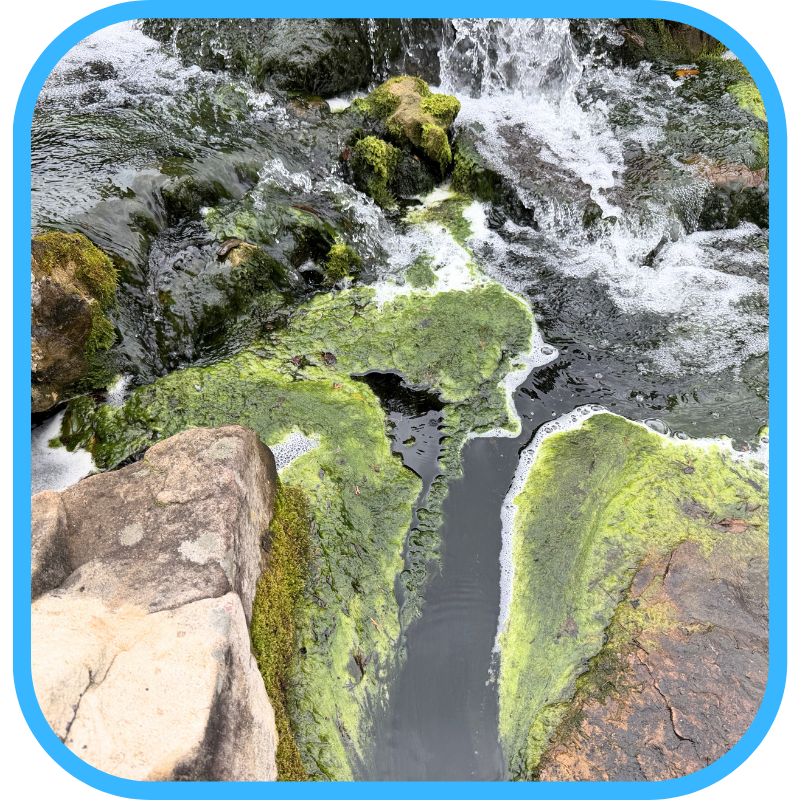
Summer brings more sunlight. More sunlight means more algae.
Now I've said this before and I'll say it again. Algae is not your enemy. It's nature's way of using up excess nutrients. The algae is not killing your fish. The algae is a symptom of a system that's out of balance.
The fix isn't to dump algaecide in the pond and kill everything. That removes the visible algae but does nothing about the nutrients that caused it and the algae comes right back, sometimes worse.
The real fix is to address the underlying nutrient load. And in summer, that means a few things:
- Feed less — less food means fewer nutrients entering the system
- Harvest aquatic plants regularly — those plants are pulling nutrients out of the water as they grow
- Make sure your filtration is working at full capacity and your skimmer basket is being cleaned
- Consider a partial water change if nitrate levels are high
Green water in a new pond, or at the start of summer, is also often just the cycling phase — the system finding its balance. Give it time. Keep your biological filter running. Add beneficial bacteria. Be patient.
It will balance. I've never seen a properly designed ecosystem pond that didn't find its equilibrium.
How Do I Use Plants to Fight Summer Algae?
Plants Are Your Best Tool
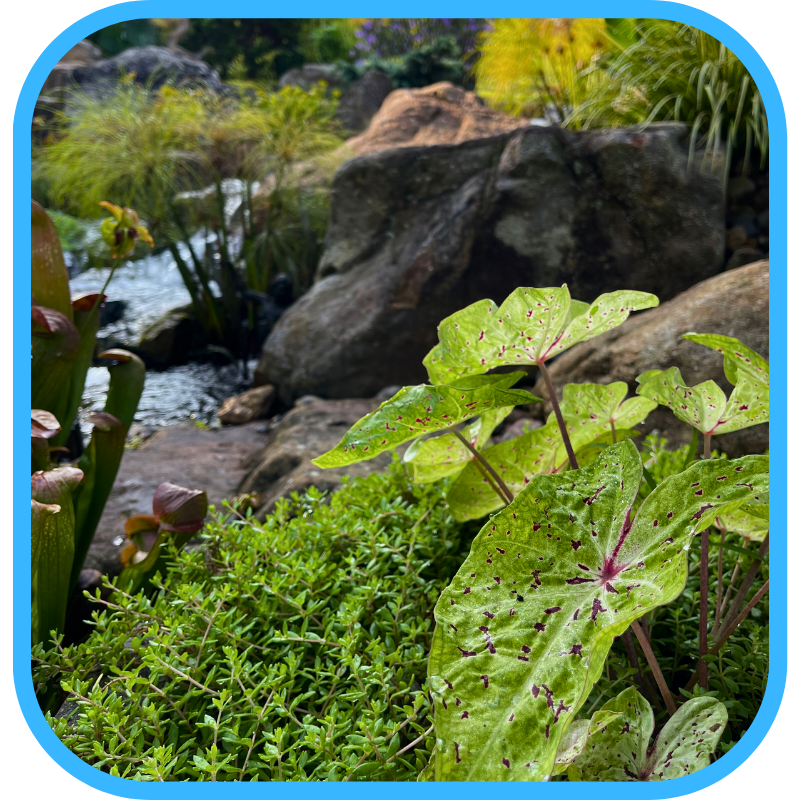
If there is one thing that separates a struggling summer pond from a thriving one, it's aquatic plant coverage.
Here's why: plants and algae are in direct competition for the same nutrients nitrogen and phosphates. Every time a plant uses those nutrients to grow, that's one less unit of energy available for algae.
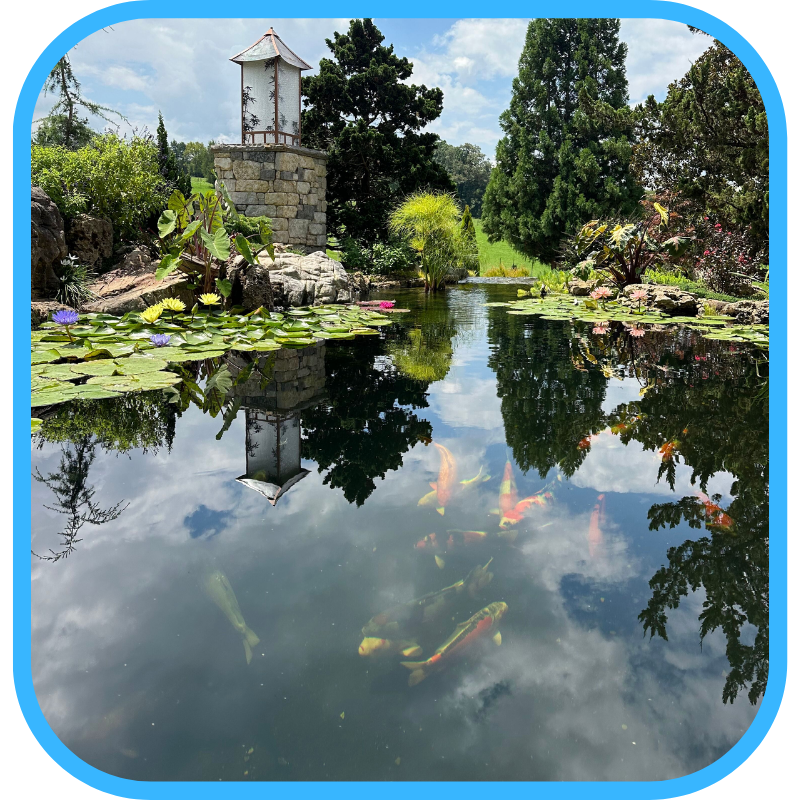
The goal is to have enough plant coverage — especially floating plants like water lilies — to cover roughly 50% of the pond's surface by midsummer. That shade reduces water temperature slightly, limits sunlight penetration, and gives the fish somewhere to hide from predators.
It also makes the pond look spectacular, which doesn't hurt.
If you're fighting summer algae and you don't have good plant coverage, that's the first thing I'd address. Not chemicals. Not UV clarifiers. Plants.
Should I Feed My Fish Differently in the Summer?
Yes — Significantly
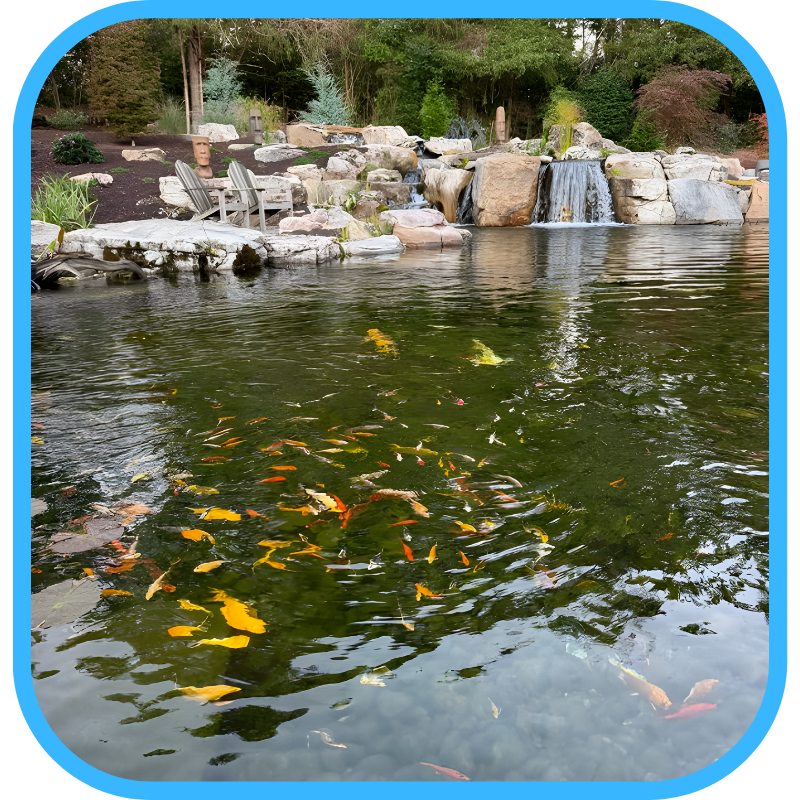
Feed less. Full stop.
I know that sounds counterintuitive because fish seem so active and hungry in summer. But here's the reality: every bit of food that doesn't get eaten becomes nutrients in your pond. And in summer, that drives algae growth and water quality problems faster than any other time of year.
In summer, I recommend feeding once a day, only what your fish can consume in 3–5 minutes. If there's food left after 5 minutes, you're overfeeding.
During extreme heat — when water temperatures are consistently above 85–90°F — I'd cut back even more, or stop feeding altogether for a few days. Fish slow down and their digestive systems don't work as efficiently in extreme heat. Overfeeding in those conditions can cause real health problems.
And choose a quality fish food. A high-quality food with less filler means more of what you're feeding actually gets used by the fish, and less ends up as waste in the water.
When Should I Do a Water Change During Summer?
Don't Wait Until There's a Crisis
Partial water changes are one of the most underutilized tools in summer pond care.
If nitrate levels are creeping up or if your water looks cloudy, smells off, or your fish seem sluggish — a 10–20% water change can make a real difference.
Just a few things to keep in mind:
- Always dechlorinate tap water before adding it to a pond with fish
- Add slowly — a dramatic temperature difference between new and old water stresses fish
- Test your source water if you're using well water — high iron or phosphates can make things worse
- Don't change more than 25–30% at once — you want to preserve your beneficial bacteria
I also like to do a thorough skimmer cleaning every week in summer, and check on water quality — even informally — a couple of times a week. The sooner you catch a problem, the easier it is to fix.
Summer is not the time to be hands-off. Give your pond 15–20 minutes of attention a week, stay on top of your skimmer, feed appropriately, and let the plants do their job.
You'll be rewarded with clear water, healthy fish, and a pond that's absolutely beautiful at its peak season.
Frequently Asked Questions
Why are my fish gasping at the surface in summer?
Low oxygen. This is the most common cause of surface gasping in summer. Make sure your waterfall is running, consider adding an aerator, reduce feeding, and check that your filter isn't clogged. If it continues, test your water immediately.
How do I cool down my pond in extreme heat?
Increase surface agitation with a waterfall or aerator — this aids gas exchange and slightly lowers temperature. Add shade with water lilies or a shade sail. Avoid adding ice directly to the pond — the temperature shock stresses fish.
Should I add beneficial bacteria more often in summer?
Yes. Warm temperatures accelerate bacterial activity but also accelerate waste production. Dosing beneficial bacteria weekly in summer helps keep the biological filter strong and the nutrient cycle moving.
Is string algae different from green water algae?
Yes. Green water is caused by free-floating single-celled algae. String algae (also called blanketweed) is a filamentous algae that forms long strands and attaches to rocks. Both are driven by excess nutrients and sunlight. Both respond to the same management strategies — more plants, less feeding, good filtration.
Closing Thoughts
Summer is your pond's peak season. It's when it looks the most alive — full of plants, full of fish, full of color and movement.
It also requires the most attention. But that attention doesn't have to be complicated.
Feed less. Harvest plants. Keep your skimmer clean. Watch your fish. Enjoy what you've built.
That's summer pond care in a nutshell.
John G. out.
Start a Conversation
No pressure. No used car salesman tactics. Just an honest conversation to see if we're a good fit and to help you end up with the water feature of your dreams.
Contact Us