Quick Overview: Koi Health 101
- Behavior is your best early warning system
- Healthy koi are active, alert, and responsive
- Fins, scales, and coloration tell you a lot
- Water quality is the foundation of fish health
- Early intervention almost always leads to better outcomes
Table of Contents
One of the things I love most about koi is how expressive they are.
If you spend time with your fish and I mean really spend time, not just walk past and glance — you start to learn who they are. You learn their personalities. You learn their feeding patterns. You learn which ones are bold and which ones are shy.
And when something is wrong? You know it. Because they're not acting like themselves.
That relationship that familiarity is your most powerful tool for keeping your fish healthy.
But even if you're newer to koi keeping, there are specific things to look for. Let me walk you through them.
What Does a Healthy Koi Actually Look Like?
Start With Appearance
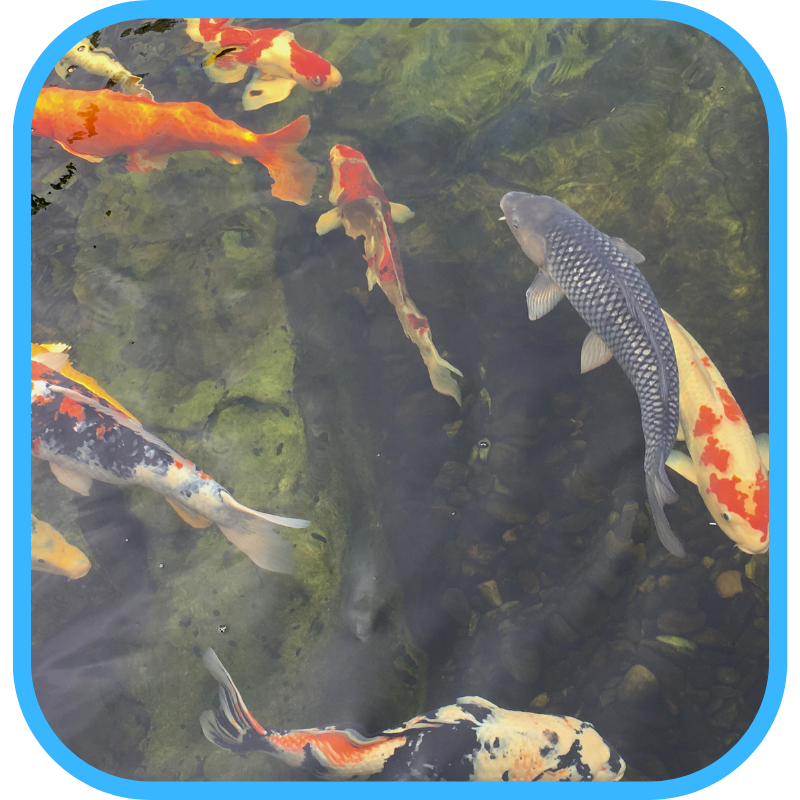
A healthy koi has a few telltale visual signs:
Body Condition
A well-fed, healthy koi should be rounded and full through the middle not sunken or pinched looking behind the head. A fish that looks thin or has a hollow appearance behind the gills is usually not getting enough nutrition, or something is preventing it from absorbing nutrients properly.
Scales and Skin
The scales should lie flat and smooth. Any raised scales — what looks like a pine cone effect is a serious warning sign of a condition called dropsy, which indicates internal problems. Wounds, ulcers, or patches of missing scales can indicate bacterial infection or physical injury and need attention.
Fins
Fins should be full, open, and upright. Fins that are clamped tight against the body, frayed at the edges, or have white or red streaking are all signs that something is off — often a bacterial or parasitic issue.
Eyes
Clear and bright. Cloudy eyes, sunken eyes, or one eye protruding more than the other (pop-eye) are warning signs.
Color
Vibrant, rich color is a sign of a healthy fish eating a quality diet in good water. Pale, faded, or blotchy coloration can indicate stress, poor nutrition, or disease.
What Behavior Should I See in a Healthy Koi?
Behavior Is Everything
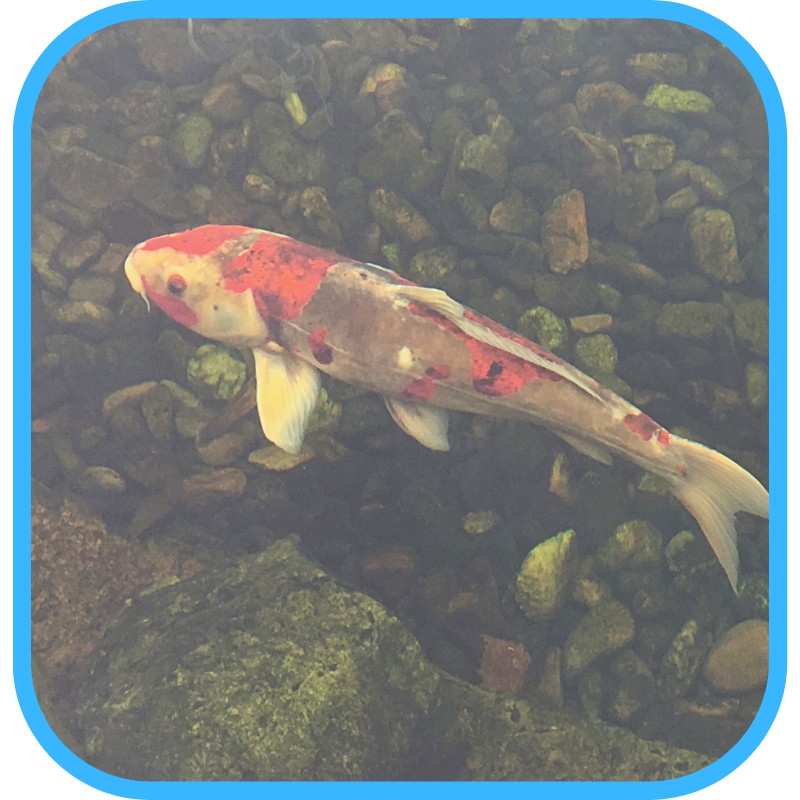
This is actually where I spend most of my attention, and I think it's the most valuable thing I can teach you.
Healthy koi are:
- Active throughout the day — swimming, foraging, exploring
- Responsive to your presence — especially at feeding time
- Grazing the bottom, moving through the gravel, stirring things up
- Interacting with other fish in a normal way — occasional chasing during spawning season is normal, persistent aggression is not
- Coming to the surface eagerly when you feed them
Pay close attention to any fish that is:
- Hovering in one spot for extended periods
- Sitting on the bottom and not moving
- Hanging near the surface or the waterfall inlet
- Isolating from the rest of the group
- Swimming erratically, rolling, or in circles
- Rubbing against rocks repeatedly (flashing)
Any of those behaviors warrants a closer look. Some of them are minor. Some of them are serious. But they're all your fish's way of telling you something is wrong.
What Are the Warning Signs That Something Is Wrong?
Know These Before You Need Them
Beyond behavior, there are specific physical signs that should put you on alert immediately:
- Ulcers or open sores — bacterial infection, needs prompt treatment
- Red streaking in the fins — often bacterial, especially if accompanied by lethargy
- White spots — classic sign of ich (Ichthyophthirius), a parasitic disease
- Fuzzy white growth — often a fungal infection, sometimes secondary to an injury
- Raised scales — dropsy, a serious condition indicating organ failure or severe infection
- Excessive mucus or slime — often a response to parasites or poor water quality
- Gasping at the surface — low oxygen or gill issues
- Rapid gill movement — respiratory distress, test water quality immediately
I want to be honest with you: some of these conditions are very treatable if caught early. Others are serious and require professional intervention.
The most important thing is not to wait and hope it resolves on its own. With fish, problems tend to escalate quickly. The sooner you act, the better the outcome.
How Does Water Quality Affect Fish Health?
Everything Comes Back to Water
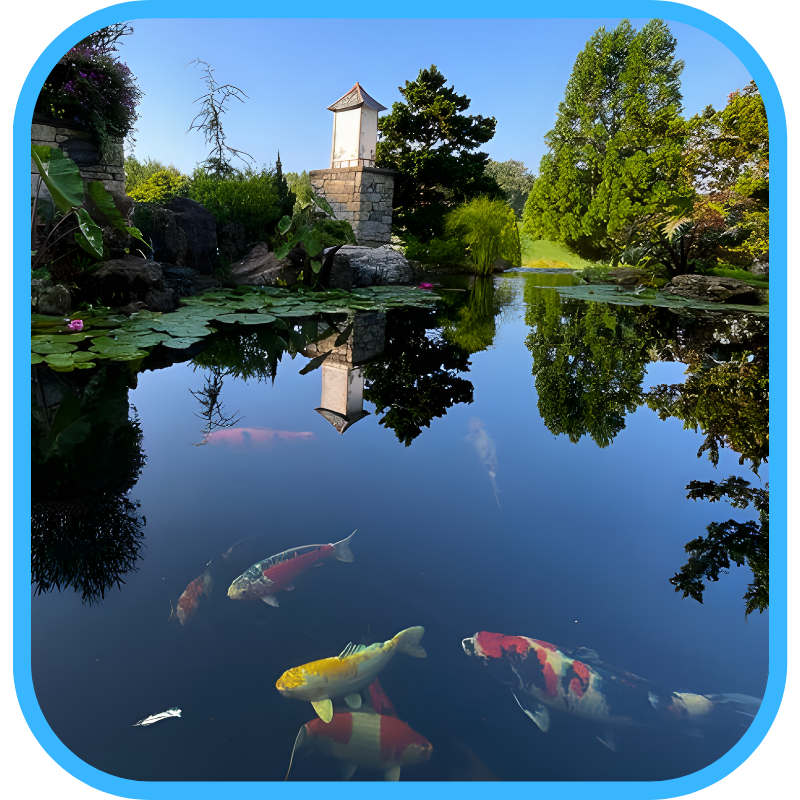
I cannot overstate this.
Water quality is the foundation of fish health. Period.
Koi are incredibly sensitive to water chemistry. Even parameters that aren't immediately lethal can cause chronic stress that suppresses the immune system and makes fish vulnerable to disease.
Here are the key parameters to know:
Ammonia
Should be zero. Ammonia comes from fish waste, uneaten food, and decomposing plant matter. Even low levels are toxic to fish over time. If you have ammonia, your biological filter is either new, overwhelmed, or not functioning properly.
Nitrite
Also should be zero in an established pond. Nitrite is the intermediate stage in the nitrogen cycle — less toxic than ammonia but still harmful at elevated levels.
Nitrate
Can be tolerated at low levels, but chronically high nitrates stress fish and drive algae growth. Regular water changes and healthy plant coverage keep nitrates in check.
pH
Koi prefer a pH of 7.0–8.5. Rapid pH swings are actually more dangerous than a slightly elevated or lowered pH — sudden changes shock the system. Test regularly, especially in summer when biological activity is high.
Temperature
Koi are most comfortable between 65–75°F. They can tolerate a wide range, but extremes especially rapid changes cause stress. In summer heat, watch your dissolved oxygen. In winter, watch for freezing.
If your fish are showing signs of illness and your water tests fine then look at the fish more closely. But in my experience, water quality is the culprit far more often than not.
When Should I Call a Vet?
Yes, There Are Fish Vets — and They're Worth It
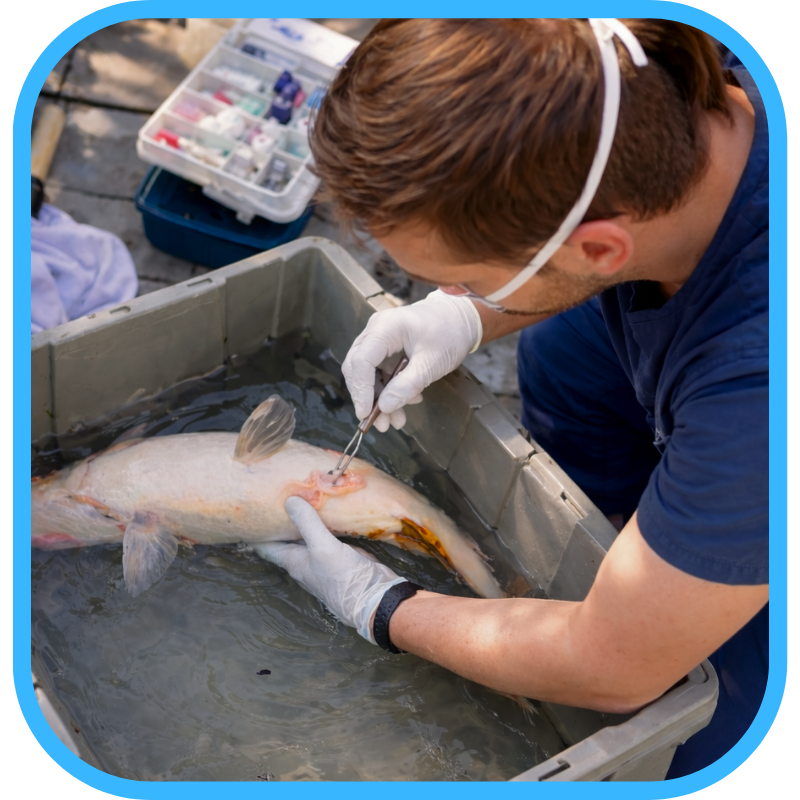
For minor issues — a small wound, a brief bout of lethargy that resolves quickly, minor fin damage — experienced pond keepers often handle things themselves with appropriate treatments.
But there are situations where I'd strongly recommend calling a veterinarian who specializes in aquatic animals:
- Multiple fish are sick at the same time
- A fish is showing signs of dropsy (raised scales, swollen body)
- A fish has a large or deep ulcer
- You've treated a problem and it's not improving
- You've lost fish and don't know why
- A fish is showing neurological symptoms — erratic swimming, rolling, circling
A good aquatic vet can run diagnostics — skin scrapes, blood tests that take the guesswork out of diagnosis. That's valuable. Treating the wrong problem with the wrong medication can make things worse.
Don't let pride or cost stand between you and getting help when your fish need it. These are living creatures that can live decades. They deserve proper care.
Frequently Asked Questions
How often should I test my pond water?
At minimum, test ammonia, nitrite, and pH once a week during the active season. In summer when fish are feeding heavily and temperatures are high, test more frequently. After adding new fish, after a heavy rain event, or any time fish behavior changes — test immediately.
Can I use aquarium medications in my pond?
Some aquarium medications are appropriate for ponds; others are not — especially if your pond has plants or snails, which can be killed by certain treatments. Always read labels carefully and look for products specifically formulated for outdoor ponds. When in doubt, consult a vet.
Why is my koi flashing (rubbing against rocks)?
Occasional flashing is normal — fish scratch themselves like any animal. Frequent or persistent flashing usually indicates parasites (flukes, ich) or gill irritation from poor water quality. Test your water first. If water is clean and flashing continues, treat for parasites.
Is it normal for koi to lose color?
Some color variation is normal seasonally. But significant, sudden fading is usually a sign of stress — poor water quality, disease, low nutrition, or overcrowding. A quality diet with natural color enhancers (like spirulina or krill) helps maintain vibrant colors in healthy fish.
Closing Thoughts
Koi keeping is a relationship. The more time you spend with your fish, the better you'll understand them — and the faster you'll notice when something isn't right.
Learn what "normal" looks like for your specific fish. That knowledge will serve you better than any single piece of advice I can give you.
Take care of your water. Watch your fish. Act early when something looks off.
It's that simple — and that rewarding.
John G. out.
Start a Conversation
No pressure. No used car salesman tactics. Just an honest conversation to see if we're a good fit and to help you end up with the water feature of your dreams.
Contact Us